
5 Mistakes to Avoid With Driveway & Pavers
The most common driveway paver failure in Richmond isn’t a material defect or even sloppy installation. It’s a base that was undersized for the actual load conditions of the driveway, a decision made on day one that can’t be fixed without tearing everything out and starting over. We’ve watched homeowners pay twice for the same driveway because of choices locked in before anyone picked up a shovel. Here are the five mistakes that cost the most, and how to catch them early. If you’d rather have a pro spec the job right the first time, call (833) 700-4611.
Mistake 1: Specifying Base Depth From a National Standard
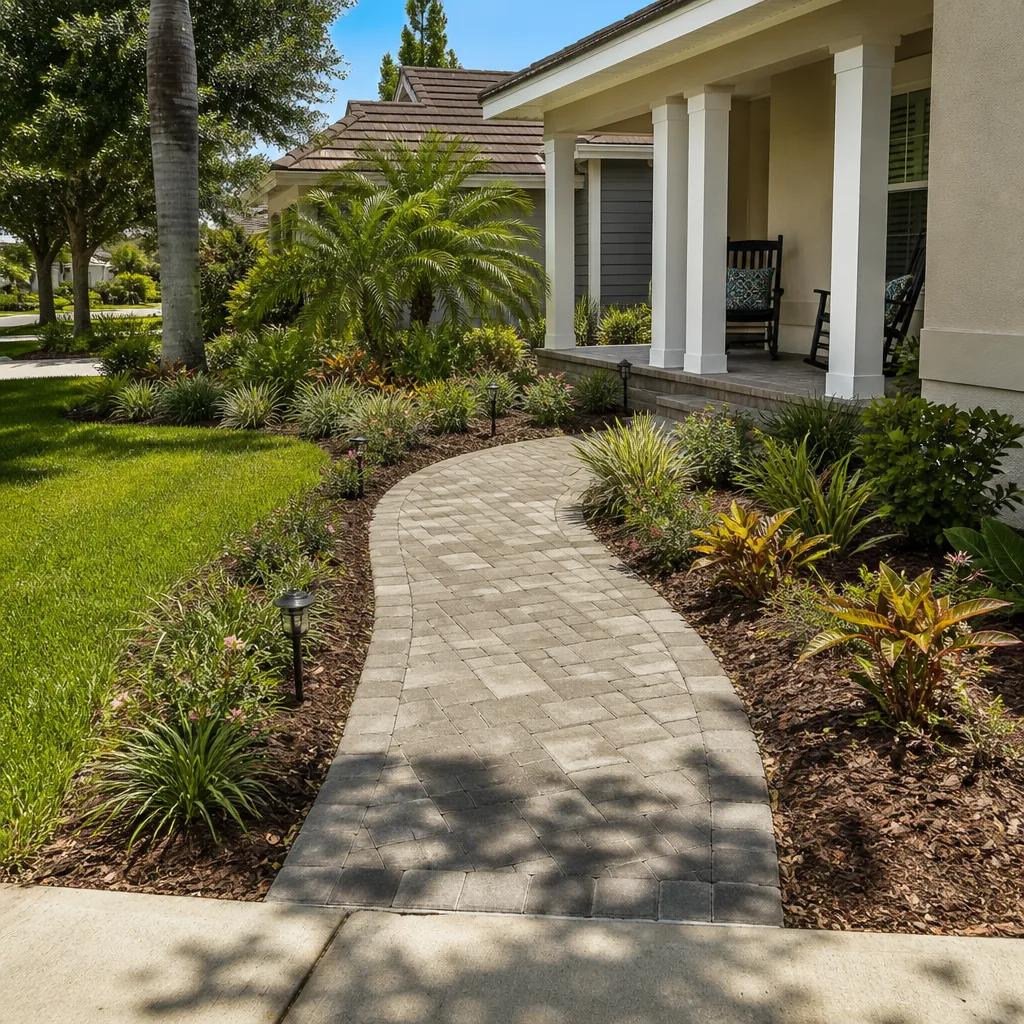
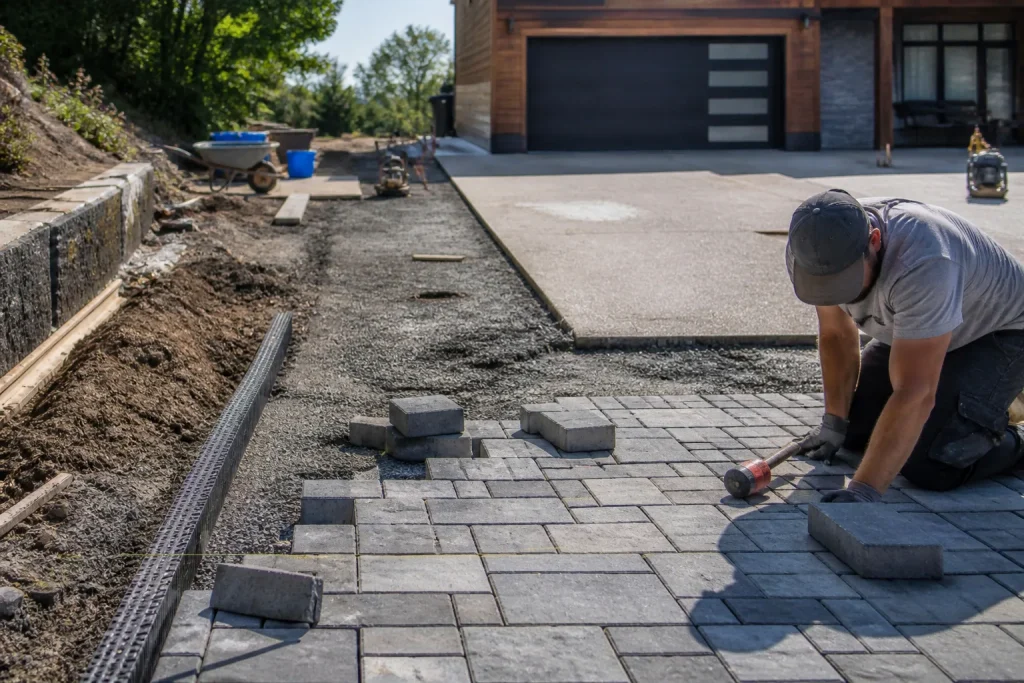
Most paver installation guides say 4 to 6 inches of compacted aggregate base. That number works fine in sandy, well-draining soil. It’s a problem in Richmond, where much of the ground is Contra Costa clay that holds water, expands when saturated, and shifts under load. A driveway spec’d to a generic national standard over clay can develop rutting and settling within a couple of seasons.
What a proper Richmond driveway needs is a base depth tied to actual site conditions: a compaction test or at least an honest soil assessment, the vehicle load the driveway will carry, and drainage. A heavy SUV and a work truck don’t load a driveway the same way, and a sloped driveway in the Richmond hills stresses its base differently than a flat one near the bay.
- Ask for a soil assessment. If a contractor specs 4 inches of base over known clay without one, that’s a red flag.
- Match base depth to load. Driveways seeing heavy vehicles or steep grades need thicker, more heavily compacted base.
- Confirm compaction is measured, not eyeballed. Proper compaction happens in lifts, with equipment, not a quick pass with a plate compactor.
This is the one mistake that’s genuinely hard to fix later. Everything above the base depends on it being right.
Mistake 2: Picking Pavers by Looks Before Load and Slip Rating
Paver catalogs are beautiful, and it’s tempting to pick a look first and deal with the technical stuff later. That’s backwards. Two paver lines that look identical can have very different compressive strength and slip resistance ratings, and the difference matters on a driveway.
Vehicular pavers need to be rated for vehicle loads, not just foot traffic. Some budget concrete pavers are rated for patios and walkways only; put them on a driveway and they’ll chip, crack, and fail under tire load. Slip resistance matters too, especially on the shaded, wet stretches common on Richmond driveways through the winter.
- Confirm vehicular load classification. The paver should be rated for driveways, not just pedestrian use.
- Check slip resistance. A driveway that stays slick after rain is a safety issue, especially on a slope.
- Buy enough overage. Order 5 to 10 percent extra for cuts, breaks, and future repairs from the same dye lot.
Good brands like Belgard and similar lines are widely available, but the label on the box isn’t the point. The load rating and slip rating are. Get both in writing before you commit to a look.
Mistake 3: Skipping Edge Restraint Specification
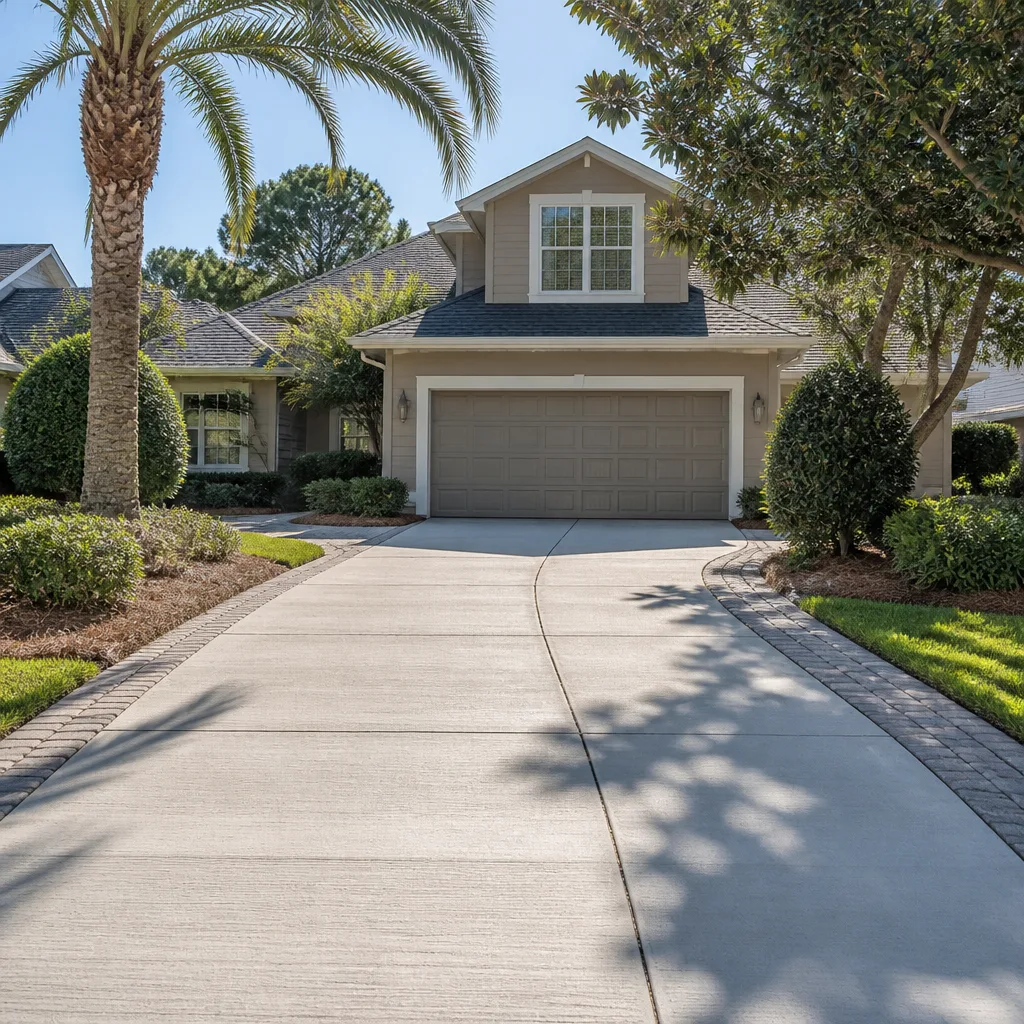
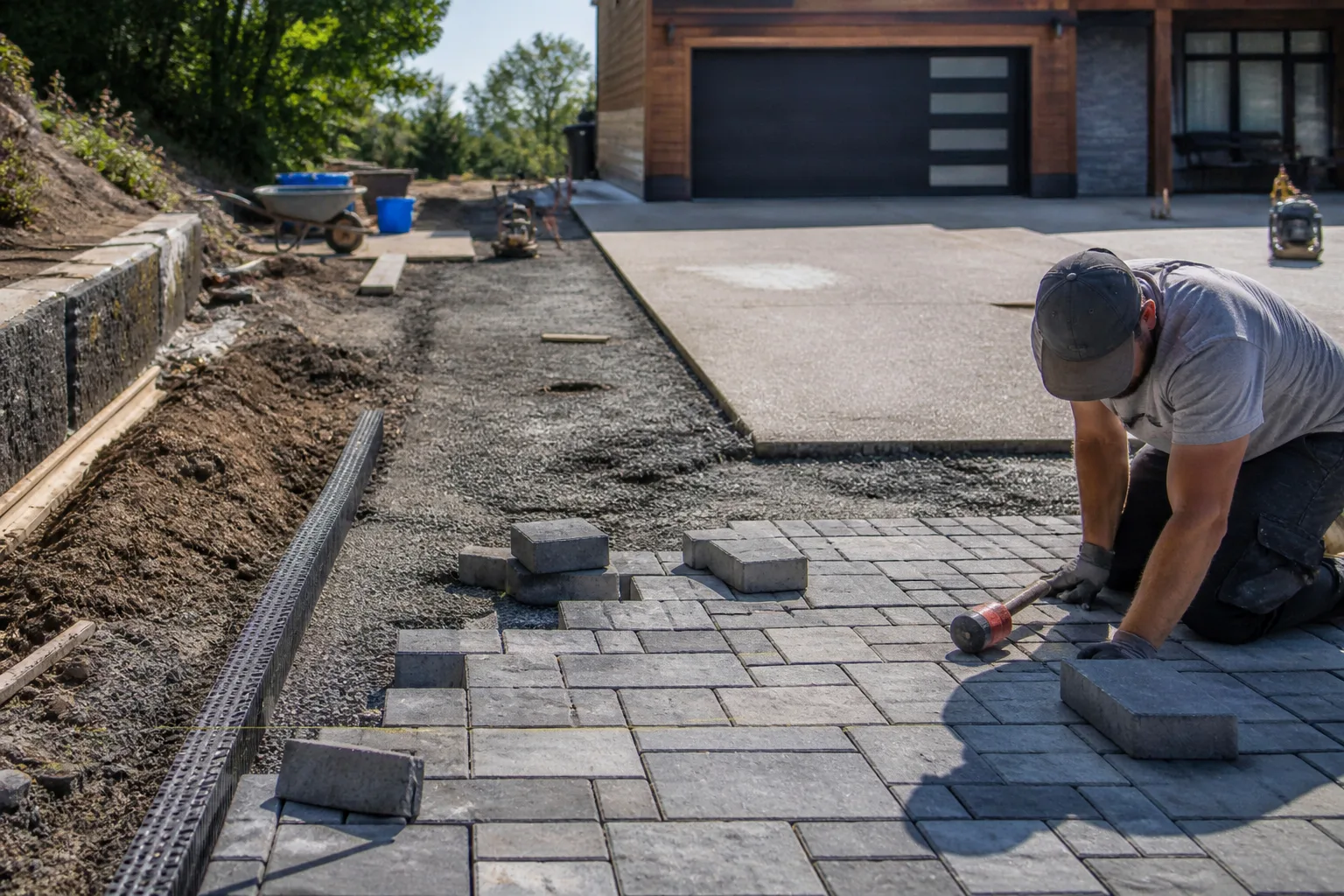
Edge restraint is the least glamorous part of a paver driveway and the one most often left out of a bid. It’s the mechanical border, usually a spiked or glued-down edge, that holds the outer pavers in place. Without it, pavers migrate outward over time. By year three, a driveway with no edge restraint typically shows a widening gap at the border, pavers walking out of the field, and a joint pattern that’s visibly loosened at the edges.
On a Richmond driveway, where winter rain softens the soil at the perimeter, the failure comes faster. Once the edge gives, water gets in, the base at the border erodes, and the whole outer course starts to drop.
- Edge restraint should be in the written spec. Not implied, not “standard practice,” written down.
- It should be mechanically fastened. Spiked or glued into a stable base, not just butted against the soil.
- Check the border course. A soldier course or cut border looks better and holds better than an open edge.
This is a small line item on a bid and an expensive one to add later, because fixing it usually means lifting and re-laying the perimeter.
Mistake 4: Accepting a Lump-Sum Bid With No Written Material Spec
A lump-sum bid with no material specification is a blank check for substitution. The bid says “paver driveway” and a price, and nothing about which paver, which base material, which edge restraint. Once you’ve signed, the contractor can swap in a lower-grade paver, a thinner base aggregate, or a cheaper edge system, and still deliver a driveway that technically matches the contract.
What you want is a written specification that names the paver line and rating, the base depth and compaction method, the edge restraint system, the bedding sand, and the polymeric joint sand. With that in hand, a substitution is a change order you have to approve, not a surprise.
- Get the spec in writing before you sign. Paver brand and line, base depth, compaction, edge restraint, joint sand, all named.
- Ask what happens if materials change. A substitution should require your sign-off, not just a phone call.
- Insist on a line-item breakdown. Upfront pricing, no surprises. The number you see is the number you pay.
We’ve pulled bids apart for Richmond homeowners where the “same” driveway came in thousands of dollars apart because one bid quietly spec’d a lighter paver and a thinner base. The spec is what tells you what you’re actually buying.
Mistake 5: Ignoring Existing Drainage Before Installation
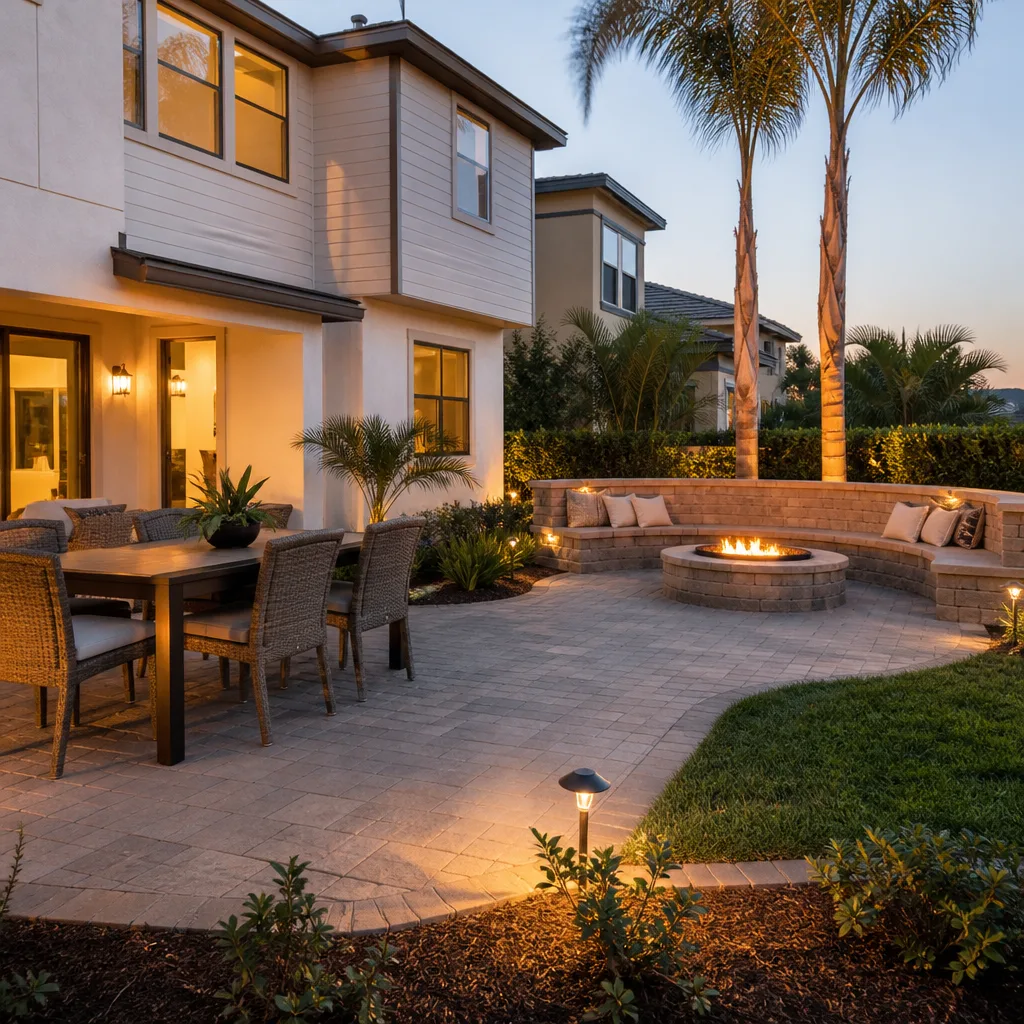
A new paver surface changes how water moves across a driveway. It changes the slope slightly, the surface texture, and where water pools and runs off. In Richmond, with concentrated winter rainfall, that matters more than in a drier climate. A driveway that used to drain to the street can, after installation, sheet water toward the garage, the foundation, or a neighbor’s yard.
Before any installation, the existing drainage pattern needs to be mapped: where water comes from uphill, where it currently goes, and how the new surface will redirect it. On sloped Richmond lots, that often means an added drain, a channel, or a grade adjustment at the low side.
- Map water flow before installation. Watch the driveway during a storm if you can, and note where it pools.
- Plan for positive drainage. The finished surface should slope away from the house, not toward it.
- Add drainage where needed. Channel drains or a grade correction at the low side are worth the cost up front.
Getting drainage wrong doesn’t just mean a wet driveway. It can mean water against the foundation, which is a much bigger problem than the driveway itself.
When to Call a Pro
Some paver driveway decisions are genuinely do-it-yourself friendly, like choosing a look or clearing the area. But base depth, compaction, load rating, and drainage are the decisions that determine whether the driveway lasts 20 years or fails at year three, and they’re the ones that need a trained eye on-site. If your Richmond driveway is on clay, sits on a slope, or drains toward the house, that’s a pro job. Our technicians have up to 12 years of experience and every project is covered by our 730-Day Done Right Promise. If it’s not done right, we make it right.
Related services in Richmond: For the full range of what we install, see Driveway & Pavers in Richmond. Matching your driveway to the property line? We also handle Fence Installation in Richmond.
The Bottom Line
Every one of these five mistakes happens before installation begins, in the planning and specification stage. Get the base depth tied to Richmond’s clay soil and actual load, confirm the paver’s vehicular load and slip ratings, insist on mechanical edge restraint in the written spec, refuse a lump-sum bid with no material specification, and map drainage before a single paver goes down. Do those five things and you’ve avoided the failures that cost homeowners the most.
We bring a curated set of top-tier brands to every job and back the work with our 730-Day Done Right Promise, plus 0% financing for 18 months and $1,000 off projects over $10,000. If you’re in Richmond and want a driveway that’s built to last and backed in writing, Groundwork Construction Co. of Richmond offers free estimates. Call (833) 700-4611 to schedule yours.
Frequently Asked Questions
It depends on your soil and the load the driveway carries, but in Richmond the clay ground usually calls for more than the generic 4-inch minimum, and always with proper compaction in lifts. A contractor who specs base depth without looking at your soil is guessing. Call (833) 700-4611 for a free estimate with a written spec.
Check the manufacturer’s load classification. Vehicular pavers are rated for vehicle loads; patio pavers are rated for foot traffic only. The spec should name the paver’s load rating in writing, along with its slip resistance. If a bid doesn’t say, ask.
Pavers spread outward when there’s no mechanical edge restraint holding the border in place. The fix is a properly spiked or glued edge system, which should be in the original spec. Adding it later means lifting and re-laying the perimeter. Call (833) 700-4611 to get an edge restraint spec into your bid.
Yes. A new surface can redirect water toward the garage, foundation, or a neighbor’s yard if the existing drainage pattern wasn’t mapped first. In Richmond’s wet winters, that’s worth planning for before installation, often with a channel drain or grade adjustment at the low side.
A Full-Scope Partner for Richmond
Driveway and pavers are one piece of a bigger picture, and we handle the trades that touch it: Home Additions & ADU in Richmond and the rest of our services, from foundation to finish line. To see the full range of what we do, visit our Groundwork Construction Co. of Richmond home page. Calls are answered by a live person 24/7, so you’ll get a real human when you reach out.
Written by the team at Groundwork Construction Co. of Richmond.
Need Construction Help?
Call Groundwork Construction Co. of Richmond - licensed & insured, here with fast after-hours help in Richmond.
(833) 700-4611