
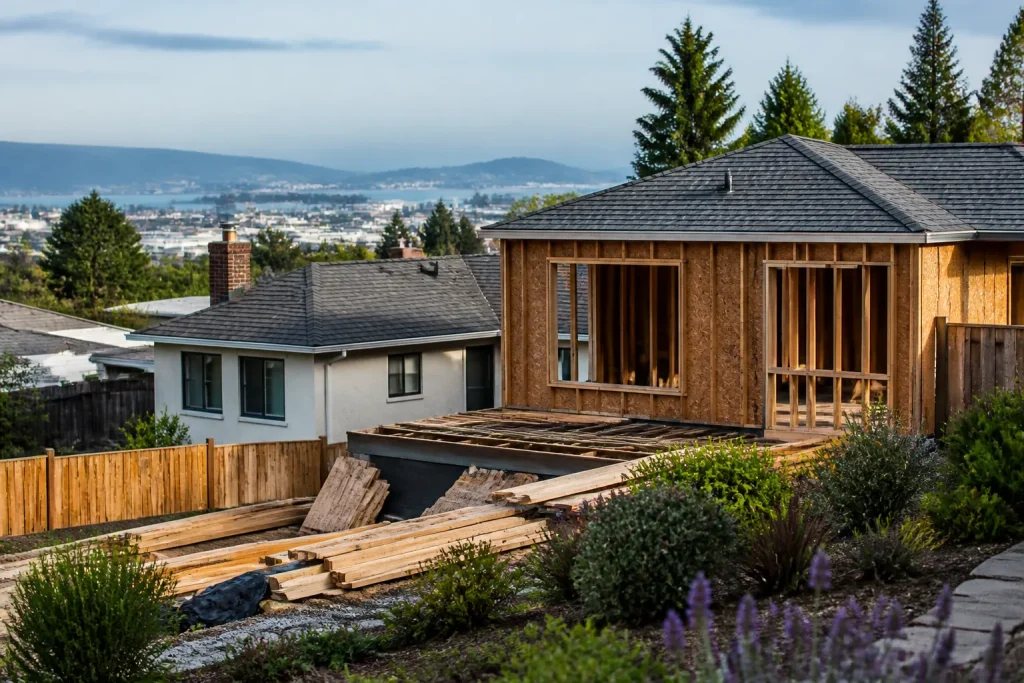
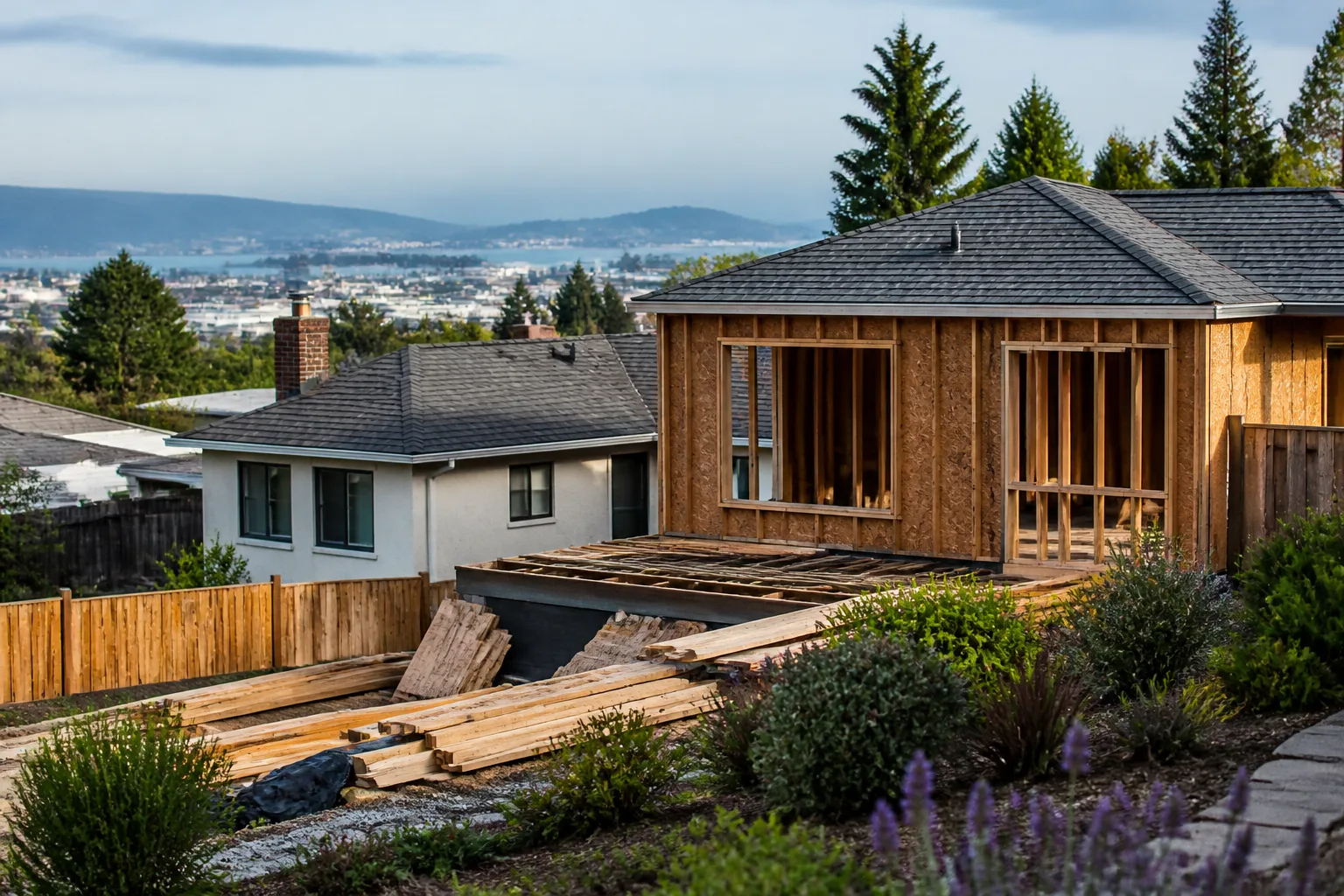
Home Additions & ADU: Repair or Replace? How Richmond Homeowners Decide
Spending $60,000 to renovate a structure sitting on a cracked slab is like rebuilding an engine and dropping it straight back into a rusted-out frame. The foundation decides everything. For Richmond homeowners weighing a renovation against a teardown and new ADU, the honest answer usually comes down to what’s under the walls, not what’s above them. Here’s how to tell the difference before you spend a dollar on finishes.
If you’d rather have a trained eye make that call, call (833) 700-4611 and we’ll walk your lot.
Why the foundation decides the repair-or-replace question in Richmond
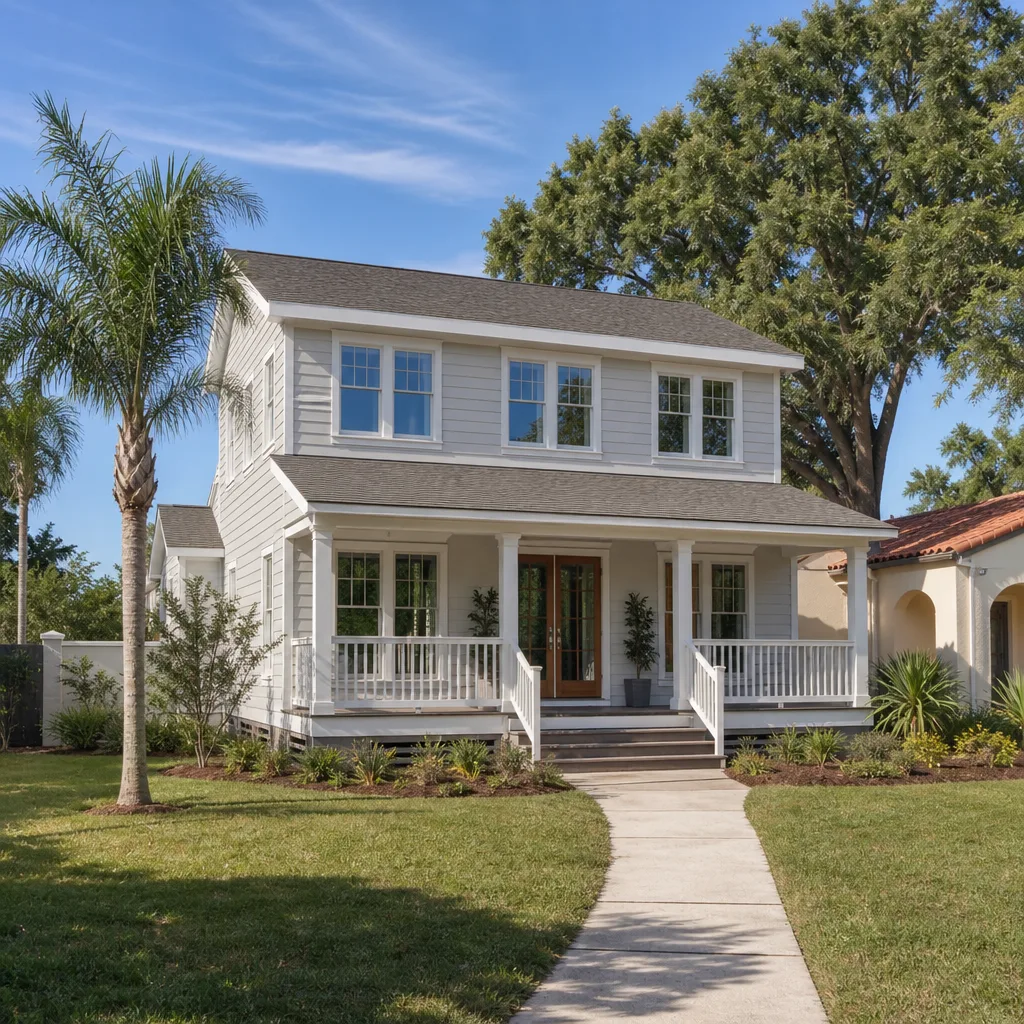
Richmond’s soil is not uniform, and that matters more than most homeowners realize. The flats near the Marina and the older industrial edges sit on fill and bay mud that settle at different rates than the firmer ground up in the hills around Arlington and Kensington borders. We’ve pulled apart detached garages and converted cottages in Richmond where the slab had cracked clean through because the fill underneath kept moving, and we’ve seen structures from the same decade that were still dead level two streets over. Same town, different ground.
Before anyone prices a renovation, we want to know three things about the existing structure:
- Foundation type and condition. A raised perimeter foundation is a very different starting point than a slab on grade that’s cracked or heaved.
- Movement history. New cracks, sticking doors, and out-of-square door frames tell you the ground is still active, not just settling into a settled state.
- Whether it’s worth saving at all. A structure that’s gone out of square can sometimes be squared and underpinned. A slab that’s failed in multiple places usually can’t be saved economically.
If the foundation fails this first test, every dollar you put into a renovation is money into a frame that will keep moving. That’s the reframe: this isn’t a construction question, it’s a financial one, and the foundation sets the ceiling on what the numbers can be.
How Richmond’s ADU rules change what you can convert vs. build
Richmond allows ADUs, and the state rules that took effect over the last few years pushed local ordinances to be more permissive on size and parking than they once were. But “allowed” and “easy to convert” are two different things.
A detached ADU or a converted garage can often move through the process faster than a full addition because you’re using an existing footprint. The catch is that a conversion still has to meet current code for egress, insulation, electrical, and sometimes foundation, and a garage built decades ago on fill often isn’t where today’s code wants it to be. We’ve seen Richmond homeowners get surprised when the conversion they budgeted for turns into a foundation and slab work package before anyone hangs drywall.
What the ordinance lets you build on your lot depends on lot size, setbacks, and whether you’re going detached or attached. A small lot in the Iron Triangle has different options than a wider lot out toward the Richmond Annex. Before you fall in love with a converted-garage plan, confirm what your specific parcel allows, then confirm the existing structure can actually carry the conversion. Our Home Additions & ADU in Richmond team runs both checks together so you’re not pricing a design you can’t permit.
The real cost comparison: permitted new ADU vs. converted space

This is where a lot of Richmond homeowners get burned, because the sticker price on a conversion looks dramatically lower than a permitted new build. The gap shrinks fast once you account for what a conversion actually requires and what it’s worth when you sell.
- Permitted detached ADU (new build): Higher upfront cost, but the square footage is legal, insurable, and appraises as real living space. This is the number your lender and appraiser recognize.
- Converted existing space (permitted): Lower than a ground-up build when the structure is sound, but only if the foundation and envelope hold up. The savings vanish when the slab needs work.
- Unpermitted converted space: Cheapest on day one, and the most expensive at resale. Unpermitted ADU square footage often doesn’t count toward appraised value, can create disclosure headaches, and can trigger enforcement and remediation costs. That’s the difference nobody sees until closing.
In our experience, the resale gap between a permitted ADU and an unpermitted conversion is wide enough to erase the entire cost difference of doing it right the first time. Richmond buyers and their agents ask for permits, and “it’s already there” doesn’t satisfy a lender.
When a bump-out addition beats a detached ADU on a Richmond lot
Not every Richmond lot wants a separate structure. A bump-out addition, which extends the existing house footprint, can make more financial sense when the yard is tight, the setbacks won’t allow a detached ADU, or you simply want the square footage attached to the main house.
Bump-outs win when:
- Your lot’s setbacks and lot coverage won’t leave room for a detached ADU.
- The existing foundation is sound enough to extend rather than work around.
- You want the added space to share the main home’s systems instead of running separate utilities.
A detached ADU wins when you want rental or family privacy, when the existing footprint can be converted cheaply, or when the lot is generous enough to absorb a separate structure. The foundation check comes first either way, because a bump-out built on a sound slab uses that slab as a starting point, and a detached unit doesn’t.
How we evaluate repair vs. replace before quoting a scope

We don’t quote a renovation until we’ve answered the foundation question, because a number built on a bad foundation isn’t a number, it’s a guess. During a site assessment we check the foundation and slab, look at the structure’s movement history, walk the lot against what Richmond’s ADU rules will allow, and then compare the permitted-build cost with the conversion cost using real, not aspirational, numbers. Only then do we put a scope together.
That’s the piece most homeowners never see from a contractor, and it’s why so many bids blow up mid-project. Our no-hassle upfront pricing means the number you see is the number you pay, and it’s backed in writing by our 730-Day Done Right Promise. We’ve been building in this area since 2014, and our technicians bring up to 12 years of experience to the assessment. Whether you’re updating fixtures with Delta or American Standard, or pricing tile work with Schluter on the bathroom side of a conversion, the foundation has to pass before any of it matters. When to call a pro: if a slab is cracked, a structure is out of square, or you’re pricing anything that involves moving a foundation or a wall, that’s beyond a homeowner’s scope. Get a professional assessment first. If you’re in Richmond and need help, our Groundwork Construction Co. of Richmond home team can walk the property with you.
Related services in Richmond
If the addition reshapes your street frontage or driveway access, our Driveway & Pavers in Richmond team can help, and a new detached ADU often pairs well with a fresh perimeter, so our Fence Installation in Richmond crew is one call away. It’s one contractor, from foundation to finish line.
What happens when you call
- 1
A real person answersNo phone trees – you reach a local pro.
- 2
You get an upfront price rangeHonest numbers before anyone is dispatched.
- 3
A background-checked tech heads outLicensed & insured, dispatched right away.
- 4
You approve before work beginsNothing starts until you say go.
The Bottom Line
The repair-or-replace decision in Richmond hinges on the foundation. If the existing slab or perimeter foundation is sound, a permitted conversion can be the smarter financial move. If it’s failed or still moving, a new build is the only honest path, and unpermitted conversion is the option that costs you most at resale. Get the foundation assessed first, confirm what your Richmond lot allows, then compare the permitted numbers side by side.
If you’re in Richmond and need help, Groundwork Construction Co. of Richmond offers free estimates. Call (833) 700-4611 for a no-hassle upfront quote, our 730-Day Done Right Promise, and $1,000 off projects over $10,000.
Frequently Asked Questions
A permitted detached ADU in Richmond generally lands in a wide range depending on size, foundation, and utility work, and a conversion of existing space can come in lower when the structure is sound. The exact figure depends on the foundation assessment and your lot’s constraints, so we don’t quote until we’ve checked both. Call (833) 700-4611 for an exact quote, and estimates are free.
Often yes, but only if the foundation, egress, insulation, and electrical can meet current code. A garage on a cracked or settling slab may need foundation work before a conversion pencils out. The first step is a site assessment, not a design. Call (833) 700-4611 to schedule a free assessment.
Yes, in most cases the permitted ADU appraises as legal living space while an unpermitted conversion often doesn’t, and can trigger disclosure and enforcement costs. The resale gap frequently erases the upfront savings of going unpermitted. Call (833) 700-4611 and we’ll walk you through what your specific Richmond property can support.
Repair makes financial sense only when the foundation is sound and the structure can meet current code; otherwise a new build is the honest answer. The foundation is the deciding factor, not the walls or roof. Call (833) 700-4611 for a free estimate and a straight answer before you commit.
Written by the team at Groundwork Construction Co. of Richmond.
Need Construction Help?
Call Groundwork Construction Co. of Richmond - licensed & insured, here with fast after-hours help in Richmond.
(833) 700-4611