Free written scope consultation - allowances, timeline, and change-order rules on paper before a single trade is scheduled
Styles & brands we work with
- Kitchen remodeling
- Bathroom remodeling
- Home additions & ADU
- Roofing
- Windows & doors
- Driveway & pavers
- Fence
See the difference
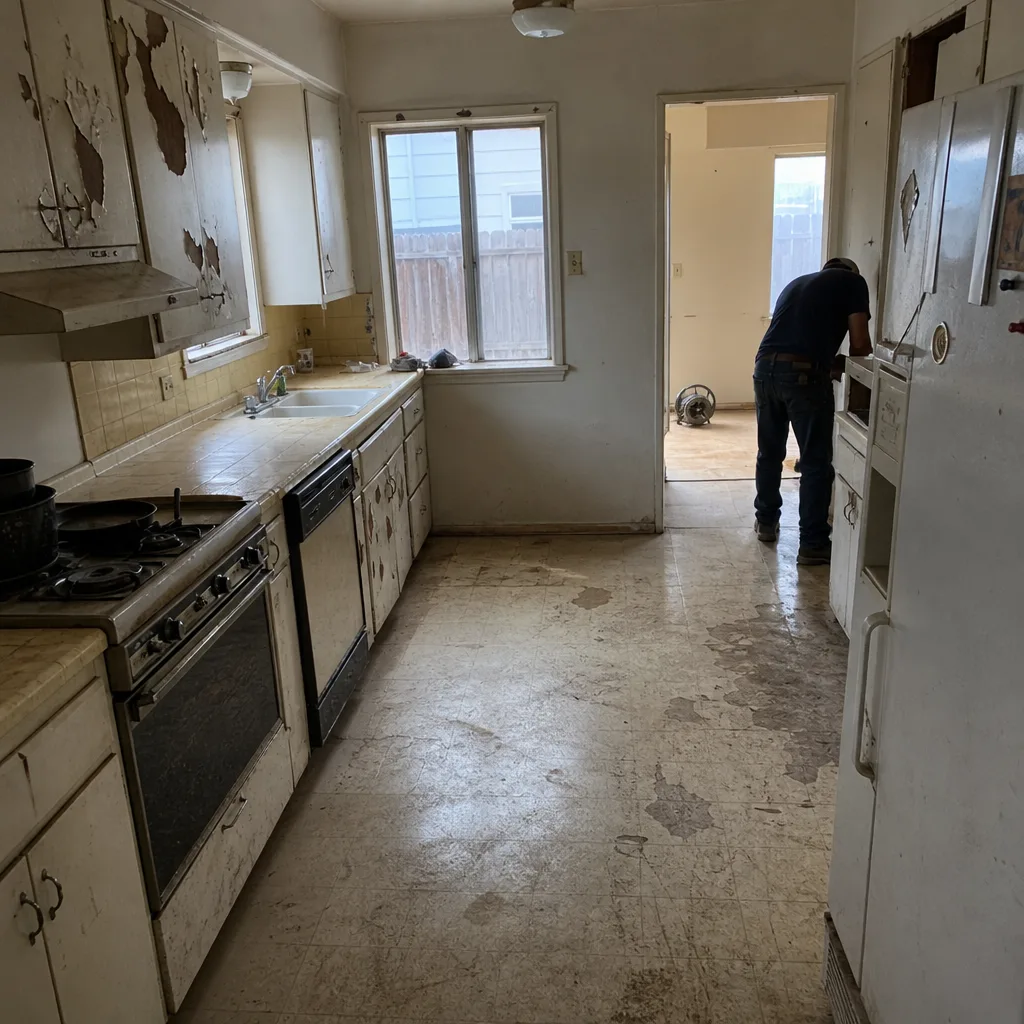 Before
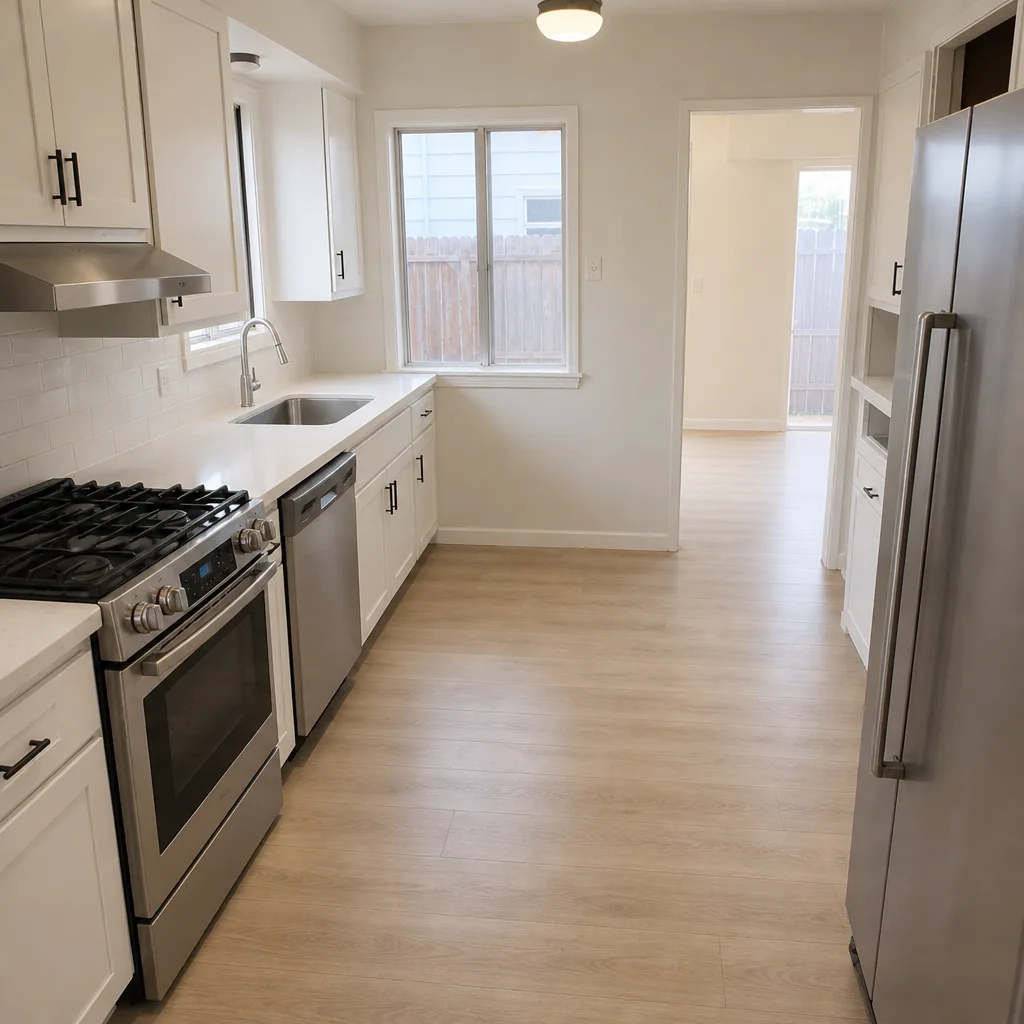 After
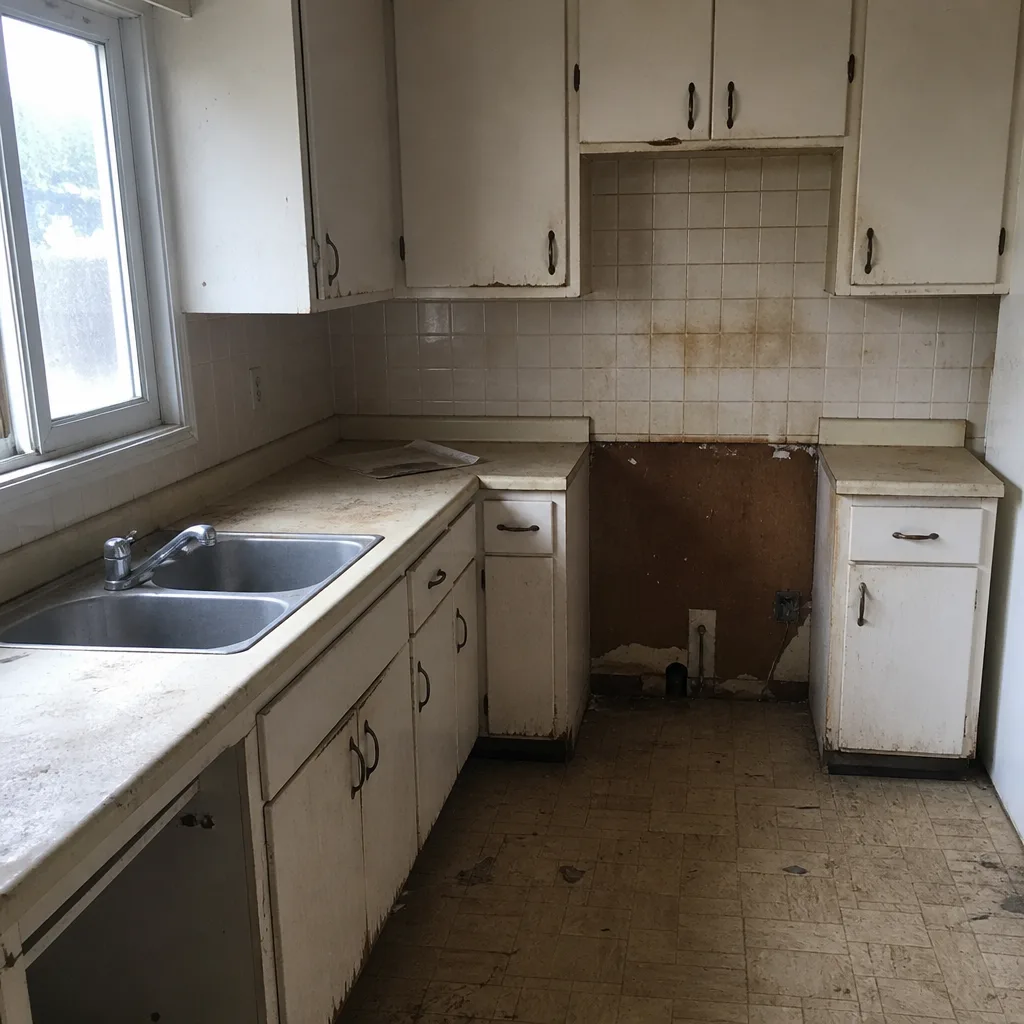 Before
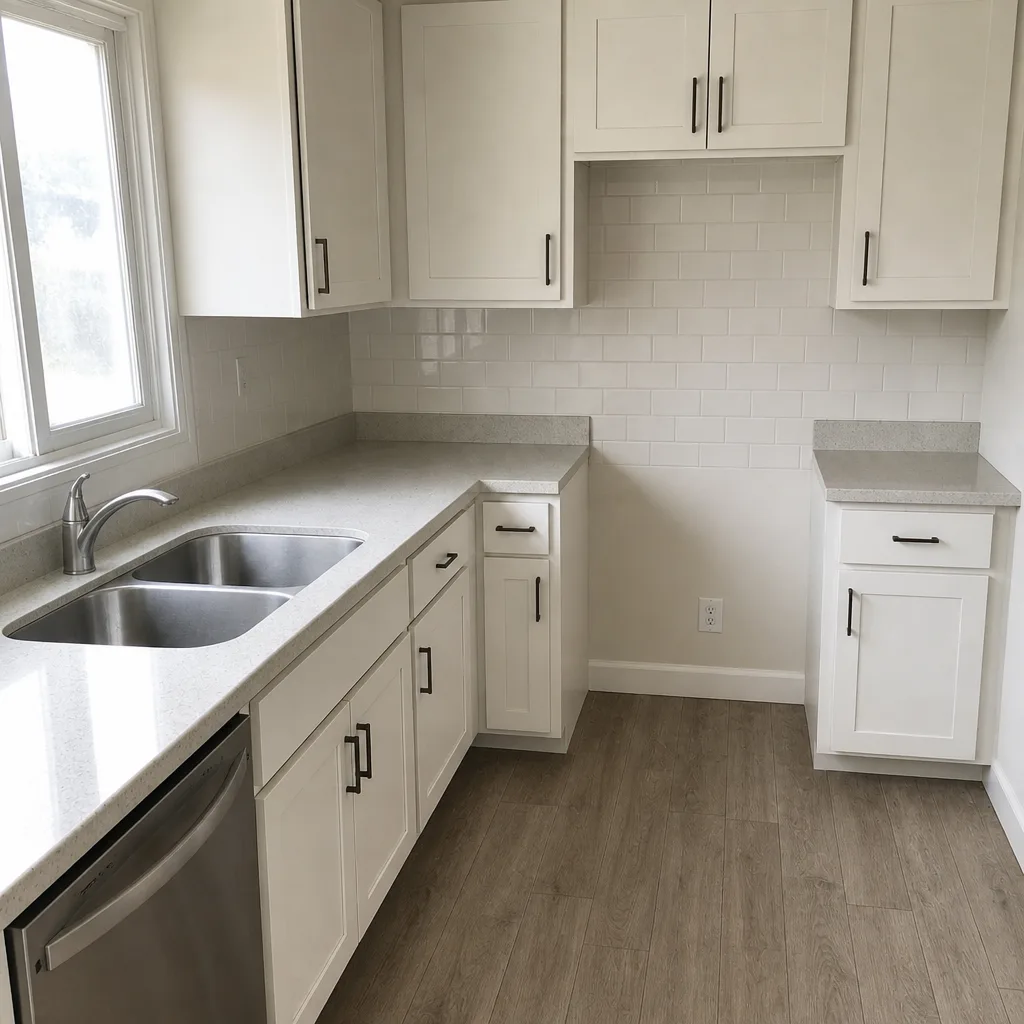 After
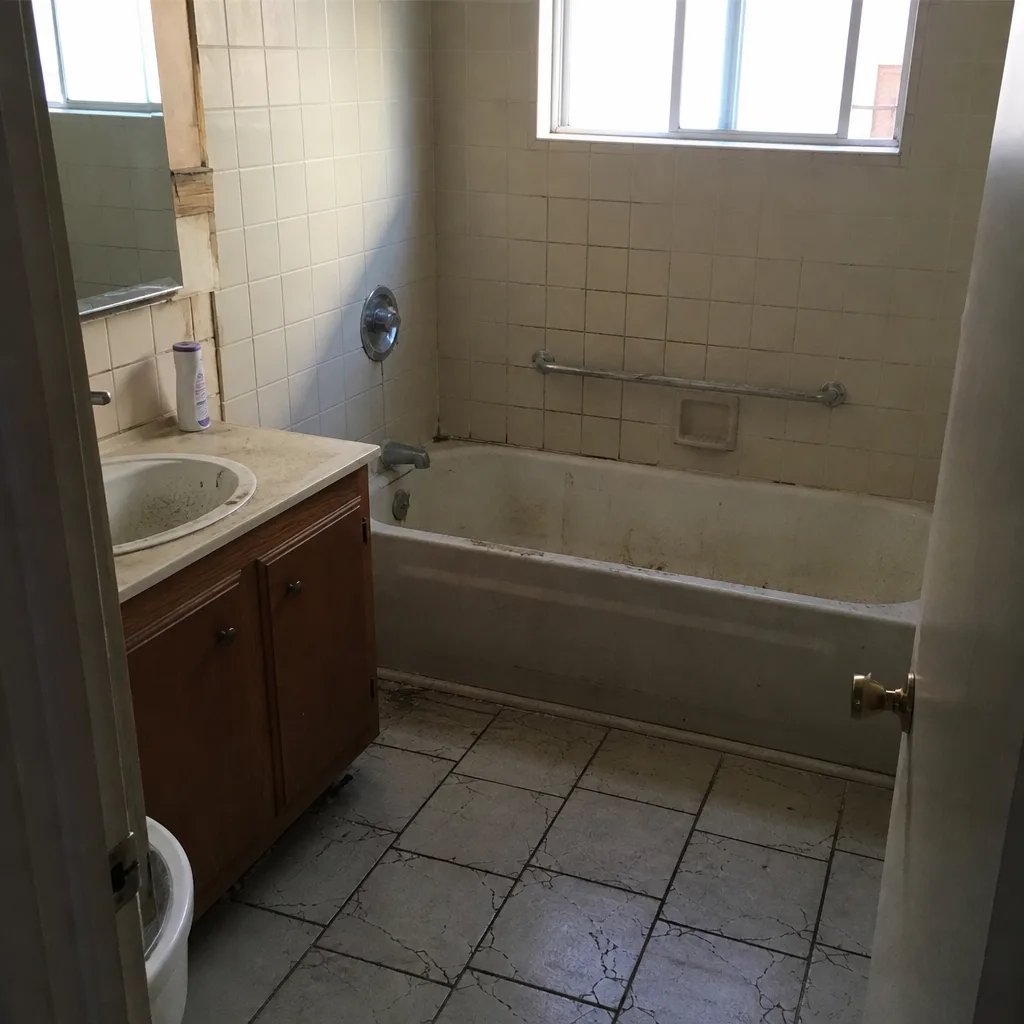 Before
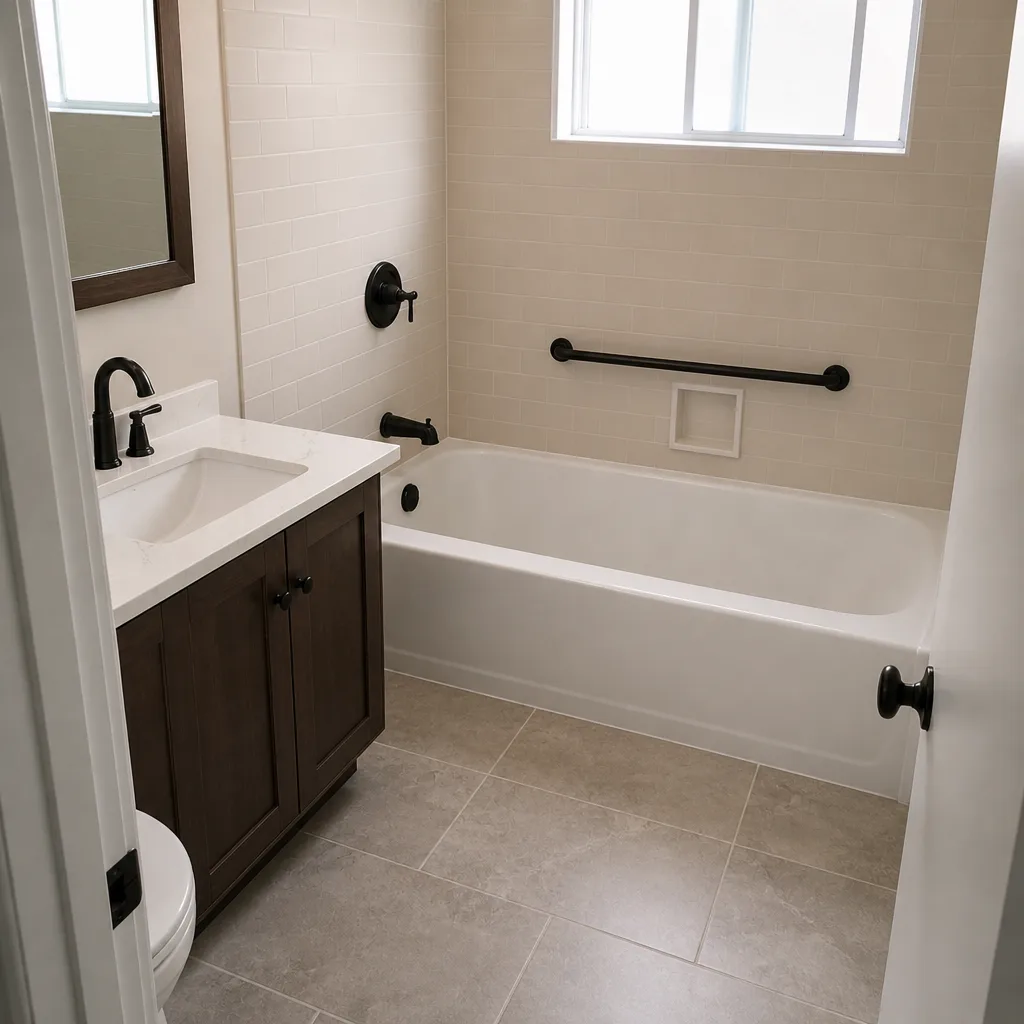 After
Asphalt vs Architectural Shingles in Richmond, CA: Which Roof Belongs on Your House?
Choose architectural shingles unless your budget is locked tight and your roof is steep, simple, and sheltered. Both products are asphalt. The real difference is weight, profile, and how each one handles wind and water, and those three things matter more on a Richmond roof than they do almost anywhere else in the East Bay. If a crew is quoting you “asphalt versus architectural” as if they’re different materials, they’ve explained it wrong. Call (833) 700-4611 and we’ll walk you through the honest version, free.
The Wind Funnel Off the Carquinez Strait Changes the Math
Richmond sits at the bay’s eastern edge, right where air funnels through the Carquinez Strait. That geography produces sustained gusts that regularly hit 50 to 60 mph in exposed flatland neighborhoods. It’s not a worst-case hypothetical you read about in a warranty booklet. It’s a documented local condition, and it’s the reason the wind-uplift rating difference between shingle types is a real variable here instead of a spec-sheet footnote.
A 3-tab shingle is rated to roughly 60 mph wind uplift. A quality architectural shingle is rated to 130 mph. Read those numbers again next to each other. In a sheltered inland town, that gap might sit unused for the life of the roof. In Richmond, it gets tested every winter.
Why the tab seal fails first
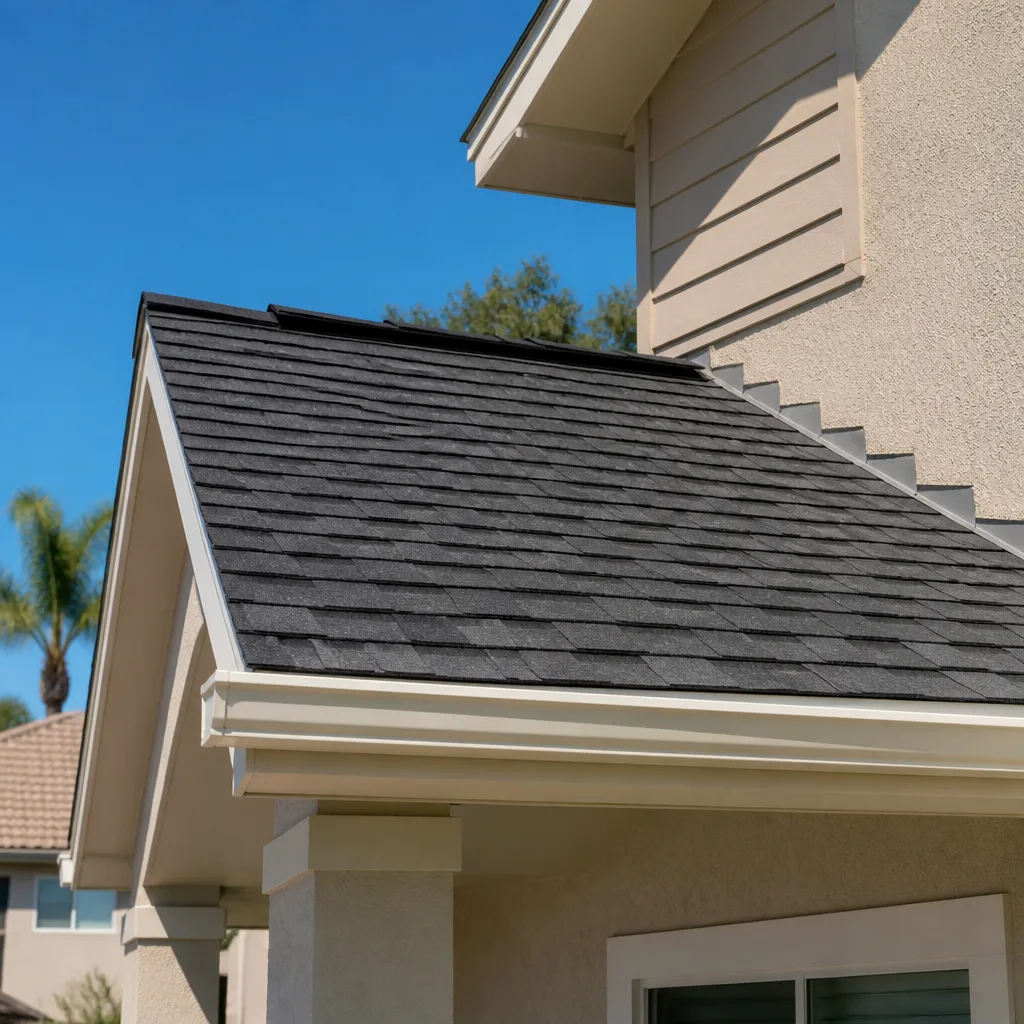
Most wind-driven rain intrusion we see doesn’t start with a hole in the roof. It starts at the tab seal. A 3-tab shingle has a thin, flat tab with a narrow adhesive strip. When the edge lifts, water gets under it, and once water gets under a tab, the seal is gone for good. Architectural shingles are laminated, which makes each tab heavier and stiffer. That extra mass resists edge lift, so the seal holds where a lighter tab would peel up.
The performance gap between the two products is wider in bay-adjacent neighborhoods than it is inland. Fog-belt moisture works the same way from the other direction, driving rot and fungal decay on south- and west-facing wood, and a roof that stays sealed keeps that moisture out of your decking and framing.
Side by Side: What You’re Actually Comparing
| Spec | 3-Tab Asphalt | Architectural Asphalt |
|---|---|---|
| Wind uplift rating | ~60 mph | ~130 mph (Owens Corning Duration SureNail) |
| Construction | Single-layer, flat tab | Laminated, multi-layer, dimensional profile |
| Tab stiffness | Thin, lifts easily | Heavier, resists edge lift |
| Warranty transfer | Limited | Transferable on home sale |
| Price delta on a typical Richmond bungalow | Baseline | +$800 to $1,500 |
That last row is where the ROI argument actually lives. On an average Richmond bungalow re-roof, the upgrade from 3-tab to architectural typically runs $800 to $1,500. Whole roof replacements in Richmond run $8,000 to $20,000, and repairs run $400 to $1,800, so the upgrade is a small slice of the total. On larger re-roofs, Groundwork’s $1,000 off projects over $10,000 incentive can absorb most or all of that delta. We install Owens Corning Duration Series architectural shingles, and their SureNail wind warranty is transferable on a home sale. That’s a document you can hand a buyer’s inspector instead of a promise.
Common Richmond Scenarios (and Where the Answer Shifts)
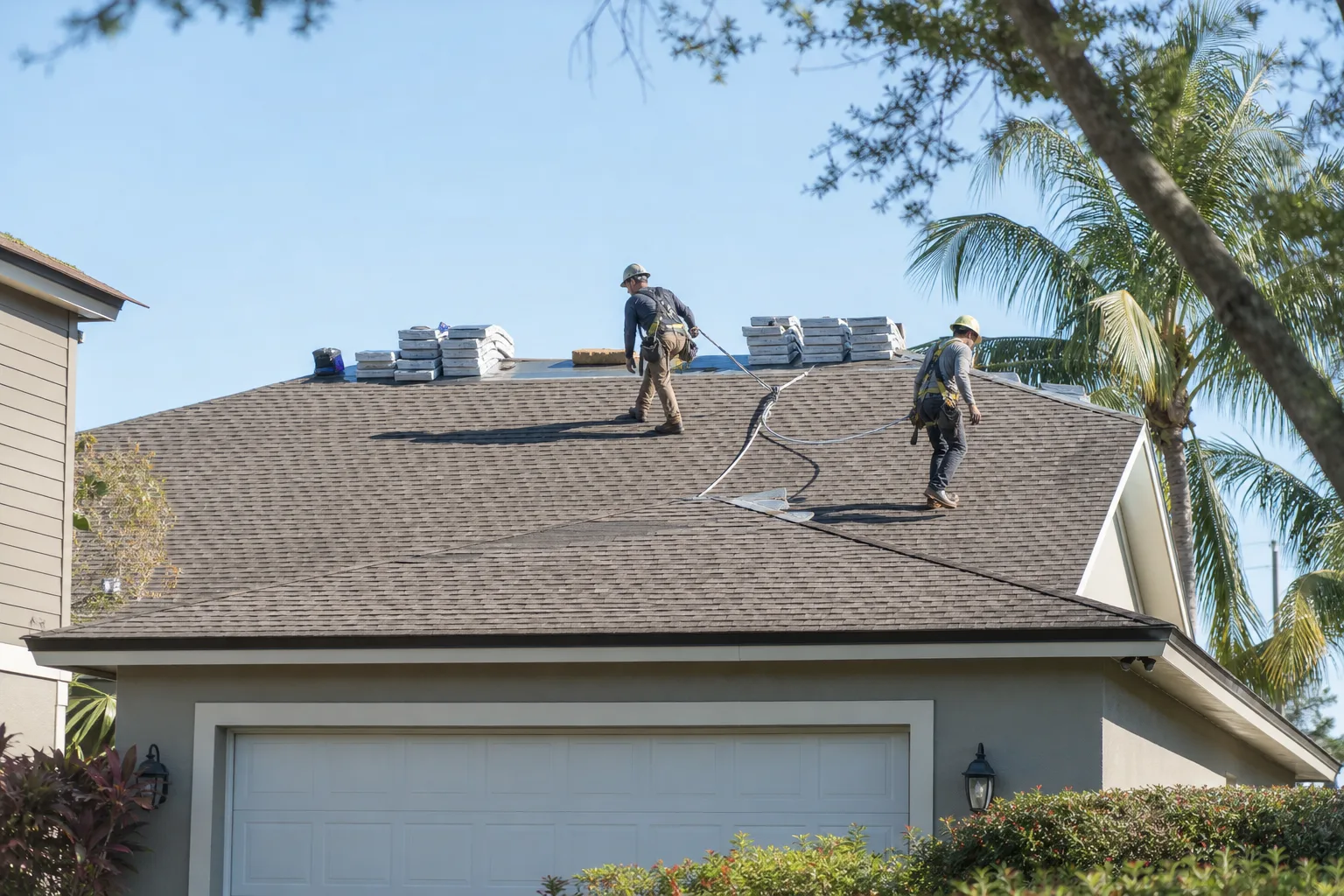
The honest recommendation depends on what the roof sits on. Here’s how the same comparison plays out across the housing stock we actually work on.
- A 1940s shipyard-worker bungalow in the Iron Triangle or South Richmond: low-slope porch roofs and original framing are common. If any section sits below a 2:12 pitch, neither 3-tab nor standard architectural is the right product, and you need an honest contractor to surface that before the quote, not after the permit review.
- A 1950s-60s stucco tract home in Parkview or Verde: these roofs are exposed to the wind funnel and usually have simple, walkable geometry. This is where the architectural upgrade pays off cleanest.
- A mid-century ranch out toward Richmond Heights or the El Sobrante fringe: more shelter from the flatland gusts, but heavier fog exposure on west-facing planes. Sealed tabs keep moisture out of the decking longer.
- Any older flatland home with an unpermitted 1940s-70s addition: a re-roof over a conversion often triggers a plan-check scramble for retroactive permits. We flag this before we quote, so the number you see is the number you pay.
Site conditions on Richmond’s east side and waterfront lots add another layer. Fill soils and legacy industrial contaminants from the shipyard and refinery era can force testing before a foundation pour, and that reality occasionally affects a full re-roof with a structural repair attached. When it does, we tell you up front rather than burying it in a change order.
Why Groundwork Construction Co. of Richmond
Groundwork Construction Co. of Richmond backs every roof with our 730-Day Done Right Promise: if it’s not done right, we make it right. That’s one of the longest workmanship guarantees in the residential construction space, and it’s in writing. Our technicians have up to 12 years of experience, every one of them is background-checked, and they show up in uniform. Calls are answered by a live person 24/7, so you’re not leaving a voicemail on a Friday and waiting until Monday. If you’re weighing a full roof against a targeted repair, our Roofing page covers the install process in more detail, and our home page lays out the full range of work.
We also carry a curated set of brand partners across every trade, from GAF and CertainTeed on roofs to Therma-Tru and ES Windows on doors, so you’re choosing quality rather than whatever was on the shelf. Financing is available at 0% for 18 months, and estimates and design consults are free.
FAQs
Yes, for most Richmond homes it’s one of the few roofing decisions with a defensible ROI calculation. The upgrade typically adds $800 to $1,500 to a re-roof, and it buys a jump from roughly 60 mph to 130 mph wind-uplift rating in a city where the Carquinez Strait funnel regularly produces 50 to 60 mph gusts. Call (833) 700-4611 for an exact quote, and estimates are free.
A full architectural shingle roof replacement in Richmond runs $8,000 to $20,000 depending on square footage, pitch, and how much decking needs repair. A 3-tab roof lands at the low end of that band; the architectural upgrade adds $800 to $1,500 on a typical bungalow. Call (833) 700-4611 for a no-surprise number.
Yes, and the difference is structural, not cosmetic. Architectural shingles are laminated, which makes each tab heavier and stiffer, and that extra mass resists the edge-lift failure that causes most wind-driven rain intrusion in bay-adjacent neighborhoods. The gap is more pronounced here than in sheltered inland locations. Call (833) 700-4611 to have your roof assessed.
No. Below a 2:12 pitch, neither 3-tab nor standard architectural shingles are the right product, and you need a low-slope system instead. We surface that before the quote rather than after the permit review. Call (833) 700-4611 and we’ll tell you straight which system your roof needs.
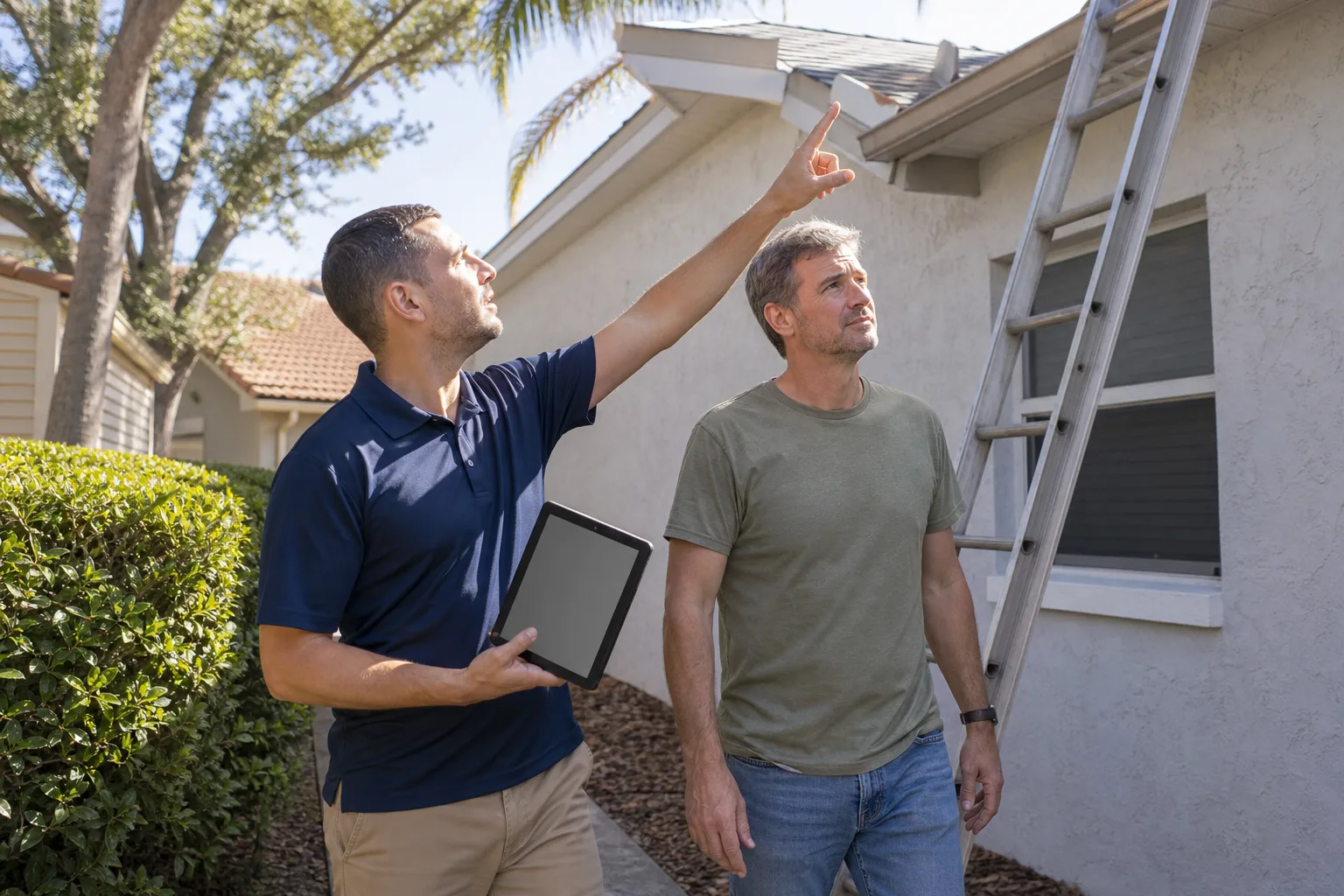
If you’d rather have it looked at, Groundwork Construction Co. of Richmond offers a no-pressure assessment in Richmond. We’ll check your pitch, your decking, and how the wind actually hits your roof, then give you an upfront price with no surprises. Call (833) 700-4611 for a free estimate. You can also see the neighborhoods we work on our Richmond service area page.
Written by the team at Groundwork Construction Co. of Richmond, serving Richmond, CA.