
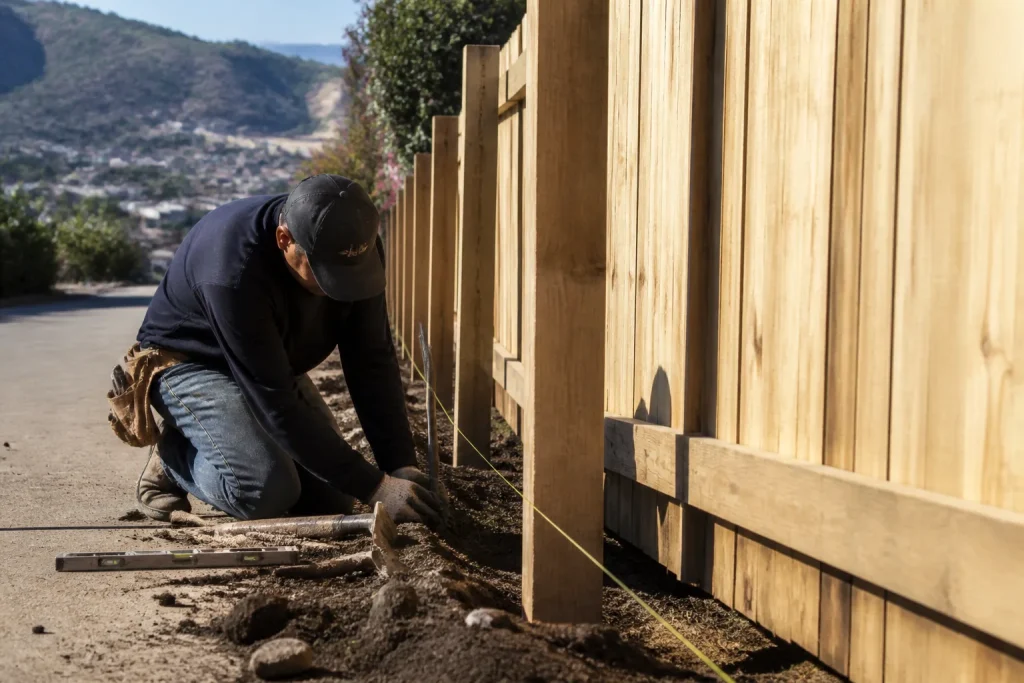
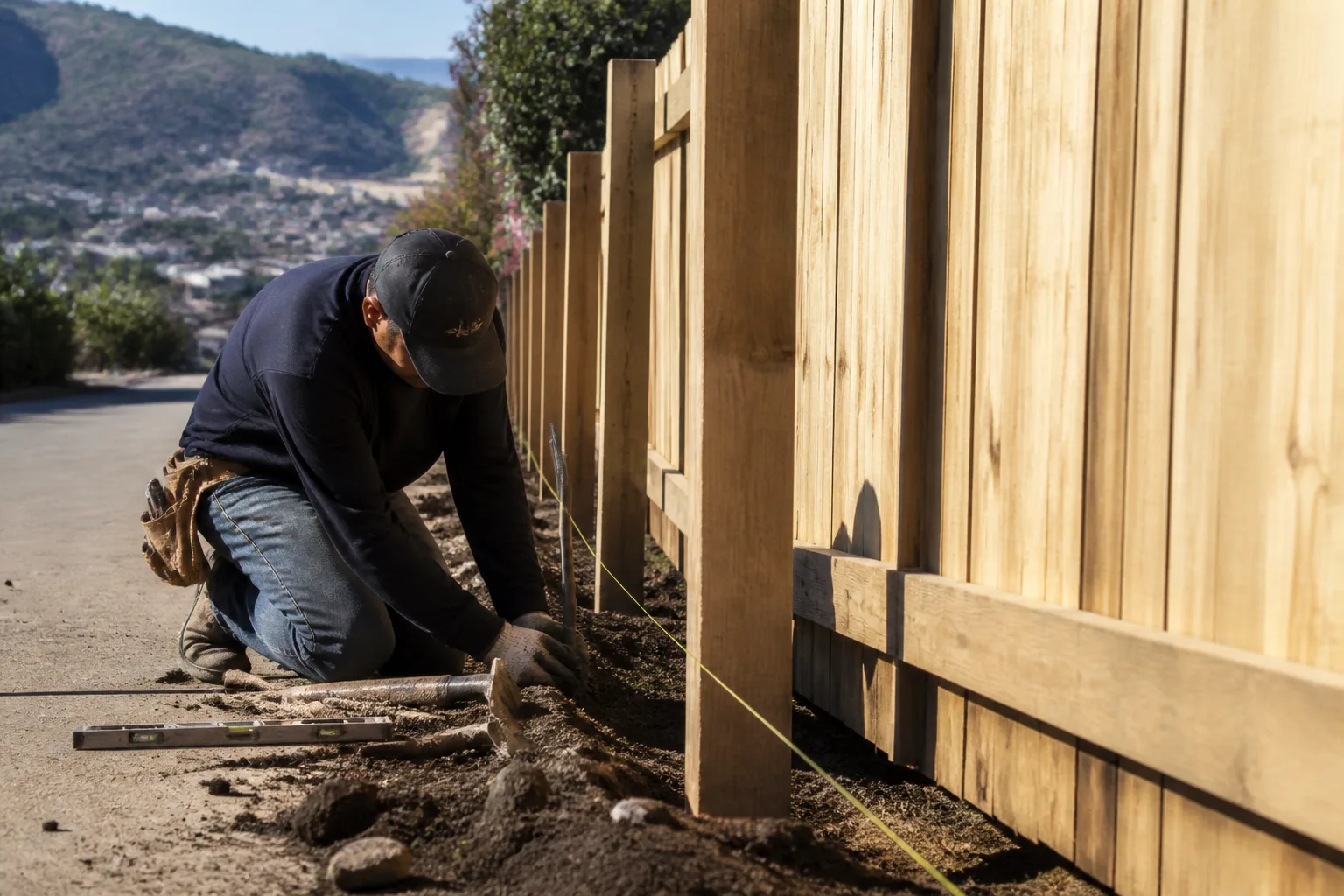
5 Mistakes to Avoid With Fence Installation
The number one fence warranty call we get isn’t about a broken board or a sagging gate. It’s a leaning post that was set in the wrong concrete mix for Bay Area soil. The fence looked perfect on day one and started failing 18 months later. Most fence mistakes in Richmond aren’t visible at handoff. They’re engineered into the project from the start and surface long after the installer has cashed the check. Here are the five we see most often, and how to sidestep each one before the first post hole gets dug.
If you’d rather not gamble on that outcome, call (833) 700-4611 and we’ll walk your property with you.
Key Takeaways
- Fast-set concrete in Richmond’s clay soil traps moisture and rots posts from the inside out.
- Build over a property line and you can be ordered to tear the whole fence down.
- Coastal wind exposure near the Bay demands deeper posts than inland ratios suggest.
- Materials rated for dry climates won’t survive Richmond’s humidity swings.
- Richmond code enforcement can require full removal when permits aren’t pulled.
Mistake #1: Setting Posts in Fast-Set Concrete Without Planning for Clay Drainage
Richmond sits on a lot of heavy clay soil, and clay holds water. When a crew dumps fast-set concrete around a post and moves on, that mix cures hard and dense, which sounds good until you realize it also traps moisture against the wood. In Richmond’s wet winters and foggy mornings, that moisture has nowhere to go. The post wicks it up, and rot starts at the base, right where you can’t see it. We’ve pulled posts in Richmond that looked solid above grade and were hollow at the waterline.
The fix isn’t exotic. It’s planning for drainage before the concrete goes in:
- Set posts in a gravel base so water drains away from the wood instead of pooling around it.
- Choose concrete that works with the soil, not against it. Fast-set concrete isn’t always wrong, but it has to be matched to drainage conditions.
- Slope the ground at the base of each post so runoff moves away from the fence line.
- Crown the concrete cap slightly so water sheds instead of sitting on top.
None of this costs much. All of it is skipped by crews racing to finish a Richmond job in a day. The homeowner pays for that shortcut two winters later.
Mistake #2: Skipping a Property Survey and Building on the Neighbor’s Land
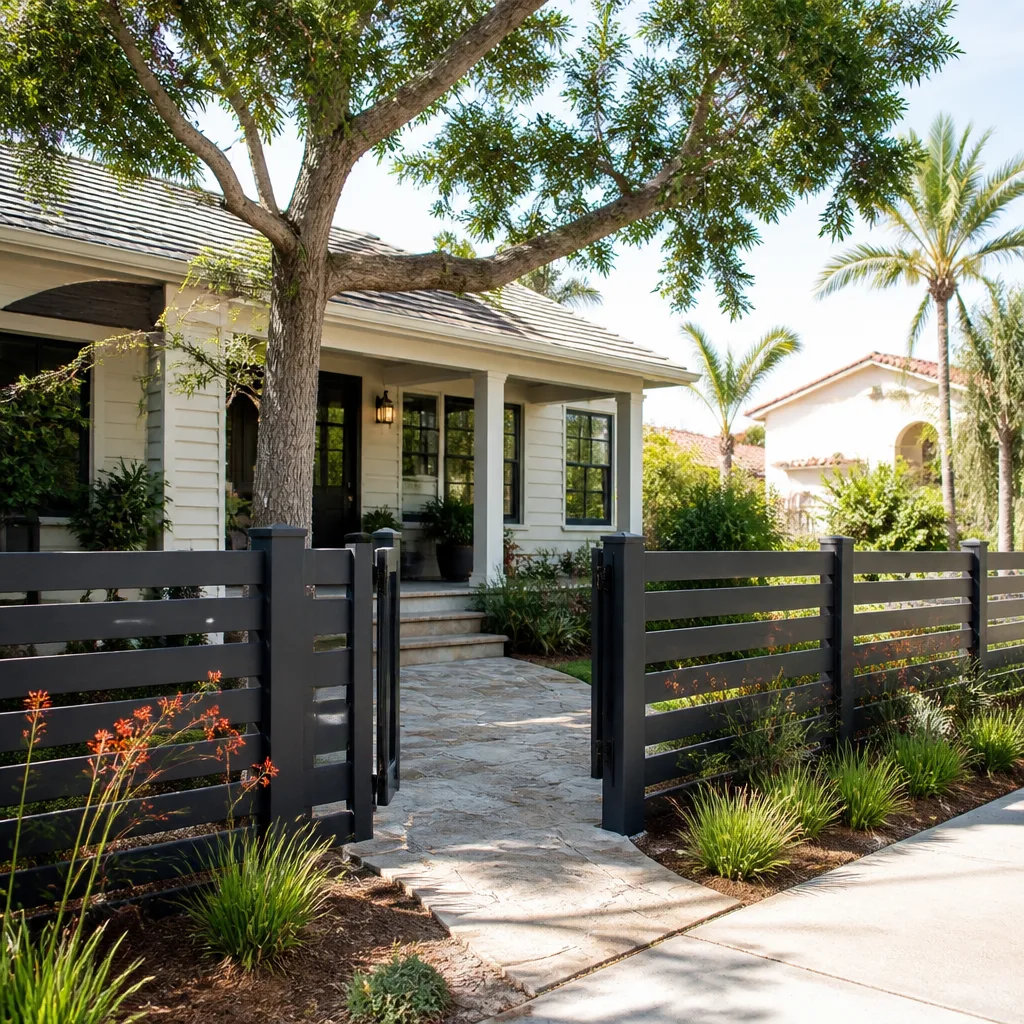
Property lines in Richmond don’t always match what a fence looks like they should be. Older neighborhoods have fences built 6 inches off, easements nobody remembers, and lot lines that run at an angle. Install a fence without a survey and you can end up with a structure on your neighbor’s land. That’s not a small problem. A neighbor can demand removal, and in the worst cases you’re paying to tear down a fence you just built and start over.
Here’s what a survey protects you from:
- Encroachment claims that force full removal of the fence, at your cost.
- Disputes that surface years later when the property changes hands.
- Easement conflicts where utilities have legal right of access through your fence line.
- Setback violations that trip a code complaint before the fence is even finished.
A plat map is a start, but it isn’t a survey. In Richmond, we always recommend a current survey before a single stake goes in the ground. The cost is a fraction of what a legal fight or a forced rebuild runs. An improperly placed fence can void your investment entirely, and no warranty covers a problem the property line created.
Mistake #3: Using the Wrong Post Height-to-Depth Ratio for Bay Wind Exposure
A fence next to the Bay catches wind that a fence three blocks inland never sees. Post depth and footing size have to account for that. The common rule of thumb is that a post should be buried about a third of its above-ground height, which works fine in a sheltered yard. On wind-exposed lots in Richmond, that ratio leaves posts undersized for the load. A 6-foot fence with posts set only 2 feet deep will start to lean after a couple of windy seasons.
Deeper posts, wider footings, and proper bracing aren’t upsells. They’re what keeps a fence standing when the wind picks up off the water. The mistake is treating every Richmond property like it’s sheltered when your specific lot may not be. Wind exposure varies block to block, and a good installer reads the site before digging.
We’ve seen fences come back to us leaning 15 degrees off plumb less than two years in, all because the footings were sized for a calm yard. If you’re on a ridge, near open water, or at the end of a wind tunnel between buildings, ask your installer how they’re accounting for it. The answer tells you a lot about the crew.
Mistake #4: Buying Materials Rated for a Dry Climate
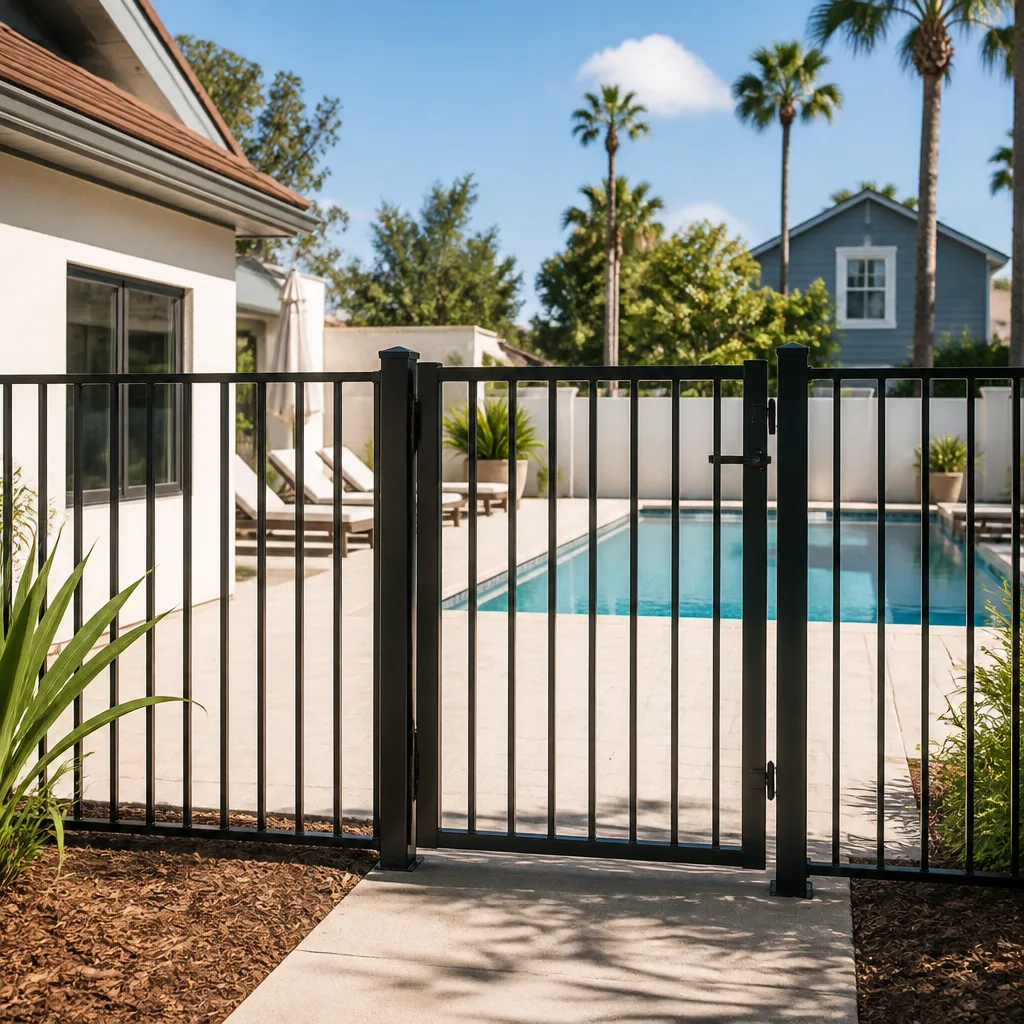
A lot of big-box fence material is rated for dry, inland climates. Richmond is not that. Coastal humidity, salt air, and wet winters punish anything that wasn’t built for moisture. Cedar and pressure-treated pine can both work in Richmond, but the grade and treatment matter. Untreated pine set in coastal humidity is a countdown clock. Steel systems need the right coating to resist corrosion near the Bay.
What to look for when you’re choosing materials for a Richmond fence:
- Wood rated for ground contact and wet climates, not just general-purpose lumber.
- Cedar with the right grade and a finish that can handle humidity swings.
- Steel or aluminum with corrosion-resistant coating if you’re going metal near the coast.
- Fasteners and hardware rated for coastal exposure. A rusted hinge can fail a gate that’s otherwise sound.
The material shelf at a Richmond yard looks a lot like the shelf anywhere else, which is the trap. Cheap lumber priced for a dry market still goes in the ground here. We specify materials the way we do windows and roofs, sticking to brands we trust over whatever’s in stock. For siding and trim, that often means James Hardie, and the same instinct applies to the fence line. Buy quality, not availability.
Mistake #5: Hiring on Price Alone and Skipping the Permit
The lowest bid is often the crew that doesn’t pull a permit. In Richmond, fences over a certain height and fences in certain setback zones need a permit, and code enforcement can require full removal when one isn’t on file. That’s the mistake that stings the most, because the fence itself might be built fine. It comes down for paperwork reasons, and the money is gone.
Before you hire anyone in Richmond, ask three questions:
- Will you pull the permit, and can I see it?
- Are you licensed and insured, and can I see the certificate?
- Is the price a written, line-item quote or a verbal ballpark?
A contractor who hesitates on any of those is telling you something. Permit work also means inspection, and pass-fail inspection is the cheapest quality check you’ll ever get. The installers who skip it are usually skipping the concrete and the survey too.
When to Call a Pro
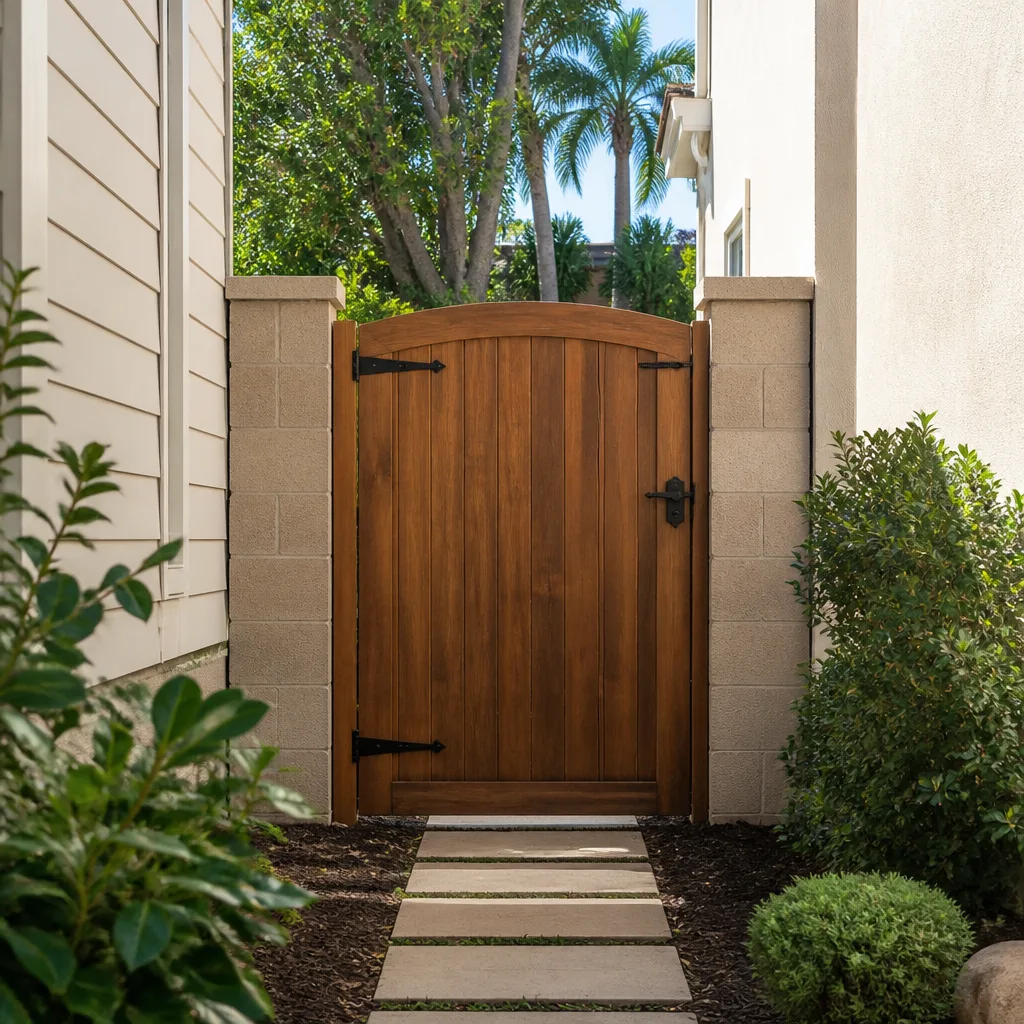
Some of this is homeowner territory. Clearing the fence line, checking grades, deciding where the gate goes. But post depth, footing size, drainage engineering, and permitting are where Richmond fences fail, and they’re the parts a homeowner can’t easily verify. That’s the line where calling a pro saves money instead of spending it. Our technicians have up to 12 years of experience and every job carries our 730-Day Done Right Promise: if it’s not done right, we make it right. Background-checked, uniformed technicians, upfront pricing, and no change orders once the work starts. From foundation to finish line, the point is a fence that’s still standing and still on your side of the line years later.
Related services in Richmond: if your project is more than a fence, we also handle Driveway & Pavers in Richmond and Home Additions & ADU in Richmond. Learn more about Groundwork Construction Co. of Richmond home or see our full Fence Installation in Richmond service page.
The Bottom Line
Fence failures in Richmond almost always trace back to something decided before the first board went up: wet clay soil and fast-set concrete, a missing survey, footings too shallow for Bay wind, materials rated for the wrong climate, or a crew that didn’t pull a permit. Get those five right and the fence should outlast the warranty. Get them wrong and you’ll be paying twice. The fence needs to be built for the soil, the wind, and the climate of the specific lot, not for a template.
If you’re in Richmond and want your fence done to that standard, Groundwork Construction Co. of Richmond offers free estimates. Call (833) 700-4611 and we’ll walk the property, answer your questions, and give you a written quote with no surprises. We also offer 0% financing for 18 months and $1,000 off projects over $10,000.
Frequently Asked Questions
Fence installation in Richmond typically runs $35 – $65 per linear foot for wood and $55 – $90 per linear foot for steel or aluminum, with the total depending on length, elevation, wind exposure, and whether a survey or permit is needed. Call (833) 700-4611 for an exact quote. Estimates are free.
Often yes, especially for fences in setback zones or above certain heights, and Richmond code enforcement can require full removal when a permit wasn’t pulled. Always ask your installer whether they’ll pull the permit and show you the paperwork before work begins.
Posts should be set at least a third of their above-ground height deep, often deeper on wind-exposed lots near the Bay, and set with the right drainage so Richmond’s clay soil doesn’t hold water against the wood. Shallow posts and fast-set concrete are the two biggest causes of early failure.
It shouldn’t if you got a written, line-item quote. We hold firm upfront pricing with no change orders, so the number you see is the number you pay. Call (833) 700-4611 to schedule a free estimate.
Written by the team at Groundwork Construction Co. of Richmond.
Need Construction Help?
Call Groundwork Construction Co. of Richmond - licensed & insured, here with fast after-hours help in Richmond.
(833) 700-4611