
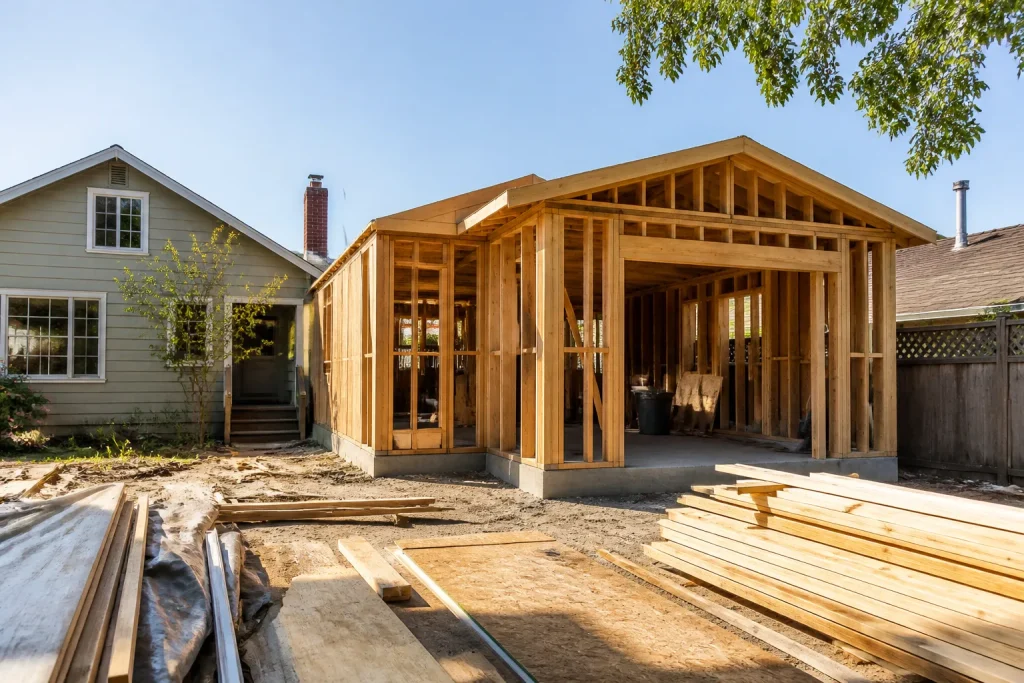
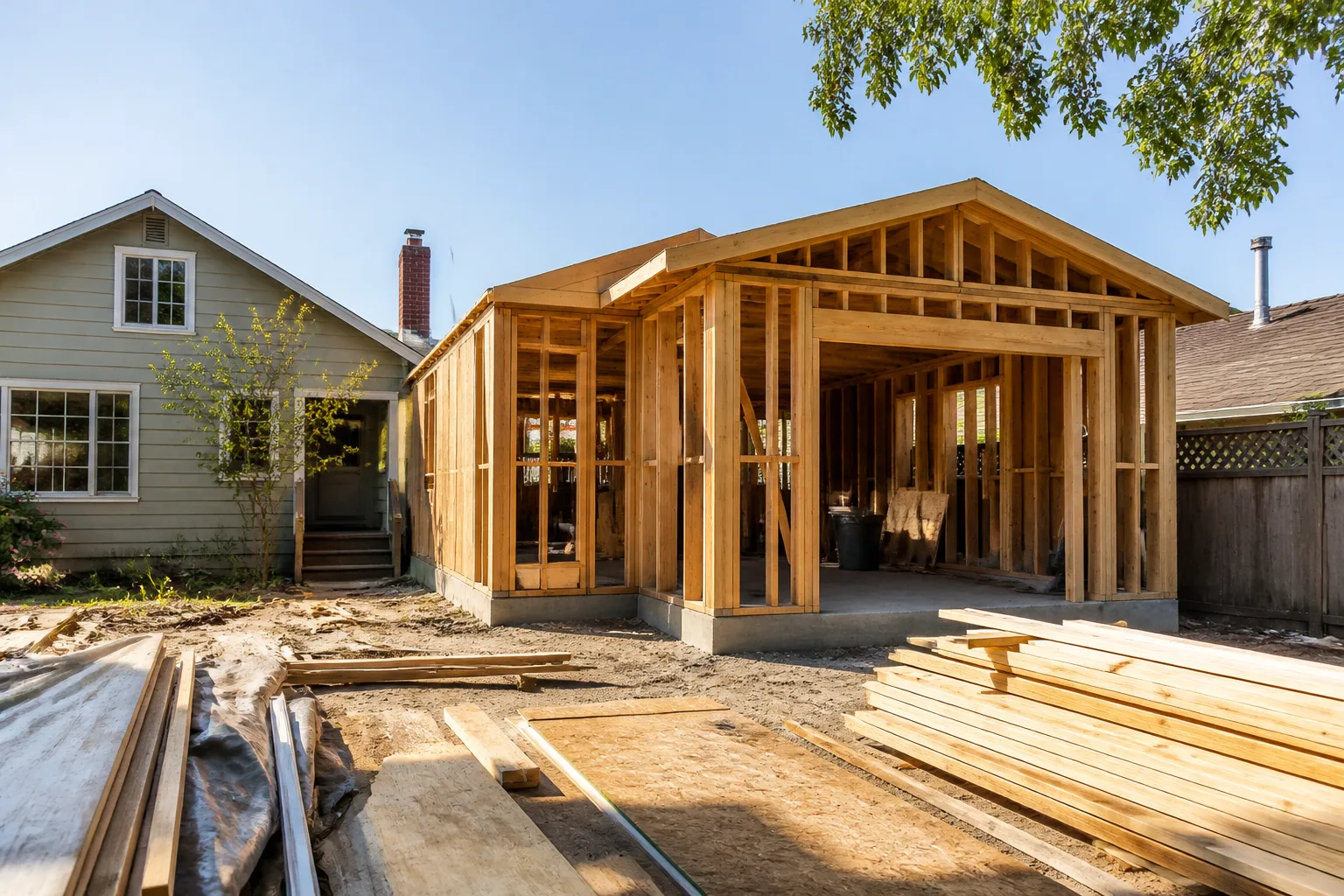
5 Mistakes to Avoid With Home Additions & ADU
The most expensive ADU mistake we see in Richmond isn’t a bad finish choice. It’s ordering a custom modular unit before anyone confirmed the setback requirements on the lot, which can make the whole unit non-compliant before it ever leaves the factory. The five mistakes below are all about sequence, not style. Get the order of operations right and your budget holds. Get it wrong and you’re paying twice for the same work. If you’d rather have someone walk your lot and tell you the real order of operations up front, call (833) 700-4611 and we’ll set up a free estimate.
1. Skipping the Geotechnical Soil Report

A soil report is the cheapest insurance on a home addition in Richmond, and skipping it is the mistake that costs the most later. Richmond sits on pockets of expansive clay, and that clay swells when it’s wet and shrinks when it dries. Generic plans drawn for a flat lot in a mild climate don’t account for it. You end up with a foundation that moves, cracks in the drywall within a year, and doors that stop closing square.
A geotechnical report tells your engineer exactly what’s under the footprint: clay depth, bearing capacity, groundwater behavior. From there, the foundation gets designed for the actual dirt, not a template. On Richmond lots we often see the report push the design toward deeper footings, a pier system, or a post-tension slab. That’s money spent up front to avoid cracking and settlement later. The report typically runs a few thousand dollars and takes a couple of weeks. Replacing a failed foundation can run into the tens of thousands, plus the disruption of tearing back into a finished addition.
If your contractor hands you a stock plan and says the soil report is optional, that’s your cue to ask harder questions. On expansive clay, it’s not optional.
2. Designing to Maximum Square Footage Without Checking Utility Capacity
Square footage is the number everyone fixates on. The number that blows up the budget is electrical capacity. An ADU with its own kitchen, laundry, water heater, and HVAC can push a Richmond home past what the existing electrical service panel can carry. When that happens, you’re looking at a full panel upgrade and possibly a service line upgrade from the utility, and that changes your budget significantly.
Before you fall in love with a floor plan, have someone check:
- The main service panel. An older 100-amp panel usually can’t support a second dwelling unit. Upgrading to 200 amps is common.
- The water line and meter. A separate unit adds fixtures and demand. Sometimes the lateral needs upsizing.
- Sewer capacity and connection. Some Richmond lots have constraints on how a second unit ties into the sewer.
- Gas service. If the ADU runs gas appliances, the meter and line size matter.
Checking utility capacity before design locks in is how you avoid discovering a five-figure electrical surprise after the plans are stamped. When we scope a Home Additions & ADU in Richmond project, the utility check happens in the first conversation, not the last. Our technicians have up to 12 years of experience reading exactly these constraints on older Richmond housing stock.
3. Pulling an Owner-Builder Permit on a Rental ADU

Owner-builder permits look like a way to save money. On an ADU you intend to rent out, they’re a trap. An owner-builder permit says you’re doing the work yourself and accepting the liability that comes with it. The moment you rent that unit to a tenant, you’ve created a paper trail that can complicate insurance and financing down the line.
Here’s how it plays out. Your homeowner’s policy may not cover a rental unit built under an owner-builder permit the way it would cover a professionally built one. Lenders get nervous about an owner-built structure when you refinance or sell, and some won’t count its value the same way. The complications follow the property, which means they surface years later at the worst possible moment, usually during a sale or a claim.
The math rarely works. The savings from pulling the permit yourself are small next to the risk you’re carrying on an income property. If the ADU is for a family member and never rented, the calculus is different. If it’s a rental, use a licensed contractor and keep the record clean. It’s a decision you make once at the start, and it’s hard to undo.
4. Finalizing Interior Finishes Before Rough Inspections Pass
Every wall in an addition has two lives: before drywall and after. Changes made in the first life are cheap. Changes made after the wall is closed cost three to five times as much, because now someone has to open the wall, move things, re-inspect, and close it back up.
This is why we tell Richmond homeowners to lock the layout and rough-in decisions before the rough inspection, not after. That means the outlet and switch locations, the plumbing rough-in for the bathroom, the HVAC runs, and the framing details are all final before drywall goes up. It’s fine to still be choosing paint and tile at that stage. It’s expensive to decide you want the bathroom sink on the other wall after the inspector has signed off and the drywall crew has left.
The good news: good design has a rhythm. Selections that live on the surface, like Toto fixtures, tile, and Schluter shower systems, can wait until after rough-in. Anything that lives inside the wall cannot. Sorting your choices into those two buckets early keeps you out of the rework trap.
5. Not Clarifying Scope Boundaries in Writing
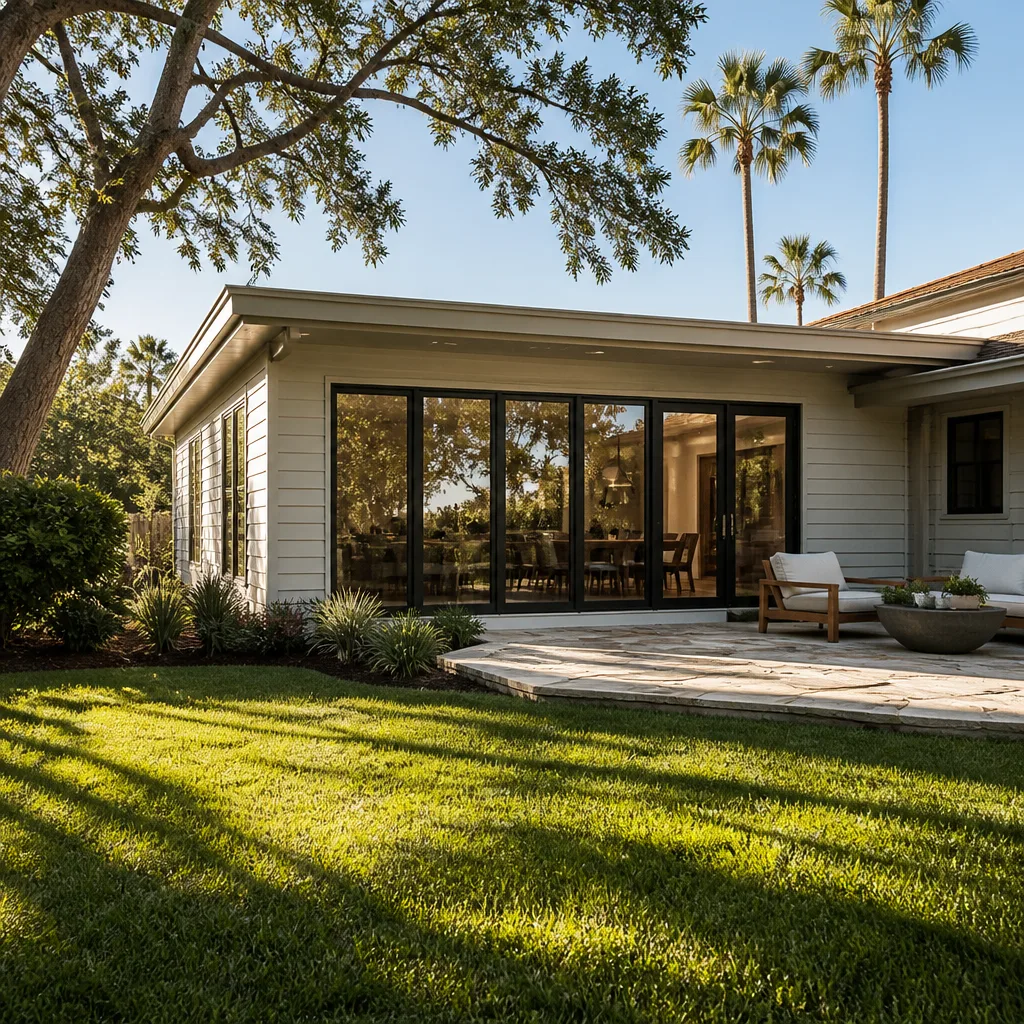
ADU projects are where scope creep quietly eats budgets. A vague bid plus a verbal “we’ll figure it out” is how a project runs 20% over without a single obvious overrun. Each small addition feels reasonable in the moment, and together they sink the budget.
A fixed-scope agreement in writing prevents this. It should spell out:
- What’s included in the base price, line by line.
- What’s excluded, from landscaping to final utility connections to appliance installation.
- How change orders work, including who signs off and how pricing is set.
- Who pulls the permits and who handles the inspections.
Upfront pricing, no surprises, means the number you see is the number you pay, and anything outside that number is a documented change order, not a surprise invoice. The other half of the equation is who does the work. Background-checked, uniformed technicians on every job is a standard we hold, and it means the people on your property are verified. When the scope is written down and the crew is accountable, you can actually plan around a budget instead of hoping it holds. Everything we build is covered by our 730-Day Done Right Promise, so if something isn’t done right, we make it right.
The Bottom Line
Sequence is the whole game with a home addition or ADU in Richmond. Run the soil report before the foundation design. Check utility capacity before the plans lock. Use a licensed contractor and a clean permit on anything you’ll rent. Lock rough-in decisions before drywall. Put the scope in writing with fixed pricing. Get those five in order and the project holds. Skip them and you’ll pay for the same work twice.
If you’re in Richmond and want the order of operations mapped out for your lot, Groundwork Construction Co. of Richmond offers free estimates, call (833) 700-4611. Calls are answered by a live person, 24/7, no voicemail. We also bring 0% financing for 18 months and $1,000 off projects over $10,000 to the table, which makes a large addition easier to plan around.
Related services in Richmond: if your addition project reshapes the driveway or the yard, our Driveway & Pavers in Richmond and Fence Installation in Richmond teams can handle those pieces alongside the build. You can also start at our Groundwork Construction Co. of Richmond home page to see all seven service lines.
Frequently Asked Questions
A home addition in Richmond typically runs from the high five figures into the low six figures depending on size, foundation type, and how much utility work is needed. Expansive clay foundations and electrical panel upgrades are the two line items that move the number most. Call (833) 700-4611 for an exact quote, estimates are free.
Yes, on any lot with expansive clay, and most Richmond lots have it. A geotechnical report tells your engineer how to design the foundation so it doesn’t move and crack. Skipping it to save a few thousand up front often costs far more in rework down the road. Call (833) 700-4611 and we’ll walk you through what your lot needs.
You can, but it can create insurance and financing complications that follow the property. Lenders and insurers may treat an owner-built structure differently, and those issues surface when you refinance or sell. On a rental, a licensed contractor and a clean permit record is the safer path. Call (833) 700-4611 to talk through your situation.
It shouldn’t if your contractor gave you a fixed-scope written agreement with upfront pricing. The number you see is the number you pay, and any change should be a documented change order you approve, never a surprise invoice. Call (833) 700-4611 for a free estimate with line-item pricing.
Written by the team at Groundwork Construction Co. of Richmond.
Need Construction Help?
Call Groundwork Construction Co. of Richmond - licensed & insured, here with fast after-hours help in Richmond.
(833) 700-4611