Last updated November 18, 2026






Free written scope consultation - allowances, timeline, and change-order rules on paper before a single trade is scheduled
How Long Does Bathroom Remodeling Take? Timelines and What to Expect
The average homeowner is told their bathroom remodel will take two weeks. The industry average for a full gut remodel is four to six weeks – and that’s when everything goes right. We’ve walked into plenty of Richmond bathrooms where the last contractor promised a two-week turnaround and the family ended up sharing a single hall bath for two months. Here’s the honest version: a week-by-week sequence for demo, rough-in, waterproofing cure, tile, fixtures, and punch list, plus why permitting in Contra Costa County adds calendar days most bids conveniently skip. You’ll leave knowing what a written schedule should say and how to tell the difference between a cosmetic refresh and a structural remodel.
Quick Answer
A full gut bathroom remodel typically takes four to six weeks from demo to final walkthrough, while a cosmetic refresh (paint, vanity swap, new floor tile over sound substrate) runs one to two weeks. Add one to three weeks to the front of any project for permit review and material lead times in Contra Costa County. If someone quotes you ten days for a full remodel with a permit, they’re either skipping the inspection or planning to absorb the delay silently and blame supply chain later.
Styles & brands we work with
- Kitchen remodeling
- Bathroom remodeling
- Home additions & ADU
- Roofing
- Windows & doors
- Driveway & pavers
- Fence
Table of Contents
- Cosmetic Refresh vs. Full Remodel: Which One Do You Actually Need?
- The Week-by-Week Schedule of a Full Bathroom Remodel
- Why Contra Costa County Permits Add Days or Weeks
- Material Lead Times and Why Selection Happens Before Demo
- Waterproofing Cure Time: The Step Everyone Rushes
- What a Legitimate Written Schedule Looks Like
- Red Flags in a Vague ‘Estimated Completion’ Clause
- Common Mistakes and When to Call a Professional
Cosmetic Refresh vs. Full Remodel: Which One Do You Actually Need?
The single biggest reason timelines blow up is scope mismatch. Homeowners get a two-week bid for what they think is a cosmetic refresh, then the contractor opens a wall and finds a forty-year-old lead drain, rotting subfloor around the toilet flange, or knob-and-tube wiring feeding the vanity. That’s a full remodel with a remodel schedule, not a two-week paint job. Knowing which one you’re buying before the bid protects you.
A cosmetic refresh applies when the tile substrate, plumbing stack, and electrical are sound. You’re changing surfaces and fixtures. A full remodel applies when the layout changes, when the shower waterproofing has failed (look for bubbling paint at the baseboard outside the shower wall), when you’re moving the toilet or adding a second sink, or when a bathroom in a pre-1960 Richmond home still has its original cast iron drain. Those are the triggers.
Here’s the scoping distinction in plain terms:
- Cosmetic refresh (1 – 2 weeks): New vanity with existing plumbing location, paint, mirror, light fixture swap on existing wiring, floor tile over a verified solid substrate, new toilet in the same spot. No wall moves, no permit in most cases.
- Mid-scope remodel (2 – 3 weeks): Shower tile replacement with new waterproofing, new floor, vanity, toilet relocated a foot or two. Permit required if plumbing or electrical moves.
- Full gut remodel (4 – 6 weeks): Down to studs and joists. New layout, new drain and supply, new dedicated circuit, new waterproofing system, full tile. Permit and inspection required.
If you’re remodeling the bathroom alongside other work on the property – expanding the footprint, adding a second suite, tying into a new addition – that changes the schedule entirely. See our guide to Home Additions & ADU in Richmond for how bath work integrates with a larger build.
The Week-by-Week Schedule of a Full Bathroom Remodel
This is what an honest six-week full gut remodel looks like in Richmond, assuming the permit is already pocketed (we’ll cover that separately below). Day counts are approximate working days, not calendar days. Weekend crews can compress these; weather doesn’t affect interior work much, but permit office hours do.
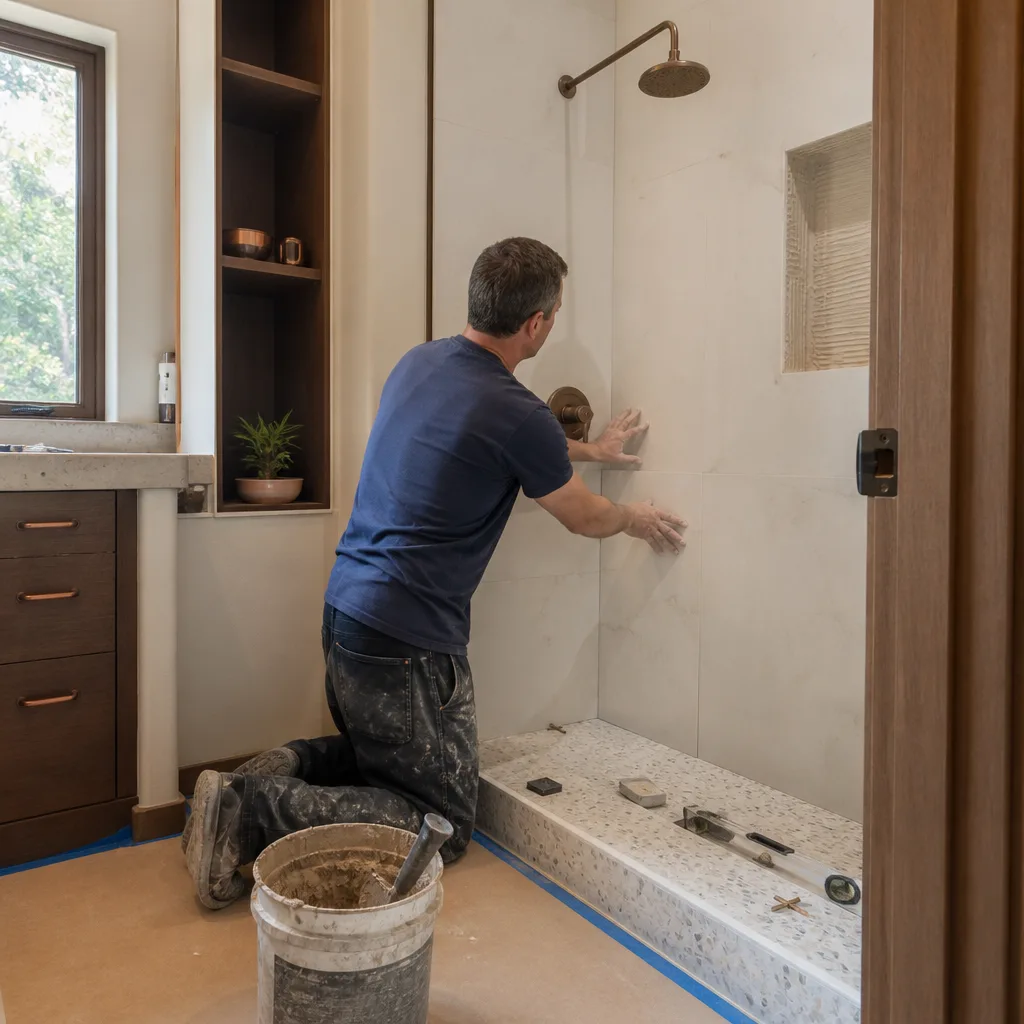
- Days 1 – 2: Demo and haul-out. Tear out tile, drywall, vanity, toilet, tub or shower pan. Haul to the dumpster. Protect the rest of the house with floor covering and plastic walls. This is when you find hidden problems – failed subfloor, wet framing, rusted drain – and it’s why a fixed-price bid needs a “hidden conditions” clause.
- Days 2 – 3: Framing corrections and rough-in plumbing. Reframe the shower for a modern pan if needed. Run new PEX or copper supply, ABS or cast iron drain, set the valve body at the correct depth for your fixture. Set electrical for the vanity, fan, and outlets (GFCI required by code within six feet of water).
- Days 3 – 4: Rough-in inspection. A Contra Costa County inspector signs off on framing, plumbing, and electrical before anything gets covered. Inspector scheduling adds a day or two of waiting; we book it the day the rough-in is done.
- Days 4 – 5: Insulation and drywall. Add sound insulation to shared walls if you want quiet. Hang and tape cement board in wet areas, moisture-resistant drywall elsewhere. Deck mud for the shower pan if you’re doing a traditional pan.
- Days 5 – 7: Waterproofing and cure. Liquid-applied membranes or sheet systems like Schluter Kerdi require a cure window before tiling – typically 24 hours for liquid, longer for some products. This is the step that gets skipped on cheap bids. No cure, no warranty, no defense when the pan leaks in year three.
- Days 7 – 10: Tile setting. Floor first, then walls, then shower. Grout after the setting bed cures. Large-format tile handles differently than 3-inch hex; ask your setter which waterproofing system they’re using and why.
- Days 10 – 12: Fixture install. Vanity, toilet, faucets (a Grohe or Sterling fixture set with quality cartridges goes in once), shower trim, mirror, lighting, fan.
- Days 12 – 14: Punch list and final inspection. Touch up, silicone, adjust doors, walk through with the homeowner. Final inspection closes the permit.
That’s a tight, honest schedule. Realistically most Richmond projects run 5 – 7 weeks because of one thing: inspection scheduling and material deliveries don’t move on your contractor’s timeline. A contractor who tells you “six weeks” and pencils four is planning to eat that risk without telling you. We build the buffer in out loud.
Why Contra Costa County Permits Add Days or Weeks
Permit review in Contra Costa County for a residential bathroom remodel runs one to three weeks for over-the-counter submittals and longer if the scope touches structural framing, adds square footage, or triggers Title 24 energy compliance on windows. Contractors who quote a start date before the permit is in hand are gambling with your money, because if the plan reviewer kicks it back for revisions, the whole schedule slides.
Here’s what actually happens:
- Application and plan review: 5 – 15 business days for a straightforward bath remodel.
- Revision cycles: If the reviewer asks for a correction (venting, structural calc, GFCI proximity), add another 5 – 10 business days.
- Inspection scheduling: Rough-in inspections in Richmond typically open within 1 – 3 business days. Miss the window because your crew isn’t ready, and you lose a week of momentum waiting for the next slot.
- Finaled permit: A home sale in Richmond requires open permits to be finaled or disclosed. An unfinaled bath permit is a negotiating chip you don’t want on the table.
Richmond has a lot of pre-war and mid-century homes in neighborhoods like North & East, Point Richmond, and the Richmond Annex where the existing plumbing is non-conforming to current code. Any remodel touching that system triggers a code upgrade – a bigger scope than a like-for-like swap. A contractor who “knows a guy at the city” isn’t the answer; a contractor who pulls a clean permit and asks for corrections before demo is.
Material Lead Times and Why Selection Happens Before Demo
The most common timeline killer isn’t on the jobsite – it’s in the showroom. Special-order tile, custom vanity cabinets, and color-matched trim can run 3 – 8 weeks. If selection happens after demo, you’re staring at a gutted bathroom for weeks waiting on a tile shipment. Any realistic schedule has selections locked and ordered before the first hammer swings.
What we order and how far ahead:
- Tile and stone: 1 – 2 weeks for in-stock, 4 – 8 weeks for special order. Order before demo.
- Vanity and cabinetry: KraftMaid or comparable semi-custom runs 3 – 6 weeks. Stock vanities in the 1 – 2 week range. Order before demo.
- Fixtures: Kohler, Grohe, and Sterling stock ships in days. Special-finish or discontinued-look items can lag; confirm availability before the design is signed.
- Glass shower enclosure: Tempered glass is cut to measure after tile is set, then 1 – 2 weeks for fabrication and install. This is why a shower door shows up at the end, not the beginning.
- Waterproofing systems: Schluter Kerdi and comparable sheet membranes are usually in stock at suppliers serving Richmond, so lead time isn’t the issue – cure time is.
Build the selection deadline into your written schedule. If a bid doesn’t include one, that’s an early warning. Material ordering rides alongside roof and window selections too – if you’re scheduling a bath remodel with a roof replacement, coordinate the delivery windows so the dumpster and material staging don’t collide. Our Groundwork Construction Co. of Richmond home page covers how we sequence multi-trade projects.
Waterproofing Cure Time: The Step Everyone Rushes
Waterproofing is the step that determines whether your remodel lasts twenty years or leaks in year three. Liquid-applied membranes need 24 hours minimum to cure before tile, sometimes two coats with a longer window between them. Sheet membranes like Schluter Kerdi go up faster because they’re bonded, not painted, but the seams still need a proper overlap and a set time before the tile bed goes over them. Rushing this step is the single most expensive mistake a tile setter can make, because the failure shows up years later in the ceiling of the room below.
On a tight schedule, waterproofing cure is where the calendar flexes. Two days of waiting looks wasteful to a homeowner watching a crew stand around. It’s not. It’s the difference between a lifetime pan and a callback. If your contractor proposes tiling the same day the membrane goes on, ask which product they’re using and read its data sheet. For most liquid systems, that answer is no.
We see the consequence of skipped cure windows in Richmond homes built in the 1940s and 1950s, where the framing has already absorbed decades of moisture from a failed mud-bed pan. Correcting those means the remodel timeline expands by a week while we sister joists and treat for mold. It’s the reason we schedule waterproofing with a hard buffer and don’t apologize for it.
What a Legitimate Written Schedule Looks Like
A real construction schedule for a bathroom remodel is one or two pages, itemized, with a start date, a target final walkthrough date, and a nested list of dependencies. Not a P6 Gantt chart – homeowners don’t need critical path analysis. They need to know which day the dumpster arrives and which day the toilet goes back in. Here’s what to insist on when you sign the contract.
- Phase-by-phase dates, not “TBD.” Demo, rough-in, rough-in inspection, drywall, waterproofing cure, tile, fixtures, punch list, final inspection. Each gets a date range, not a shrug.
- Material selection deadline. A specific date by which tile, vanity, and fixtures must be selected and ordered. Missing it is the homeowner’s line in the sand, not the contractor’s excuse.
- Hidden-conditions clause. In writing, what happens if demo reveals failed subfloor, rot, or non-conforming plumbing. Fixed price with a change-order mechanism spelled out – not a blank check.
- Inspection milestones. Which inspections are required, and who schedules them. The contractor schedules, period.
- Contingency, disclosed. A real schedule has 3 – 5 working days of built-in float for inspection delays and delivery slips. Not hidden in the “estimated completion” language – stated.
- Warranty terms on the schedule. Workmanship warranty attached to the schedule itself. Ours is the 730-Day Done Right Promise – if it’s not done right, we make it right – which is one of the longer workmanship guarantees in the residential construction space, and it starts the day of the final walkthrough, not the day of demo.
No-hassle upfront pricing and a written schedule go together. The number you see is the number you pay, and the date you see is the date you plan around. When a contractor hands you a scope of work with the timeline buried in boilerplate, that’s the red flag, not the smoke signal. For the pricing side of the same conversation, our bathroom remodeling service in Richmond walks through line-item cost ranges for the same scope discussed here.
Red Flags in a Vague ‘Estimated Completion’ Clause
Every construction contract includes an “estimated completion” sentence. The language around that sentence tells you whether the contractor is accountable or covering their tracks. Here’s what to look for when you read the contract before signing.
Green flag: “Estimated substantial completion: [date], subject to concealed conditions and inspection scheduling. Contractor will notify Owner in writing within one business day of any event that will delay the schedule by more than three working days, with a revised schedule attached.”
Red flag: “Contractor shall complete work within a reasonable time. Time is not of the essence. Contractor is not responsible for delays due to weather, material availability, or other conditions beyond its control.”
That second clause reads fine until you’re six weeks past the promised date and your family is still sharing one shower, and the contractor points at it because “material availability” is doing all the work. Here’s the checklist we suggest homeowners use when reading the schedule section of any bathroom bid:
- Is there a specific calendar date for substantial completion, or a vague “reasonable time”?
- Is “Time is of the essence” present? If it’s absent, the deadline is soft.
- Does the “delay” clause list specific triggers with notice requirements, or an open-ended catch-all with no notification duty?
- Is there a written change-order process with signed approvals before extra work happens?
- Is the warranty spelled out on the contract, with a duration and a remedy?
- Does the schedule show the inspection dates, or does it skip permit obligations entirely?
- Is the payment schedule tied to milestones, not to arbitrary dates?
Richmond contractors who survive the last market cycle are the ones who put it in writing. If the contract reads like a cover-your-tracks document, you’re going to spend the project arguing about dates instead of picking grout colors. That’s the part of the timeline you actually control – before you sign.
Common Mistakes to Avoid
- Choosing tile after demo day. Special-order tile runs 4 – 8 weeks. Richmond homeowners who wait until demo to order end up staring at an empty bathroom shell for a month while the tile ships from Italy. Lock selections before the contract, not after.
- Booking a contractor who skips the permit. A bathroom permit in Contra Costa County is a public record. An unpermitted remodel is a disclosure problem when you sell, and a code-conformance problem when the plumbing fails. Insist on a permit pulled in the company’s name, not yours.
- Accepting a two-week timeline for a full gut. It’s the industry’s oldest sales lie. Cosmetic refresh, yes. Full gut with new waterproofing and tile, no. Anyone quoting ten working days is either pricing the wrong scope or banking on your silence when it slips.
- Starting without a material selection deadline. A schedule with no selection date is a schedule that lets the contractor blame you for delivery delays. Make it mutual and put it in writing.
- Overlooking the second bathroom. Most Richmond homes only have one full bath. Plan the project around a functional half bath or a family member’s shower if you can, because six weeks of shared facilities is a different experience than two.
- Ignoring the dryer vent, exhaust fan, and moisture control. Richmond’s marine layer and damp winters make proper bath venting and insulated exterior walls non-negotiable. A remodel that skips these shows up as peeling paint on the inside of exterior walls in year four.
- Reading the warranty after you sign it. A one-year workmanship warranty is common; a two-year warranty is rare. Read the number. Ask what “make it right” means in writing. If the answer is vague, you know how it’ll go if you call about a leak.
See the difference
 Before
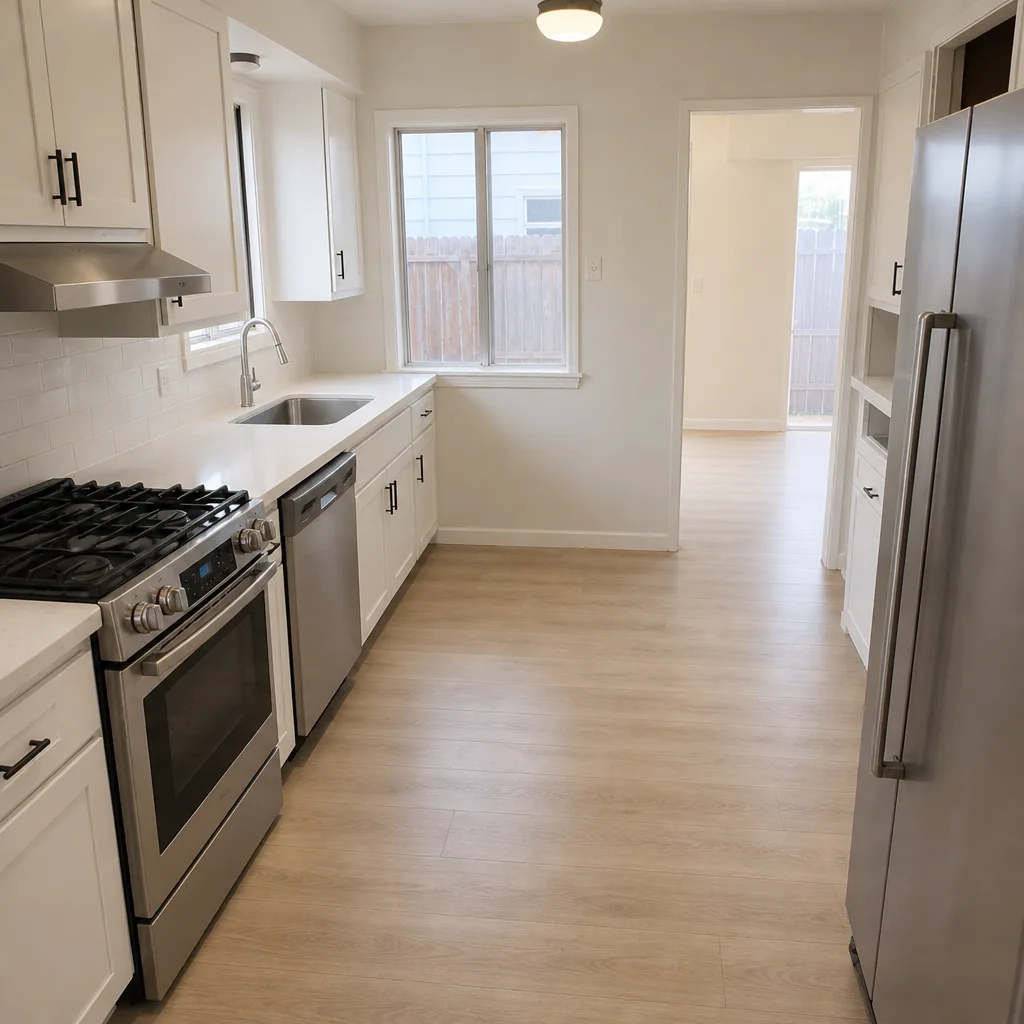 After
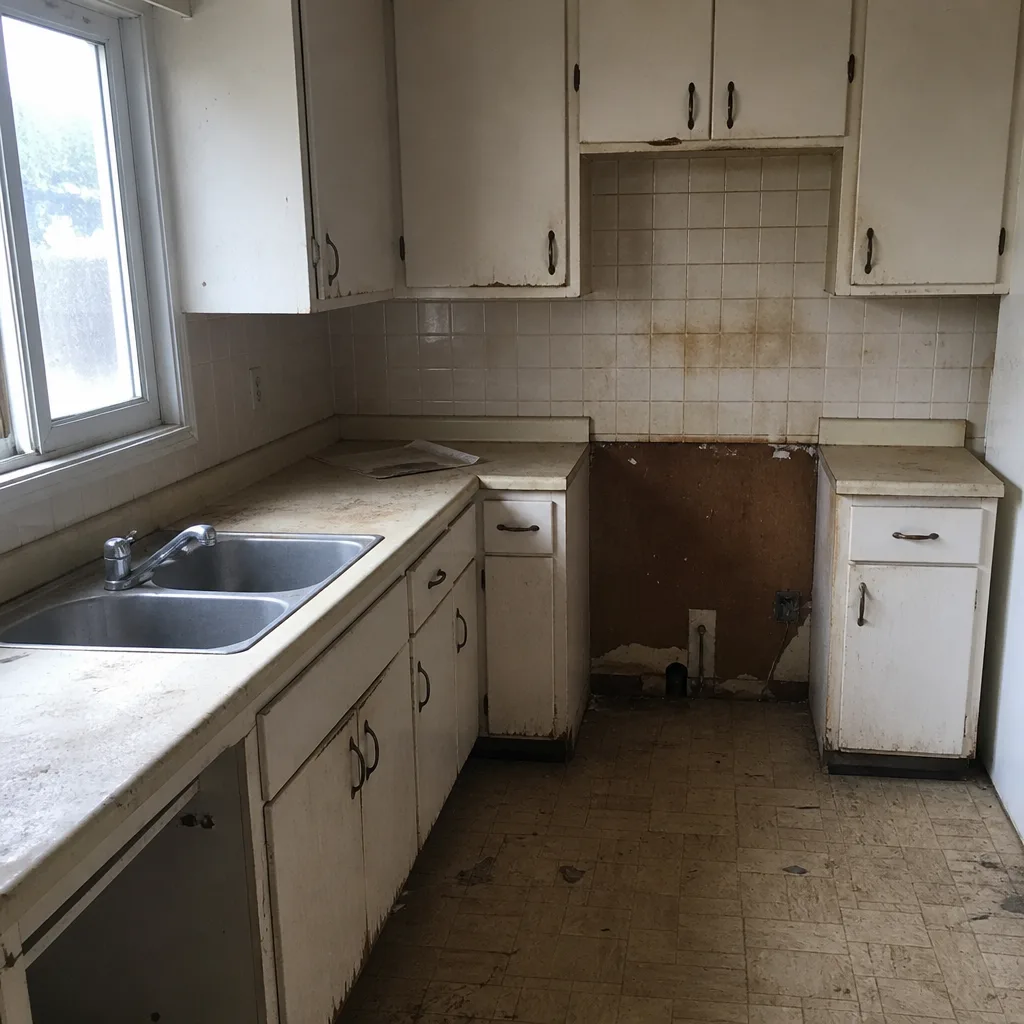 Before
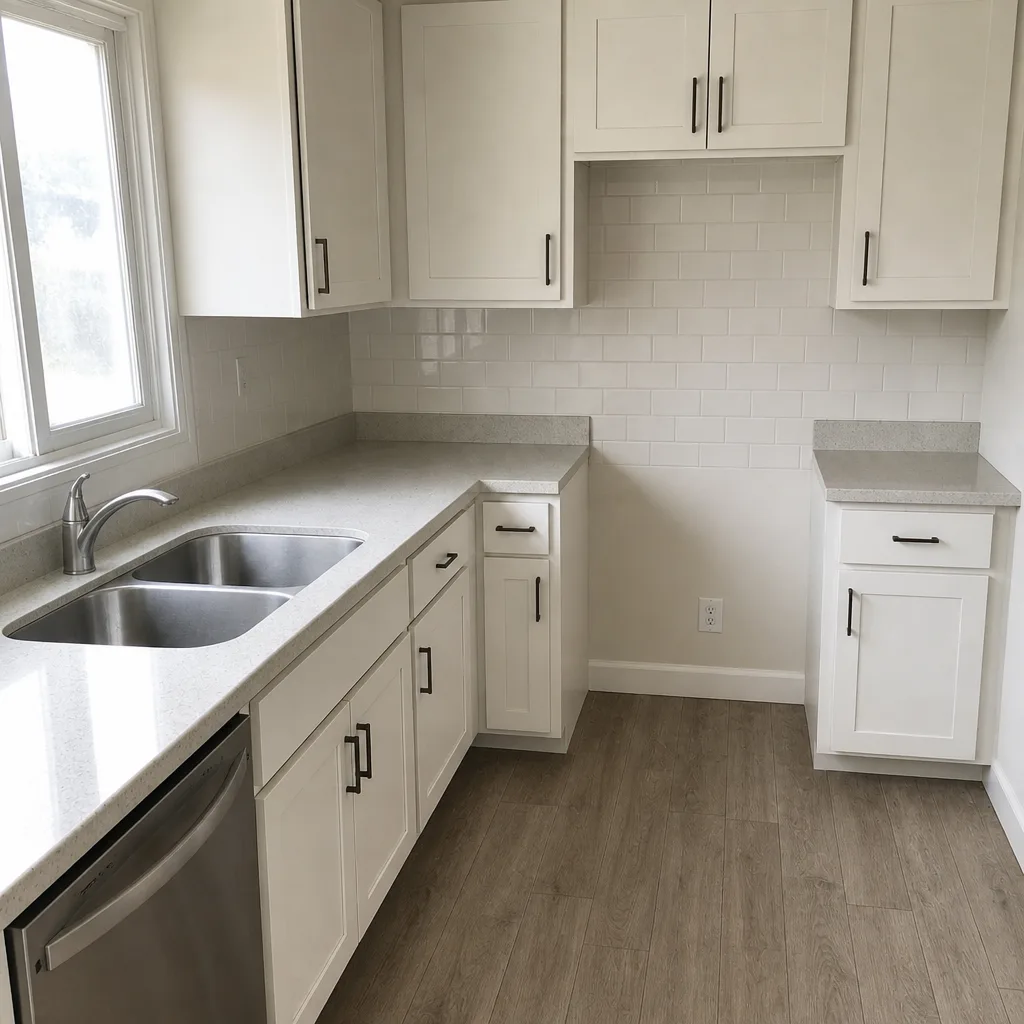 After
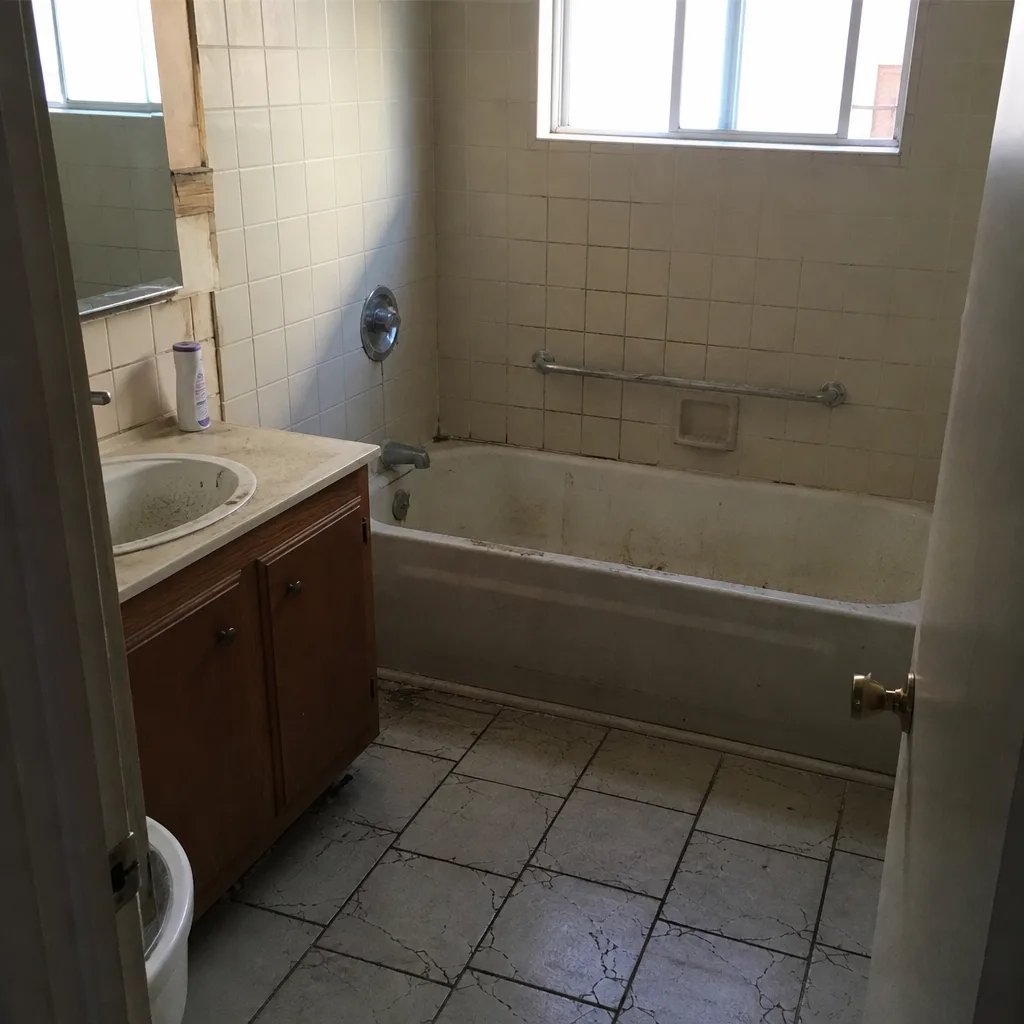 Before
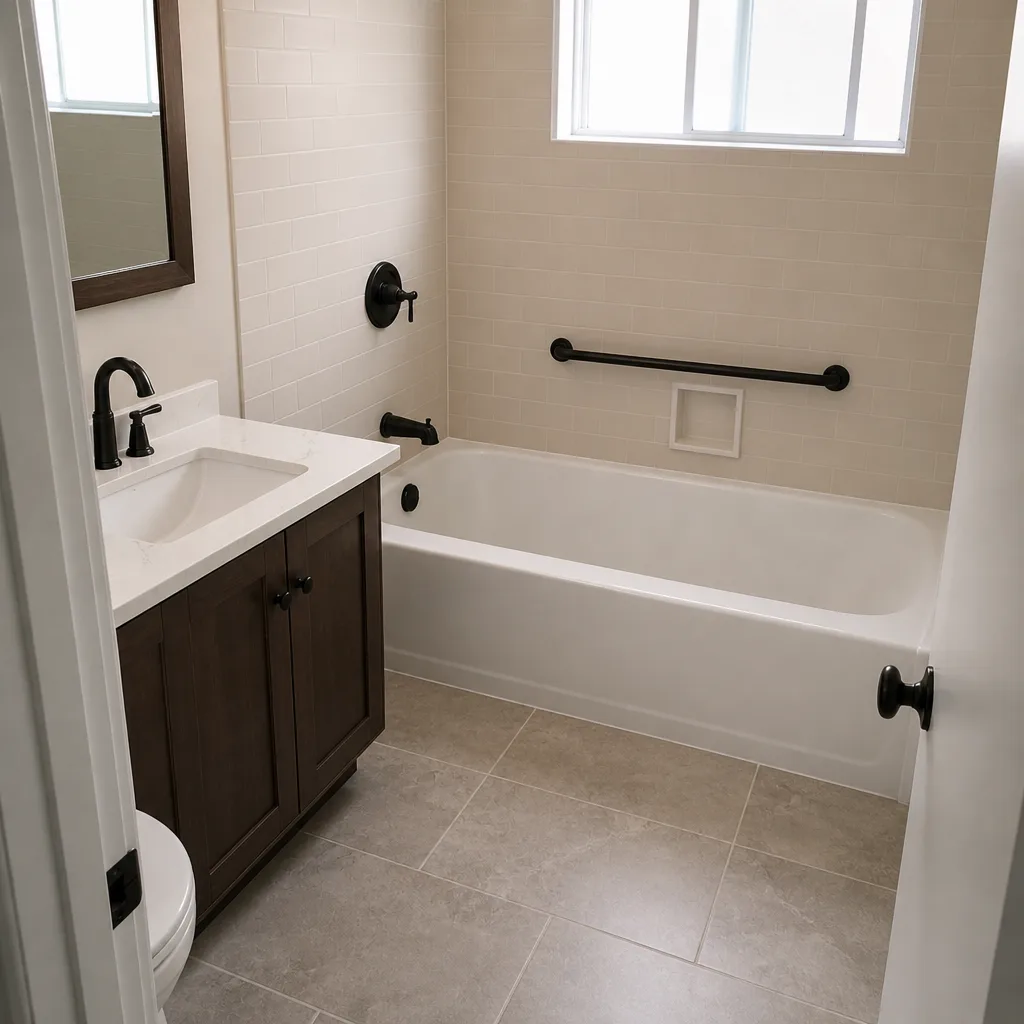 After
When to Call a Professional
Not every bathroom project needs a contractor – a paint-and-vanity refresh is achievable for a capable homeowner. Call a professional when the scope touches the things you can’t unsee: moving a toilet or shower drain, opening a wall to find rot or old galvanized plumbing, adding a dedicated circuit, or splitting a shared wall to install a new shower valve. Anything requiring a permit should be done by a licensed contractor pulling that permit in their own name – not yours. Waterproofing failures, mold, cracked pan tiles, and shower pan leaks that show up as bubbled paint outside the shower wall are all signs the bathroom needs more than a cosmetic fix. Groundwork Construction Co. of Richmond offers free estimates in Richmond – call (833) 700-4611 to schedule one. We’ll walk the space, tell you which tier (refresh, mid-scope, gut) your bathroom actually needs, and give you a written schedule with dates, not a vague “estimated completion.”
Frequently Asked Questions
A full gut bathroom remodel in Richmond typically takes four to six weeks from demo to final walkthrough, plus one to three weeks of permit review before demo begins. Cosmetic refreshes run one to two weeks. Add time for special-order tile and semi-custom vanities if selections aren’t locked before demo. Call (833) 700-4611 for an exact timeline based on your specific scope – estimates are free.
No, not a full gut remodel. Two weeks is realistic for a cosmetic refresh where the plumbing, electrical, and waterproofing stay intact. Anyone quoting two weeks for a full remodel with new waterproofing, tile, and plumbing rough-in is either skipping the permit, skipping the waterproofing cure window, or planning to blame supply chain when it slips. Call (833) 700-4611 to get a schedule that reflects the actual scope.
Yes, if the work involves moving plumbing, adding or relocating electrical, structural changes, or replacing a shower pan and tile in a wet area. Contra Costa County permits the plumbing and electrical separately from the finish work, and inspections are scheduled by the contractor. Finaled permits protect your home sale down the line. Call (833) 700-4611 and we’ll tell you whether your specific project triggers a permit.
Not with upfront pricing – the number you see is the number you pay, provided the scope in the written contract hasn’t changed. If demo reveals hidden rot, failed subfloor, or non-conforming plumbing, that’s a concealed-conditions change order, disclosed in writing before extra work is performed, never a blank check. Call (833) 700-4611 for a free estimate with the concealed-conditions language spelled out.
Liquid-applied waterproofing membranes need a minimum 24-hour cure before tile goes down, and sometimes two coats with additional time between them. Sheet membranes like Schluter Kerdi dry faster but still need proper seam overlap and a set window. Rushing this step causes the shower pan failures we fix most often in Richmond’s older homes. Plan for two to three days of cure time in any honest schedule. Call (833) 700-4611 if your contractor is skipping it.
Interior bathroom work doesn’t depend on Richmond weather much – demo, rough-in, and tile happen inside a sealed room regardless of the marine layer outside. Where season matters is material delivery windows and inspector availability, which can slow around holidays. The bigger factor is having selections locked and the permit in hand before demo, not the calendar month. Call (833) 700-4611 to schedule a free estimate and we’ll build the timeline around your actual start date, not a marketing promise.
The Bottom Line
A full bathroom remodel in Richmond takes four to six weeks when everything goes right, and six to eight weeks when it doesn’t – and the permit review and material lead times that contractors leave out of the sales pitch are the two biggest reasons the timeline slips. Cosmetic refreshes are one to two weeks, and knowing which one you’re actually buying is the single most important thing you’ll do before signing a contract. Insist on a written schedule with phase dates, a material selection deadline, a concealed-conditions clause, and a warranty with a stated duration. The 730-Day Done Right Promise – if it’s not done right, we make it right – sits on top of that schedule, backed in writing. From foundation to finish line, a bathroom remodel is a schedule you can plan around when someone is honest with you from day one.
Ready to get a realistic timeline and a written schedule for your project? Groundwork Construction Co. of Richmond is here to give you the honest version. Call (833) 700-4611 for a free estimate and design consult, or ask about our 0% financing for 18 months and $1,000 off projects over $10,000. A live person answers every call, 24/7 – no voicemail, no delays. And when the crew arrives, they’re background-checked, uniformed, and ready to work from a schedule that reflects your actual project, not the sales sheet.
Written by the team at Groundwork Construction Co. of Richmond.