

Free written scope consultation - allowances, timeline, and change-order rules on paper before a single trade is scheduled
Styles & brands we work with
- Kitchen remodeling
- Bathroom remodeling
- Home additions & ADU
- Roofing
- Windows & doors
- Driveway & pavers
- Fence
See the difference
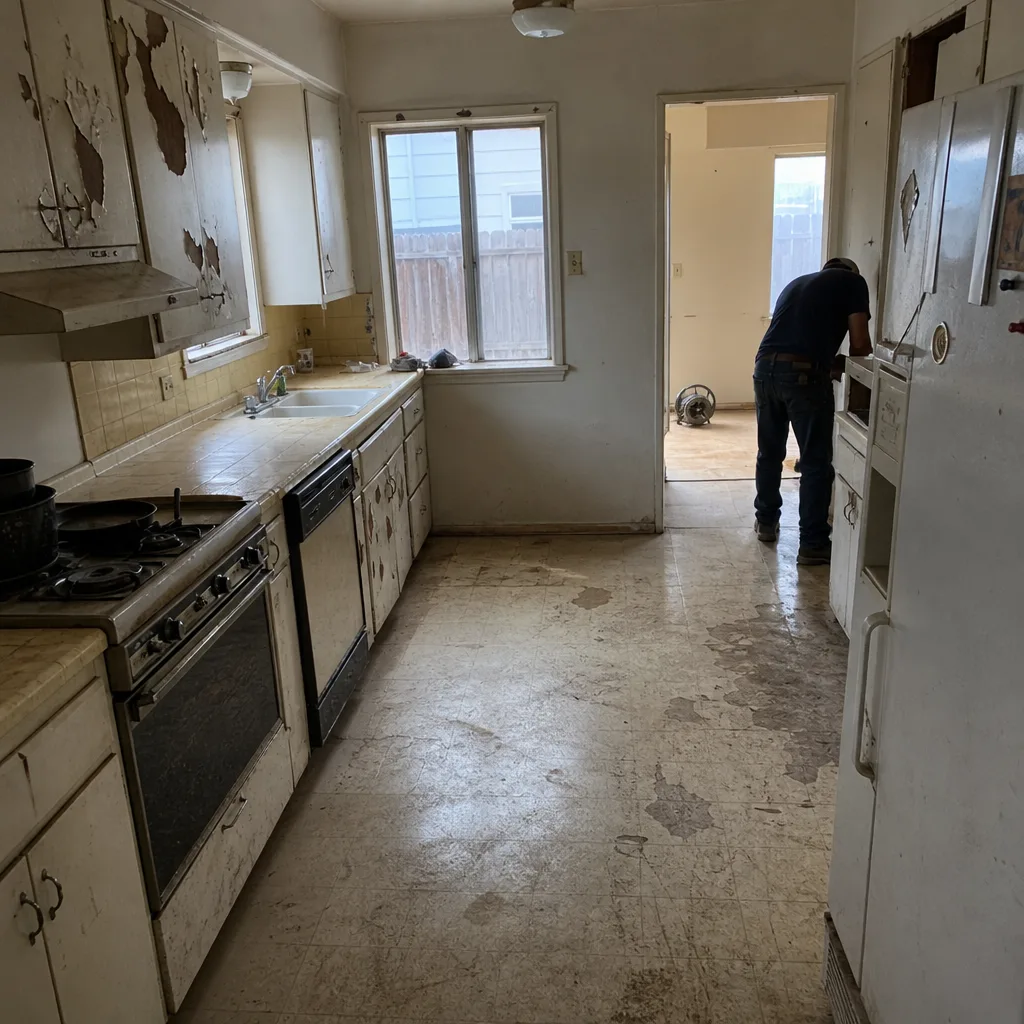 Before
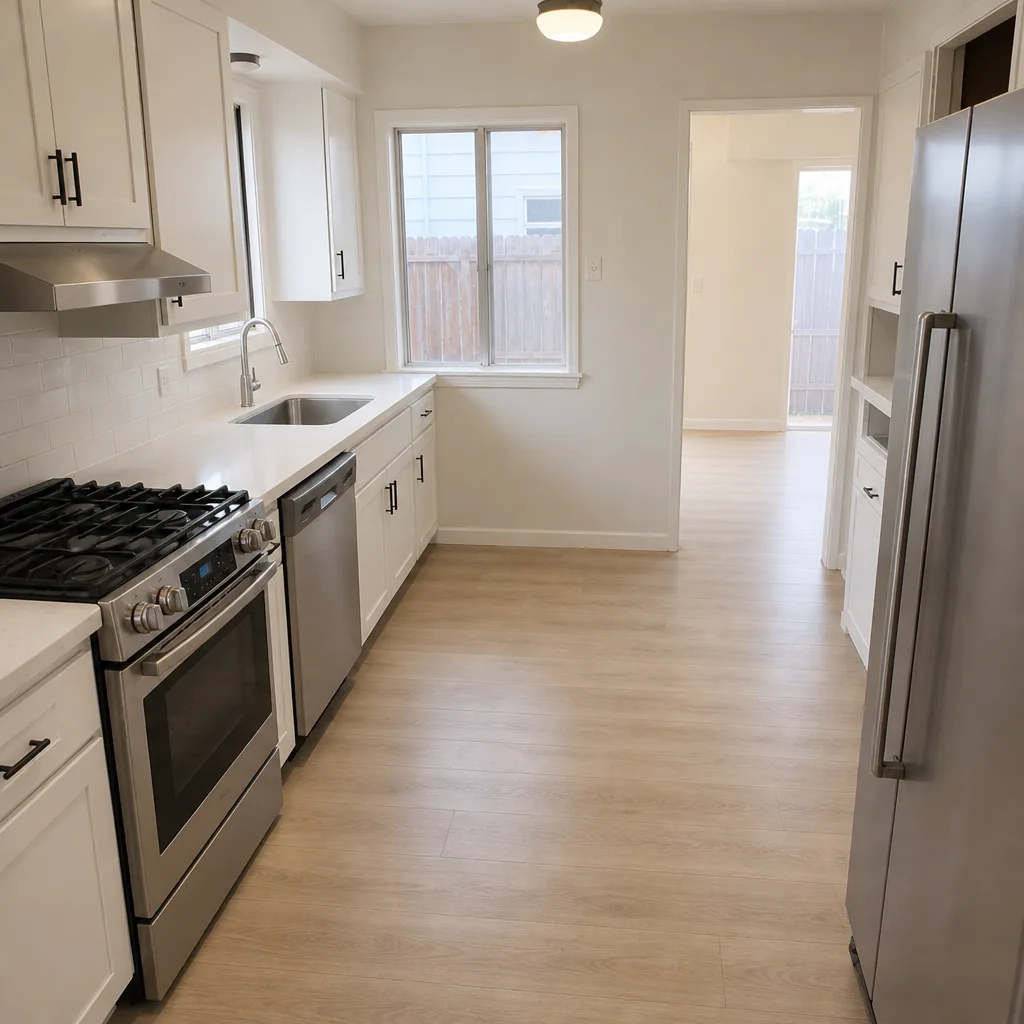 After
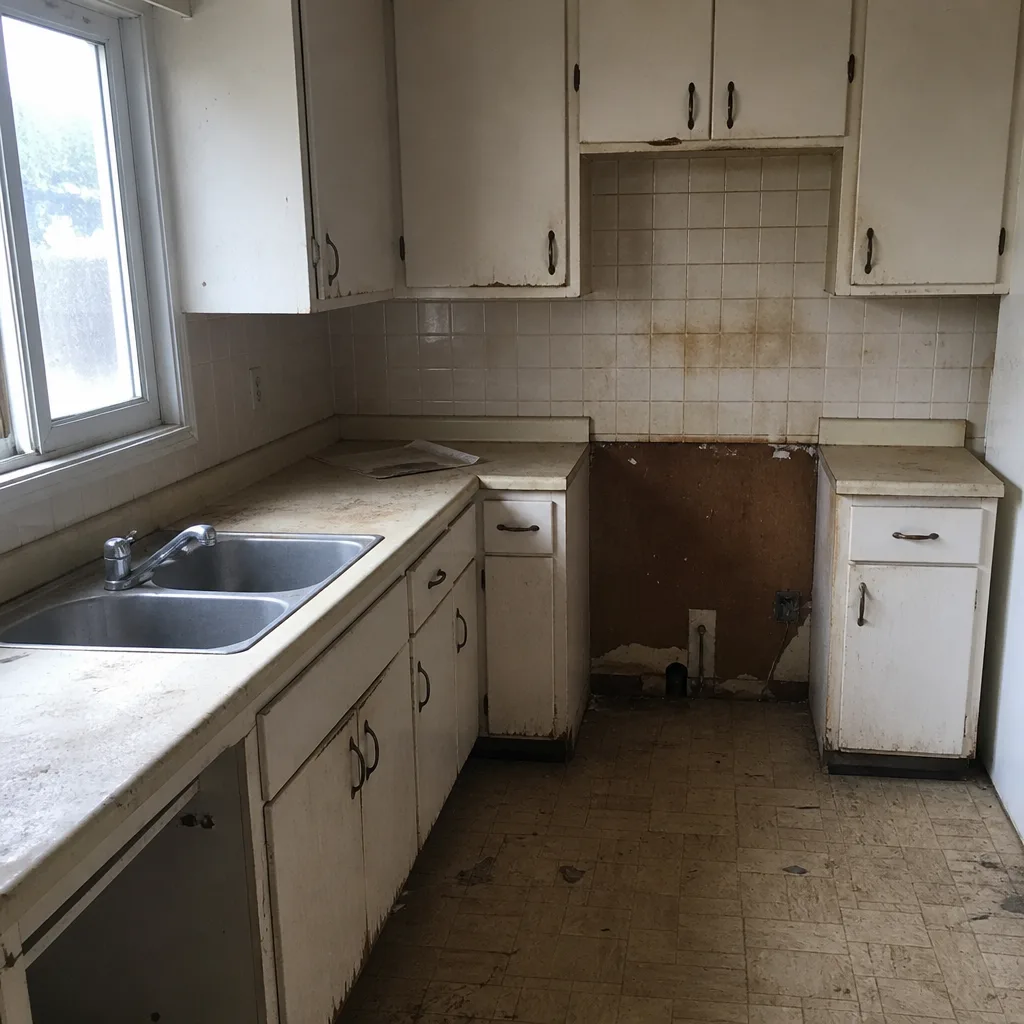 Before
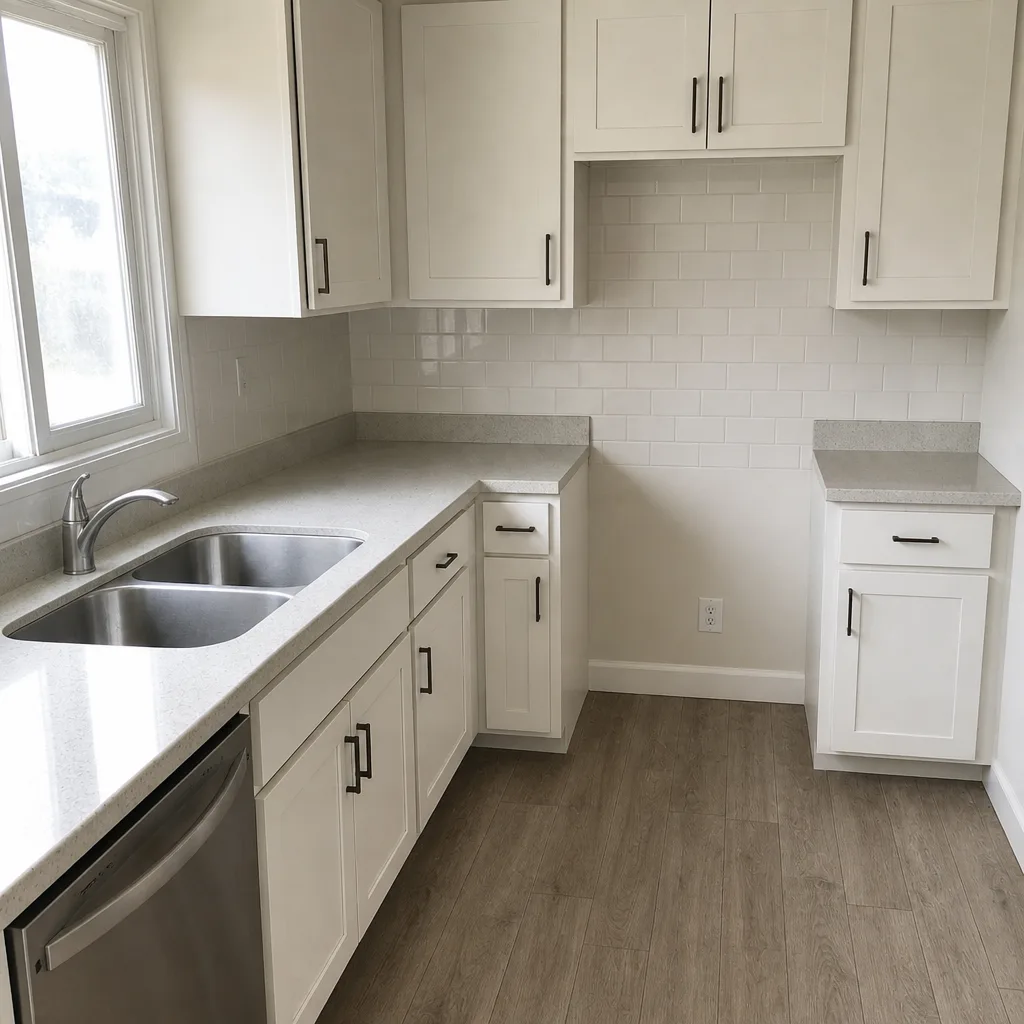 After
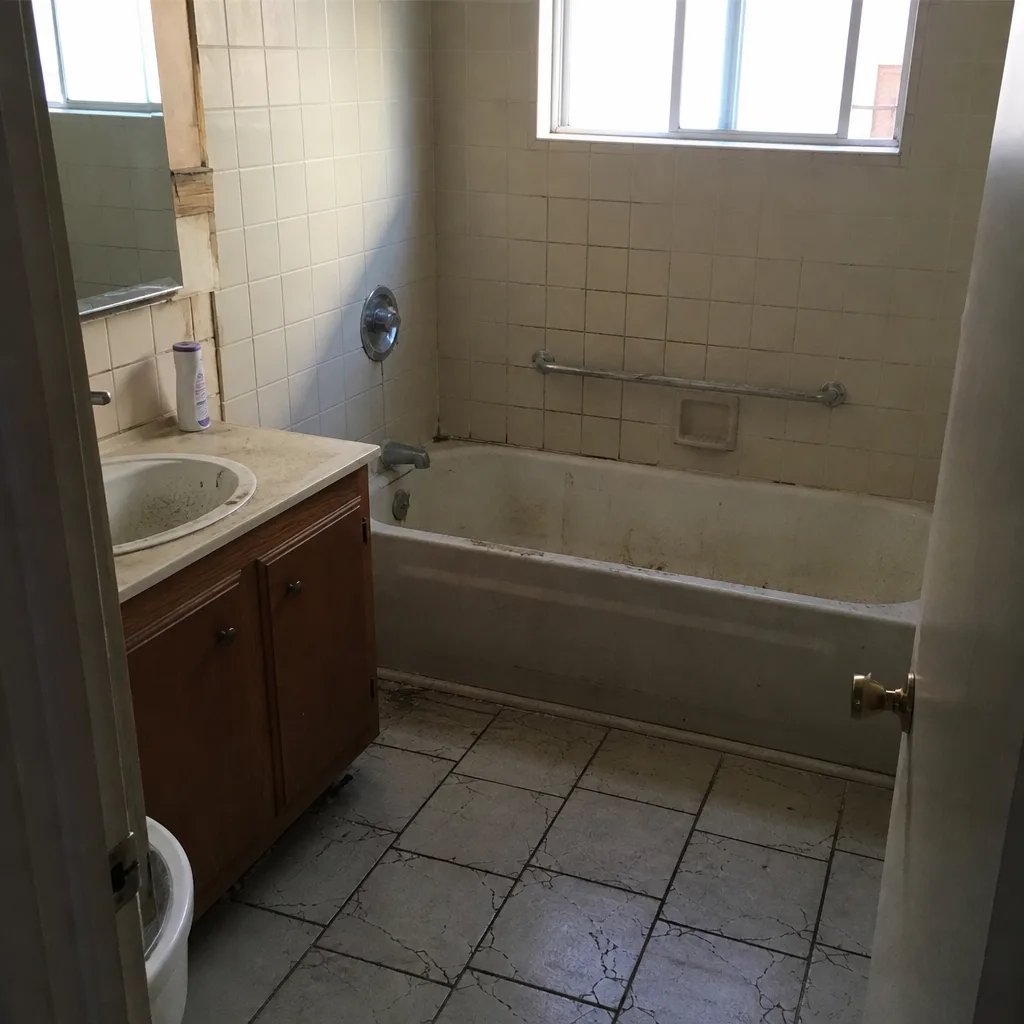 Before
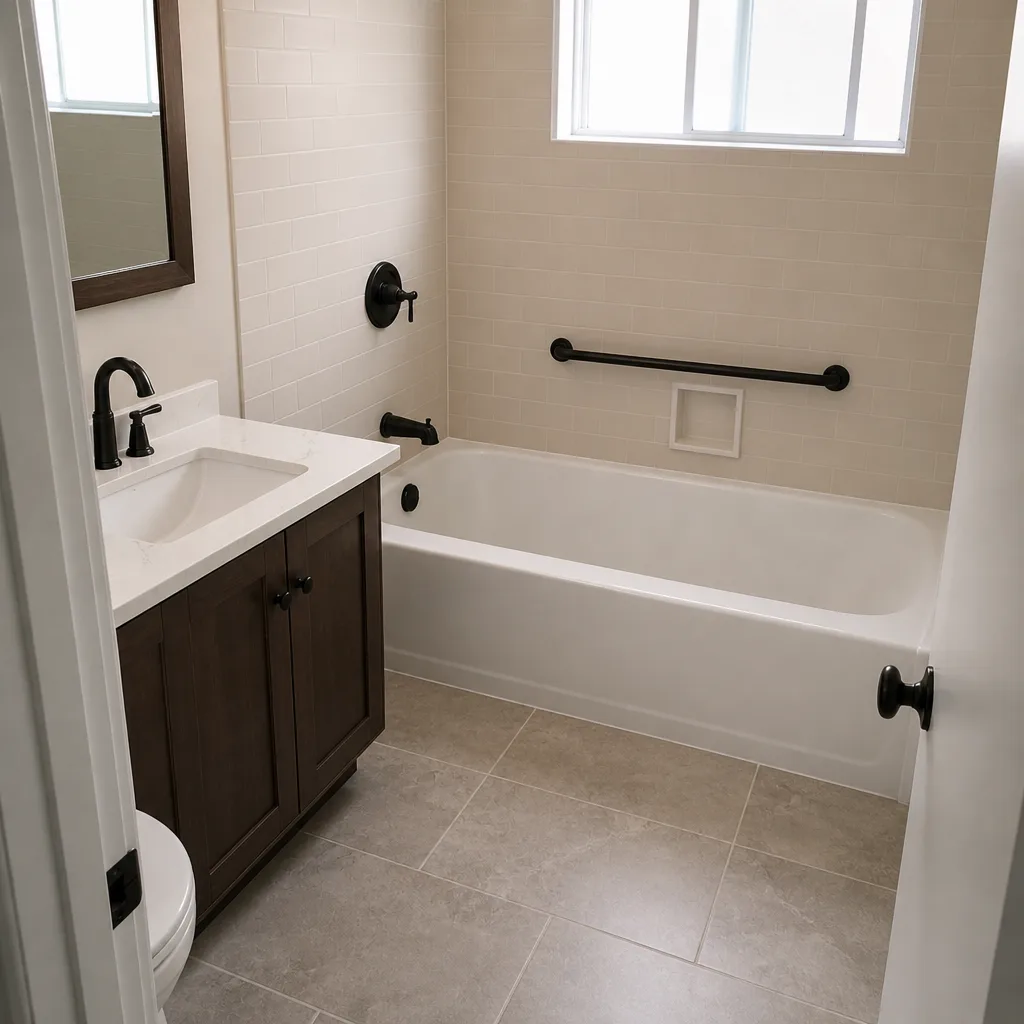 After
How Thick Should a Concrete Driveway Be in Richmond, CA?
The short answer for most Richmond homes is 4 inches of concrete over a well-compacted native base, but that number only holds when the soil underneath can actually carry the load. On the fill lots, bay-mud subgrades, and flatland clay that make up a large share of Richmond’s east side and waterfront-adjacent parcels, 5 inches is the defensible minimum. Four inches is the standard everywhere else – here it’s the way you crack a slab before the first oil change. Call (833) 700-4611 and we’ll assess your subgrade before anyone sets a form.
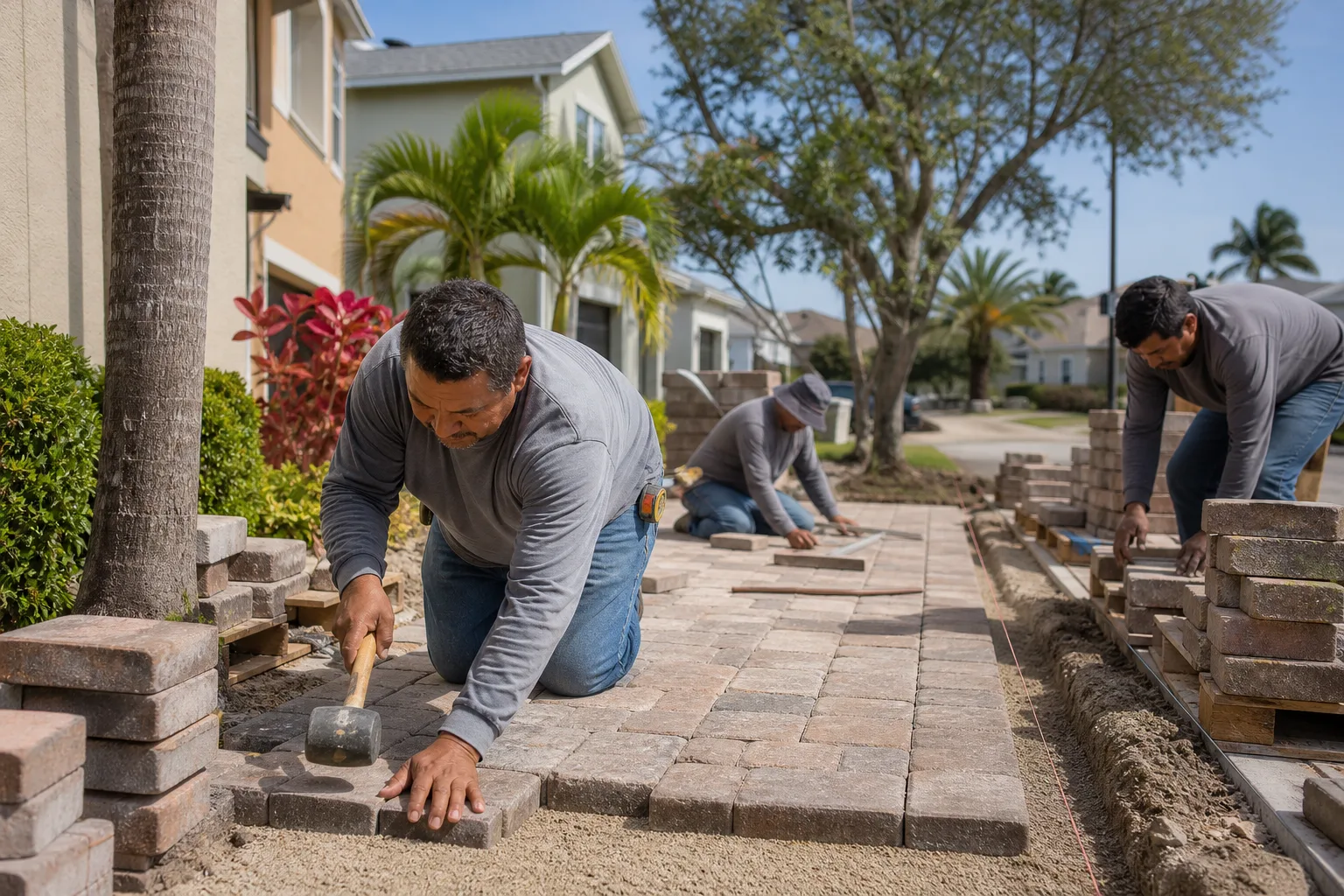
Why the “4-Inch Standard” Falls Apart on Richmond Soil
Concrete thickness is a load-transfer question, not a rule of thumb. A slab spreads the weight of a car across the ground beneath it, and the thicker the slab, the more it can bridge a soft spot before it bends and cracks. On well-drained, competent native soil, 4 inches of 2,500 to 3,000 PSI concrete handles a passenger car and a pickup fine.
Richmond doesn’t hand most homeowners that soil. A significant portion of the city sits on imported fill, old marsh, or bay-adjacent material with low bearing capacity. Push 4 inches across a soft pocket like that and the slab flexes, the surface cracks, and within a couple of winters you’re looking at a replacement.
The heavy-industrial legacy shapes this more than most people realize. Swaths of former Kaiser Shipyards land and refinery-adjacent parcels mean contractors here routinely run into fill soils that call for soil management plans and DTSC or Bay Area Air Quality permits that a homeowner in El Cerrito or San Pablo never touches. Before we pour, we want to know what’s under the slab.
Richmond Driveway Thickness: A Decision Matrix
Here’s how we think about it on a typical Richmond residential lot. Match your situation to the row.
| Your situation | Slab thickness | Reinforcement |
|---|---|---|
| Passenger cars on well-compacted native soil | 4 inches | Wire mesh for shrinkage control |
| SUVs, trucks, or soft/clay subgrade | 5 inches | Rebar grid |
| RV or occasional commercial vehicle on a fill lot | 6 inches | #4 rebar grid, chairs to hold it mid-slab |
Two numbers matter as much as thickness: the base and the reinforcement. We compact and grade the subgrade before anything goes on it, and we spec the rebar to the soil we actually see. That spec lives in your written quote, so you know what’s going in the ground before the pour, not after.
Rebar vs. Wire Mesh: It’s a Soil Question, Not a Budget Question
Homeowners often ask us to swap rebar for wire mesh to save a few hundred dollars. On stable soil, that trade can make sense. On Richmond’s variable lots, it usually doesn’t.
Here’s the difference in plain terms. Wire mesh is there to hold hairline shrinkage cracks tight while the concrete cures. Rebar is there to hold slab sections together after a crack forms, so a subgrade-driven break doesn’t turn into a trip hazard and a full replacement. When the soil under a Richmond driveway is unpredictable, rebar is the right call, and we’ll tell you so even when it’s the more expensive answer.
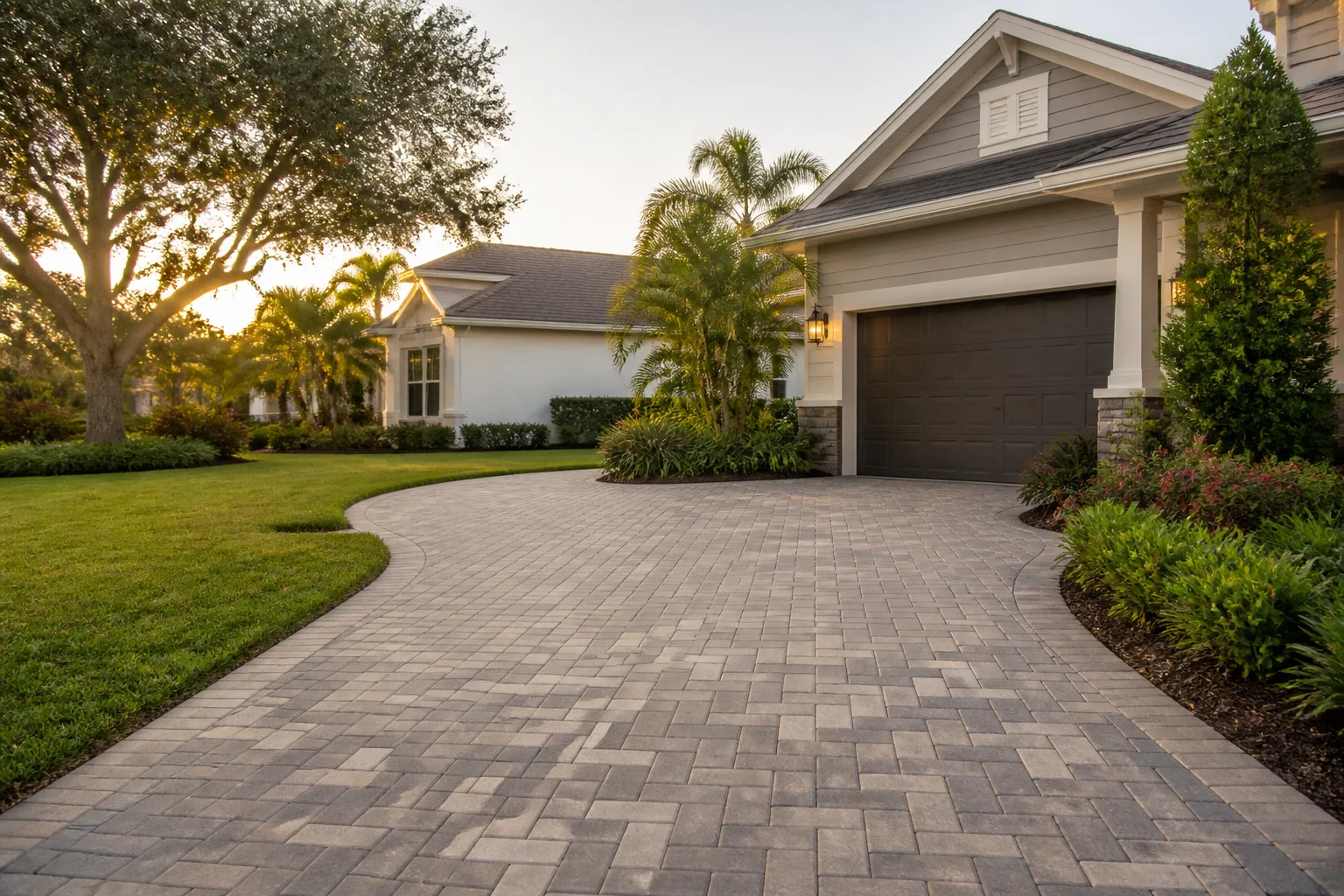
Bring that same load-and-soil thinking to a paver surface and the math changes, which is why our Driveway & Pavers page covers when a flexible paver system beats a rigid slab on a shifting lot.
Why Richmond’s Older Driveways Are Already Cracked
Walk the east-side tract neighborhoods and you’ll see a pattern. Many of the 1950s and 1960s stucco homes in areas like Parkview and Verde had driveways poured at roughly 3.5 inches on minimally prepared base. That was fast and cheap at the time. Fifty to seventy years later, those slabs show the result: spider-cracked surfaces, settled corners, and joints that have opened up.
When we quote a replacement, the goal isn’t to match the old slab. It’s to correct for the original underbuilding. That means a thicker section, a properly compacted base, and reinforcement sized to the soil. Standard concrete driveway installation in Richmond runs $4,500 to $12,000, and full driveway replacement lands at $5,000 to $14,000 – the difference in price usually tracks directly to how much base work and reinforcement the lot needs. If you’d like the broader picture of surfacing options, our home page and the Driveway & Pavers in Richmond guide both lay out the choices.
What It Costs to Build It Right in Richmond
Thickness and subgrade prep are the two biggest levers on price. Here’s where the numbers tend to land for Richmond homeowners.
- Concrete driveway installation: $4,500-$12,000 (a 5-inch slab on a prepared base sits toward the top of this range)
- Driveway replacement: $5,000-$14,000 (includes tear-out and hauling off the old slab)
- Paver driveway installation: $7,000-$18,000 (a good fit when the subgrade is too soft for a rigid slab)
- Driveway sealing: $250-$700 (protects a new pour and slows surface wear)
A thicker, reinforced slab costs more up front. It’s also the difference between a driveway that lasts and one you’re replacing in a decade. We use proven materials from brands like Quikrete and Techo-Bloc, and every driveway we build is backed by our 730-Day Done Right Promise – if it’s not done right, we make it right.
How Groundwork Specs Your Driveway
Our technicians have up to 12 years of experience, and every one of them is background-checked and arrives in uniform. We don’t guess at thickness. At quote time we do a visual subgrade assessment, check for signs of fill or soft clay, and write the slab thickness and reinforcement spec directly into your proposal. You see the number before the forms are set.
Pricing is upfront, so the number you see is the number you pay. We also offer 0% financing for 18 months and $1,000 off projects over $10,000, and a live person answers the phone 24/7 – no voicemail, no waiting until Monday.
Frequently Asked Questions
For a truck, go 5 inches; for an RV or occasional commercial vehicle on a fill lot, 6 inches with a #4 rebar grid. Richmond’s soft subgrades and fill soils need the extra thickness because the slab has to bridge weak spots rather than settle into them. Call (833) 700-4611 and we’ll size it to your vehicle and your lot – the estimate is free.
Only if the soil under it is compacted native ground with good drainage, and much of Richmond’s east side and waterfront-adjacent property isn’t. Pouring 4 inches over fill or bay-mud clay is the fastest route to cracking and settling. We assess the subgrade first and tell you in writing what thickness your lot actually needs.
Small isolated cracks are cheaper to seal, but a driveway cracked through from subgrade failure won’t be fixed by patching – it’ll keep breaking, and replacement is the honest answer. When the original slab was poured thin on poor base, we correct that in the new pour. Call (833) 700-4611 for a straight assessment and a free estimate so you can compare the real numbers.
Yes, for most Richmond lots. Rebar holds slab sections together after a subgrade-driven crack, while wire mesh only controls shrinkage cracking during curing. On variable or fill soil, rebar is worth the added cost. We recommend the right reinforcement based on your actual soil, not a default.
If you’d rather have it looked at, Groundwork Construction Co. of Richmond offers a no-pressure assessment in Richmond – call (833) 700-4611 to get your subgrade checked and your slab spec in writing before the pour.
Written by the team at Groundwork Construction Co. of Richmond, serving Richmond, CA.