Free written scope consultation - allowances, timeline, and change-order rules on paper before a single trade is scheduled
Styles & brands we work with
- Kitchen remodeling
- Bathroom remodeling
- Home additions & ADU
- Roofing
- Windows & doors
- Driveway & pavers
- Fence
See the difference
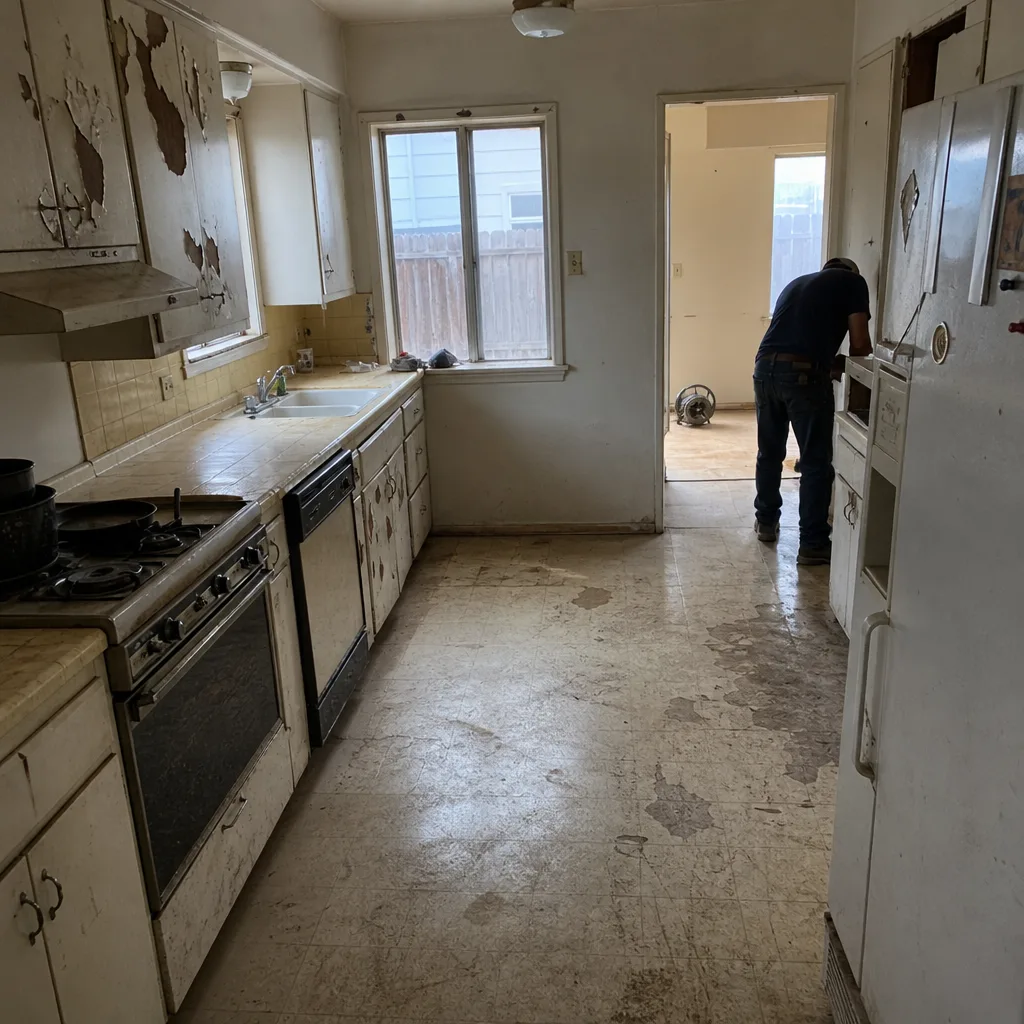 Before
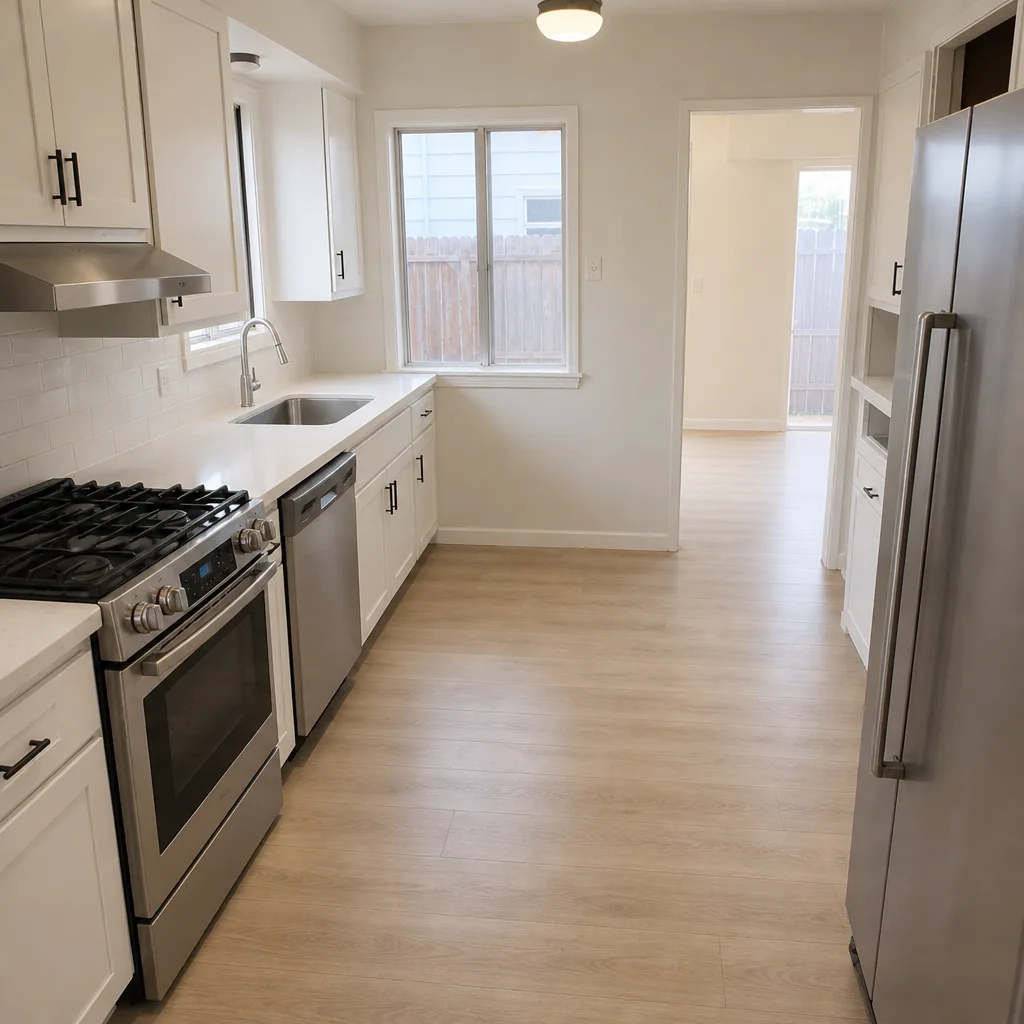 After
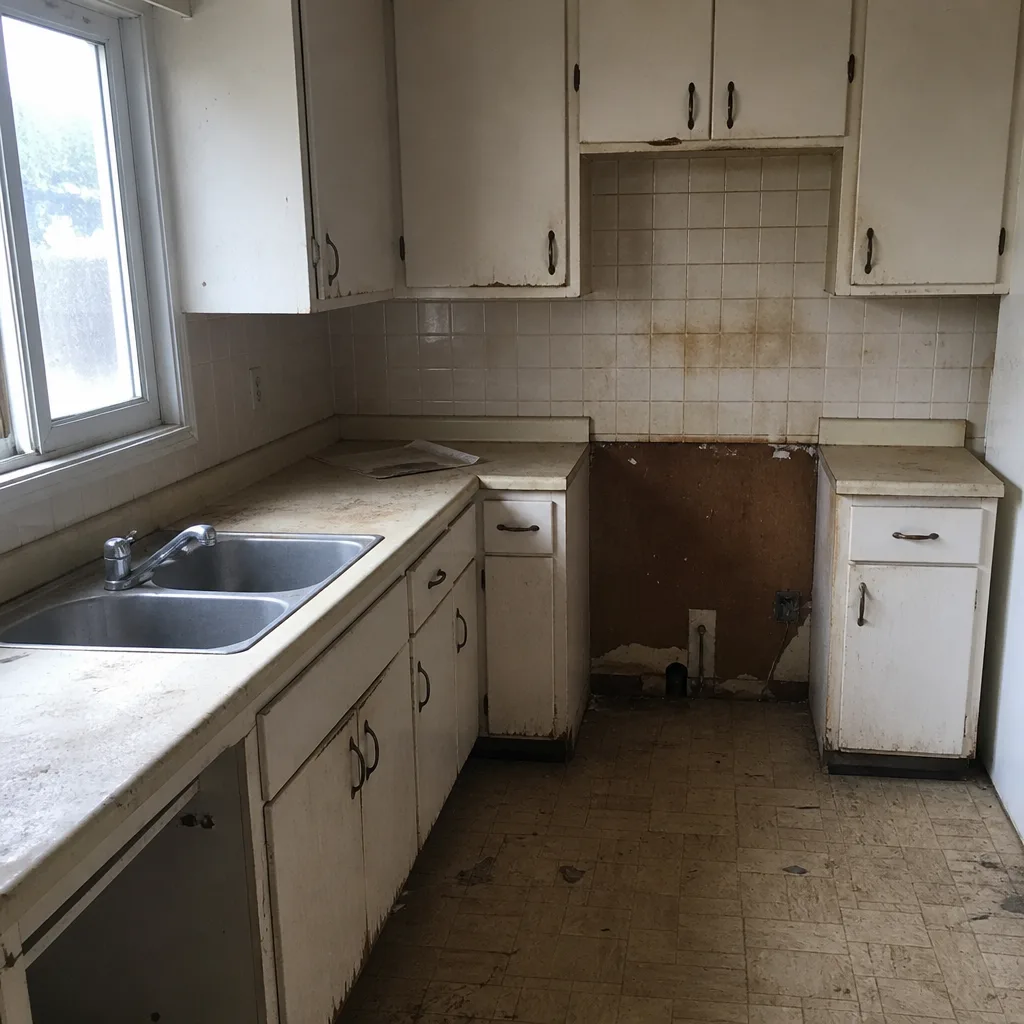 Before
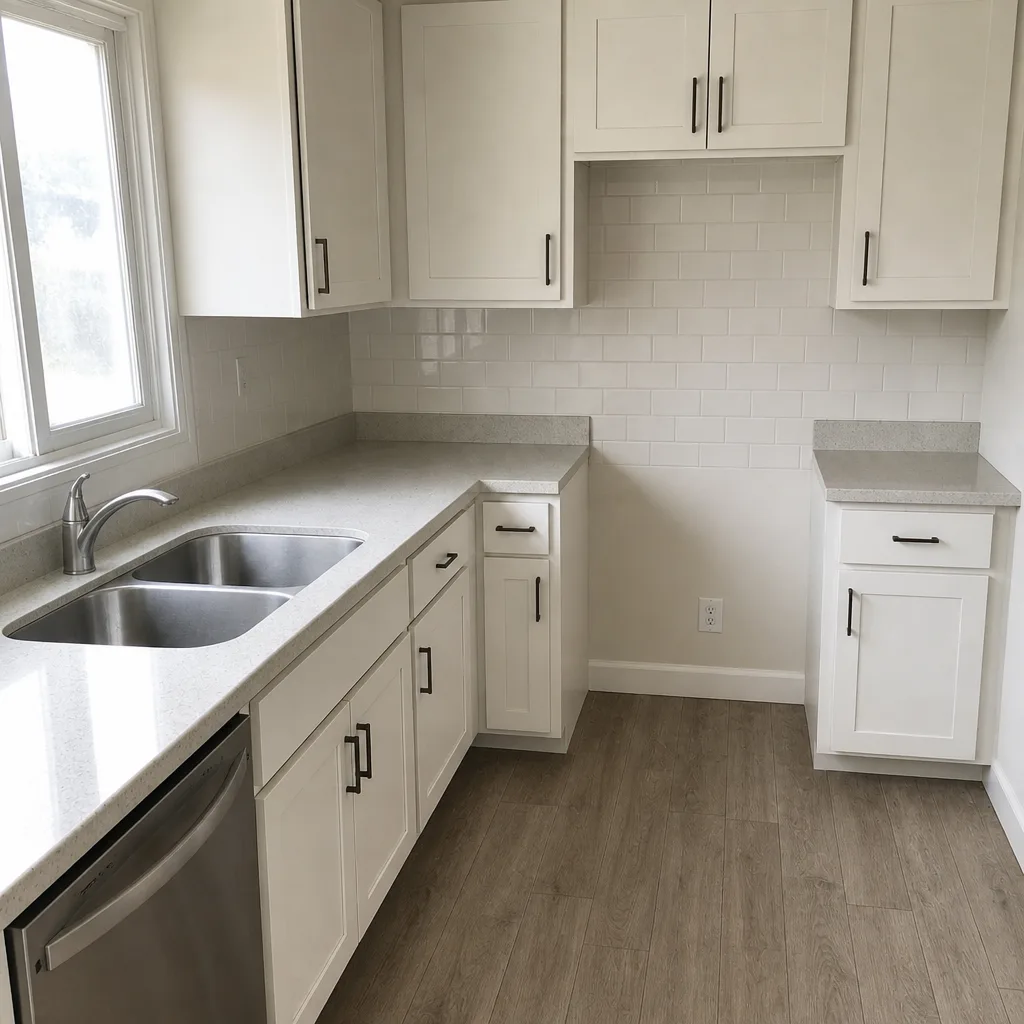 After
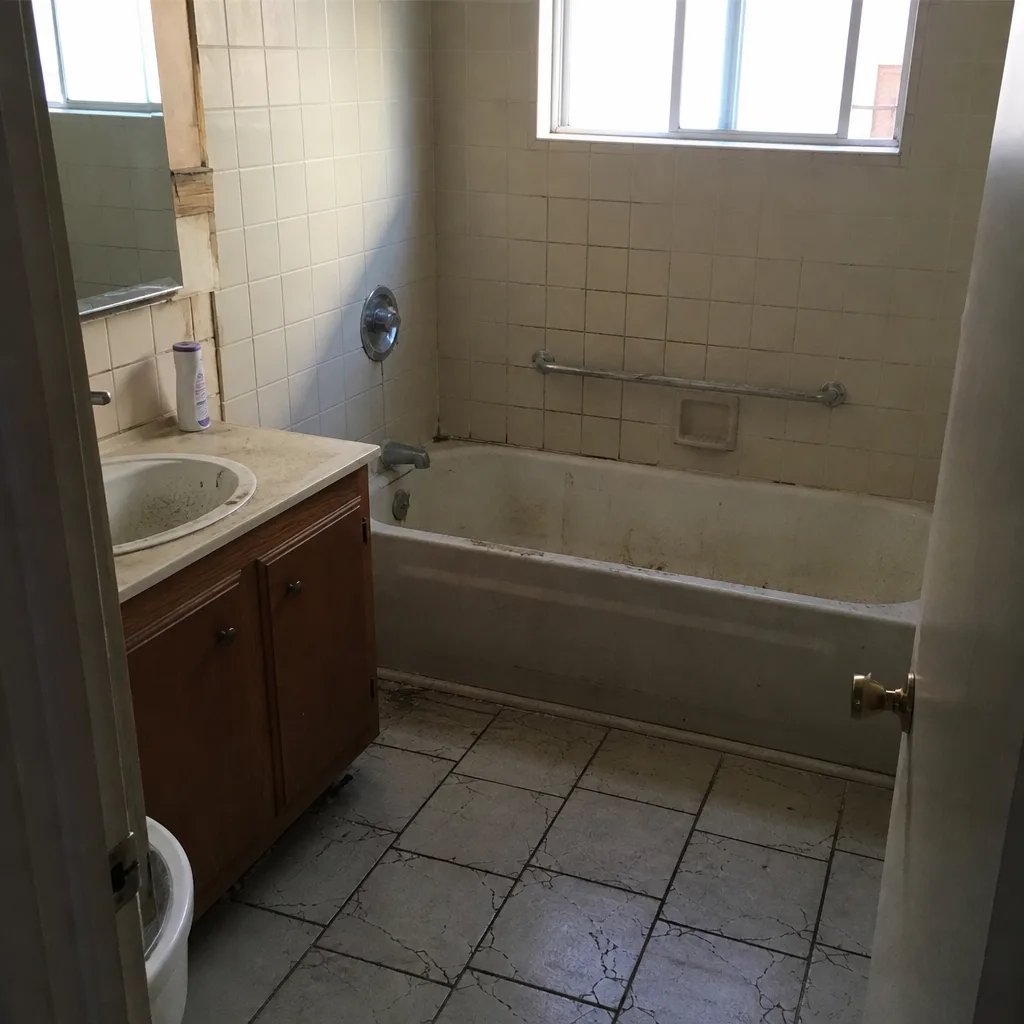 Before
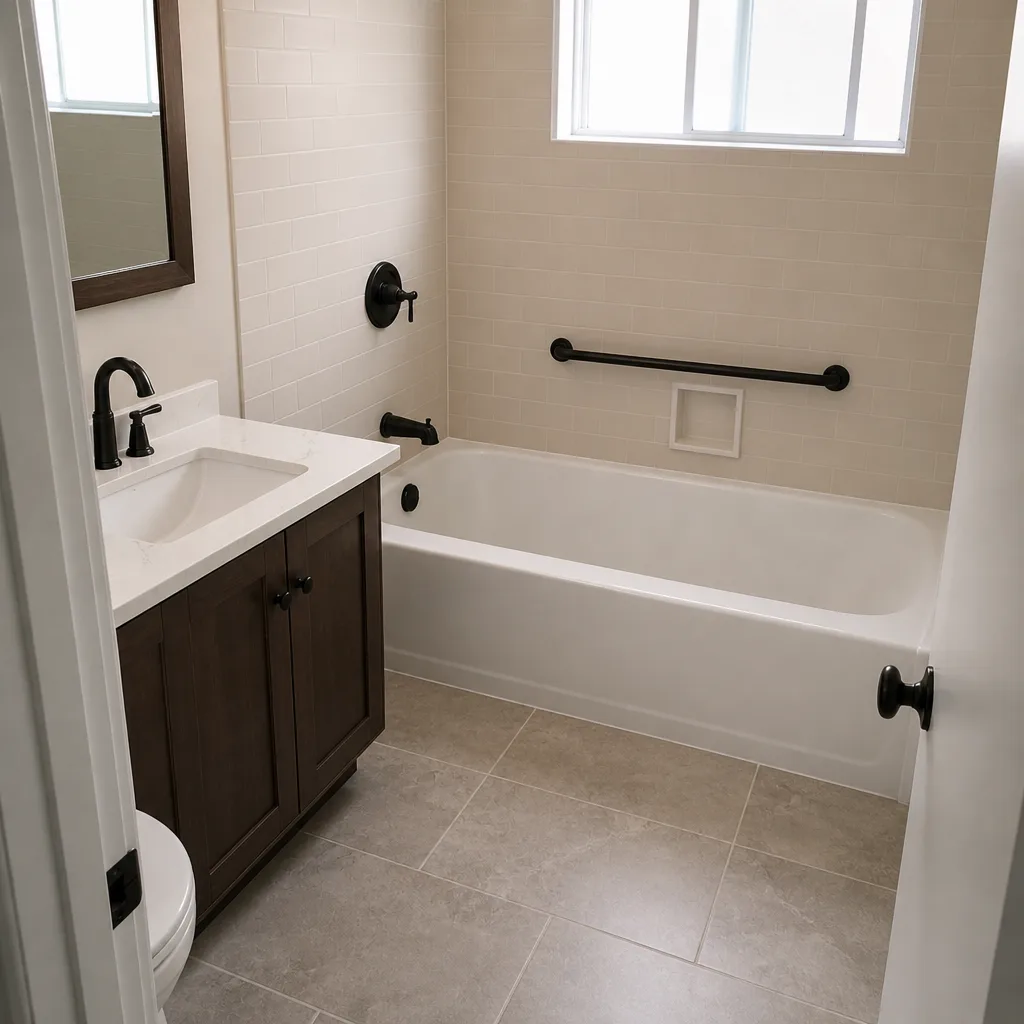 After
Tile vs Vinyl Plank Kitchen Flooring in Richmond, CA: A Builder’s Straight Answer
Choose luxury vinyl plank for most Richmond kitchens unless you’re on a flat, stable slab, in which case large-format porcelain tile will outlast and out-value it. That’s the short version. The longer version – the one that actually decides whether your floor holds for thirty years or cracks in three – depends on what’s under your feet right now, not what’s on the sample board. The first floor in your kitchen isn’t the one you’re choosing. It’s the one you’re covering. Call (833) 700-4611 and we’ll tell you which one you’re standing on.
Here’s what most comparison guides skip: in Richmond, the substrate decides everything. A 1952 shipyard-worker bungalow in South Richmond sitting on a wood-frame subfloor over a crawl space behaves nothing like a 1963 stucco tract home in Parkview on a poured slab. Same city. Same fog. Completely different flooring answer.
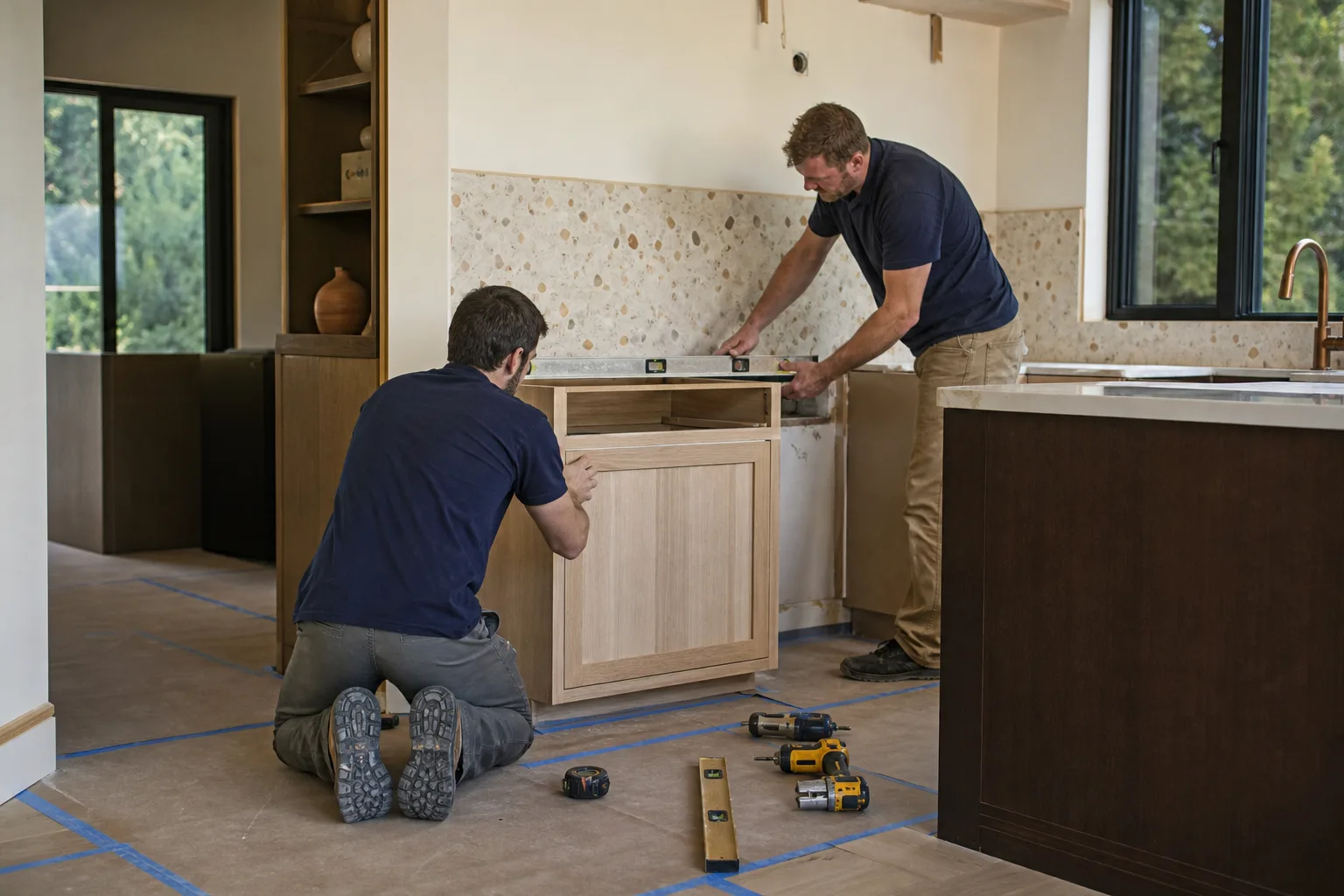
Why Richmond’s Subfloors Change the Tile-vs-Vinyl Question
Walk into a kitchen remodel anywhere else and the conversation is about grout lines and wear layers. Walk into one in the older flatlands and the first thing we look at is deflection. Tile needs a floor that barely moves.
How little? Under 1/8 inch of flex across a 48-inch span (the industry calls this L/360), and no more than 3/16 inch of variation in flatness over any 10-foot run. Richmond’s wood-frame bungalows routinely fail both. Fir subfloors that have been seasoning for seventy years cup and crown. Joists sag. When that happens, the fix isn’t cosmetic – it’s sistered joists or a self-leveling pour, and that pour runs $400-$1,200 before a single tile is set.
The moisture half of this story is specific to Richmond’s crawl-space homes. Fog-belt winters push ground moisture up through unencapsulated crawl spaces into those wood subfloors. Once moisture content climbs above 19% by weight, grout cracking and tile de-bonding start showing up within 2-4 years. We see it regularly in the older flatlands south of Cutting Boulevard and across the Iron Triangle. It isn’t a product failure. It’s a substrate failure that took a few winters to show.
What LVP Actually Tolerates (and Where It Stops Working)
Luxury vinyl plank handles minor subfloor irregularity that would crack tile. That’s real, and it’s why it’s the right call for a lot of Richmond kitchens. But the honest version comes with limits.
LVP’s dimensional stability degrades above 95°F, and direct sunlight through a south-facing kitchen window during a Richmond heat spike will test that. Cheap LVP – anything under a 6mm wear layer – shows seam failure faster in a high-traffic kitchen. When we spec LVP for a client, we’re looking at an 8mm or thicker commercial-grade product, not the roll-back bargain at the box store. The product tier matters as much as the category.
We keep a short list of material partners we trust for flooring and substrate work, including Quikrete and Sakrete for self-leveling and patch compounds. The compound you pour matters as much as the plank or tile you lay on top of it.
Installed Cost Reality: Tile vs Vinyl Plank in Richmond
Here’s where the comparison math actually lives. Tile’s headline number looks competitive until you add slab prep. LVP’s number already assumes a compliant subfloor.
| Flooring Type | Installed Cost (Richmond) | Substrate Prep |
|---|---|---|
| Standard ceramic tile (prepared slab) | $8-$14/sq ft | Assumes flat, dry slab; prep extra |
| Large-format porcelain tile (prepared surface) | $14-$22/sq ft | Assumes flat, dry slab; prep extra |
| Mid-grade LVP | $6-$10/sq ft | Tolerates minor irregularity; moisture barrier recommended |
| High-end LVP | $10-$16/sq ft | Tolerates minor irregularity; moisture barrier recommended |
| Self-leveling pour (when substrate fails) | $400-$1,200 | Added to tile cost when required |
Run the math on a 200 sq ft Richmond kitchen. Large-format porcelain at $18/sq ft lands around $3,600 before prep. Add a $900 self-leveling pour and you’re at $4,500. High-end LVP at $13/sq ft lands at $2,600 on a compliant subfloor with no pour. That gap – roughly $1,900 – is the trade-off you’re actually making. Tile buys you resale and longevity. LVP buys you budget and a shorter timeline.
The Richmond Decision Framework by Home Type
Two homes, two answers. Here’s how we sort it.
Slab-foundation tract homes (Parkview, Verde)
If you’re on a flat, stable, dry slab – which is most of the 1950s-60s stucco tract homes east of Market Avenue – large-format porcelain tile is the stronger long-term choice. It adds more resale value, handles cooking splatter and dropped pans without drama, and a slab that’s been stable for sixty years isn’t going anywhere. You’ll budget $14-$22/sq ft installed and skip the pour entirely.
Crawl-space bungalows (South Richmond, Iron Triangle)
On a wood-frame subfloor over a crawl space, 8mm+ commercial-grade LVP is the smarter call unless you’re prepared to invest in proper subfloor remediation. Sistered joists, encapsulation, a moisture barrier, a self-leveling pour – that’s real money and real downtime. If the wood isn’t sound or the moisture reads high, tile is a future callback waiting to happen. LVP at $10-$16/sq ft installed sidesteps it.
A quick caveat on the older flatlands: the “bonus room” or converted garage on a 1940s South Richmond bungalow is often a shipyard-era conversion that was never permitted. If a remodel pulls that into scope, plan-check can balloon the timeline. We’d rather flag it on day one than discover it mid-pour.
If your kitchen project is part of a broader remodel, our Kitchen Remodeling team handles flooring, cabinets, and countertops as one scope – so the substrate call gets made before anything ships. You can see the full scope on our Kitchen Remodeling in Richmond page, or start back at our home to see what else we cover.
What Groundwork Brings to a Richmond Kitchen Floor
We’ve spent over 42 years serving local communities, and our technicians bring up to 12 years of experience on projects like these. Every job is backed by our 730-Day Done Right Promise – if it’s not done right, we make it right. That matters more on flooring than almost any other trade, because the failure shows up two winters later. Our guarantee covers it either way.
Pricing is upfront and the number you see is the number you pay. Calls are answered by a live person 24/7, and we offer 0% financing for 18 months plus $1,000 off projects over $10,000. For a kitchen renovation landing in the $14,000-$45,000 range, that’s real breathing room.
FAQs
Only if the subfloor passes deflection and flatness checks – L/360 and 3/16 inch over 10 feet – and the wood moisture stays under 19%. Most 1940s-50s Richmond bungalows don’t pass without self-leveling compound ($400-$1,200) or sistered joists. We test the substrate before quoting so the number you get is the number that sticks. Call (833) 700-4611 for a free assessment.
Almost always, and the gap widens on crawl-space homes where tile needs substrate prep. Mid-grade LVP runs $6-$10/sq ft installed versus $8-$14 for standard ceramic tile – before the pour. High-end LVP at $10-$16 still usually beats large-format porcelain at $14-$22 once prep is added. Call (833) 700-4611 for an exact quote on your kitchen.
Large-format porcelain tile adds more resale value in slab-foundation Richmond homes, especially in Parkview and Verde where buyers expect hard-surface kitchens. LVP closes the gap in crawl-space bungalows because it’s the more durable choice for that substrate. The right answer depends on your foundation, not the showroom. Call (833) 700-4611 and we’ll talk through both.
LVP on a compliant subfloor is often done in a single day for a standard kitchen. Tile takes longer – typically 2-4 days once you account for pour cure time and grout. Self-leveling compound alone needs 24 hours minimum before tile goes down. Call (833) 700-4611 for a timeline specific to your Richmond kitchen.
If you’d rather have it looked at, Groundwork Construction Co. of Richmond offers a no-pressure assessment in Richmond – call (833) 700-4611 for a free estimate.
Written by the team at Groundwork Construction Co. of Richmond, serving Richmond, CA.