Last updated November 18, 2026

Free written scope consultation - allowances, timeline, and change-order rules on paper before a single trade is scheduled
The Complete Driveway & Pavers Guide for Richmond Homeowners
Richmond sits on expansive clay soils that can shift up to two inches seasonally. That single fact eliminates certain paver systems entirely and makes proper base preparation worth more than the pavers themselves. A driveway built on a national-average spec in this city will heave, settle, and crack long before the material fails. This guide covers what actually works on Richmond ground: base depth for clay, materials that survive salt air and fog cycles, the Contra Costa permit path, why joint sand matters here more than color, and real Richmond-area pricing. You’ll finish knowing exactly what to ask a contractor and what to reject.
Quick Answer
A driveway paver installation in Richmond typically runs $16 to $28 per square foot installed, which puts a standard two-car driveway (roughly 500 square feet) between $8,000 and $14,000. The number moves most on base depth: Richmond’s expansive clay demands 8 to 12 inches of compacted aggregate base versus the 4 to 6 inches used inland, and that base is where the money and the longevity both live. Concrete pavers on a properly engineered base outlast asphalt three to one in this soil.
Styles & brands we work with
- Kitchen remodeling
- Bathroom remodeling
- Home additions & ADU
- Roofing
- Windows & doors
- Driveway & pavers
- Fence
Table of Contents
- Why Richmond’s Clay Soil Changes Everything
- Which Paver Materials Survive Richmond’s Marine Climate
- Base Preparation: Where the Money Should Go
- Seismic Movement and Jointing: The Part Most Guides Skip
- Permits for Richmond Driveway Work
- What Driveway Pavers Actually Cost in Richmond
- The Installation Process, Step by Step
- Keeping Pavers Healthy in Richmond
Why Richmond’s Clay Soil Changes Everything
The Bay Area’s expansive clay is a vertisol, meaning it swells when wet and shrinks when dry. In Richmond that cycle runs hard because our wet season dumps rain for months and then we get long dry stretches from May through October. Soils in the flats near the bay, including the older residential blocks of central Richmond and the neighborhoods around Cutting Boulevard, can move a full inch or two across a season. Soil near Point Richmond and the hillside streets above it behaves differently again, with more slope movement and drainage concentration.
For a driveway, that movement translates directly into base design. A paver surface is only as stable as what sits under it. When the subgrade moves, a shallow base transfers that movement straight up into the pavers, and you get the classic failure pattern: rutting at the wheel paths, a lip at the apron where the driveway meets the street, and joint sand washing out every winter.
What this means in practice:
- Base depth of 8 to 12 inches of compacted aggregate in clay areas, not the 4 to 6 inches a national guide will tell you.
- Geotextile fabric between subgrade and base to stop clay fines from pumping up into the aggregate over time.
- Positive drainage on every plane. Richmond’s clay doesn’t absorb water quickly, so the surface has to move it.
- Deeper excavation at the apron. This is where water collects and where we see the most premature failures on Richmond driveways.
In our experience across Richmond, we see spring failures in clay-heavy blocks where the original installer used a standard inland spec. The pavers themselves are fine. The base gave way underneath them.
Which Paver Materials Survive Richmond’s Marine Climate
Richmond’s fog, salt-laden air, and cool summers are gentle on some materials and cruel to others. The wrong paver in this climate fades, chalks, or spalls within a decade. The right one looks nearly the same after twenty years.
Concrete pavers
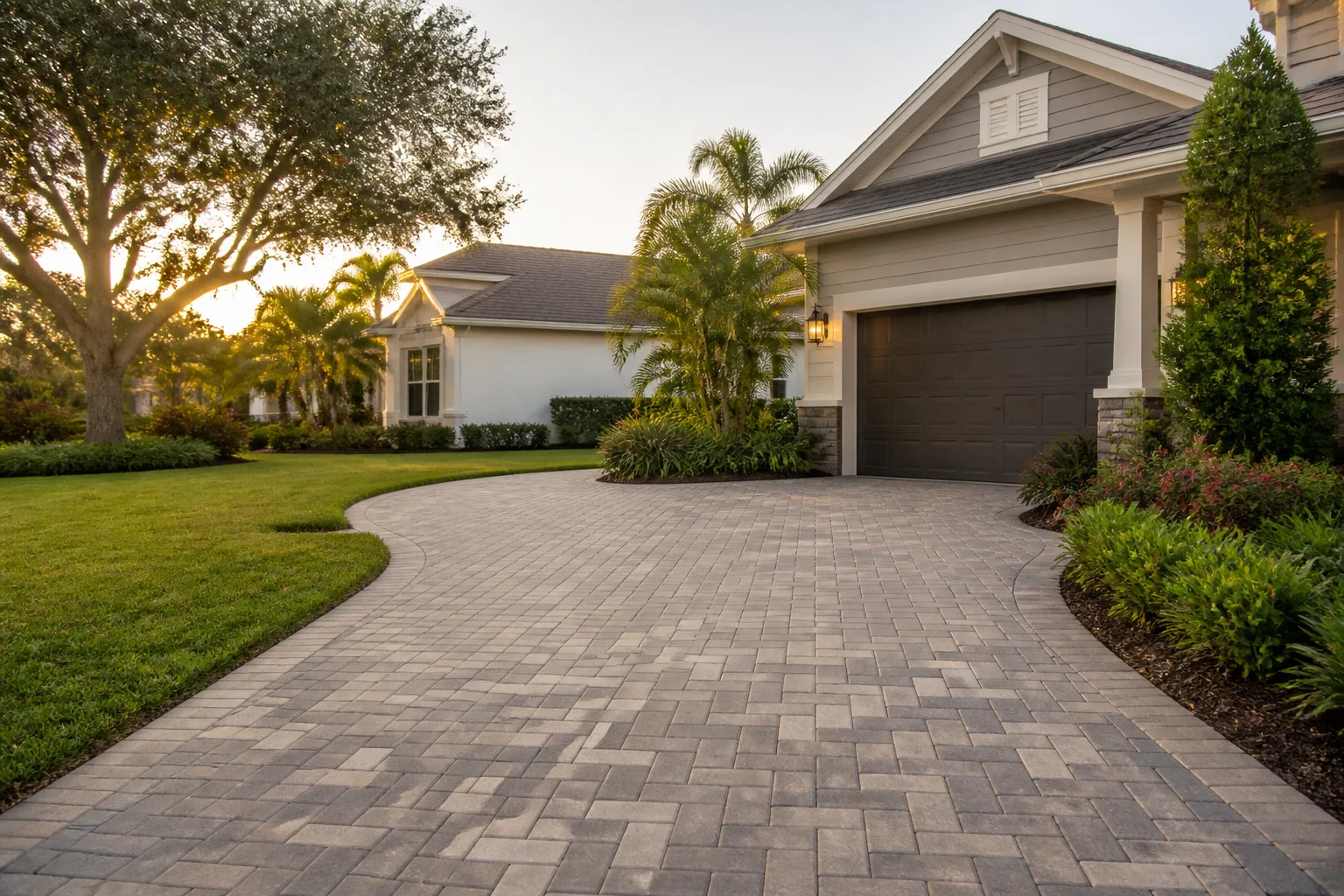
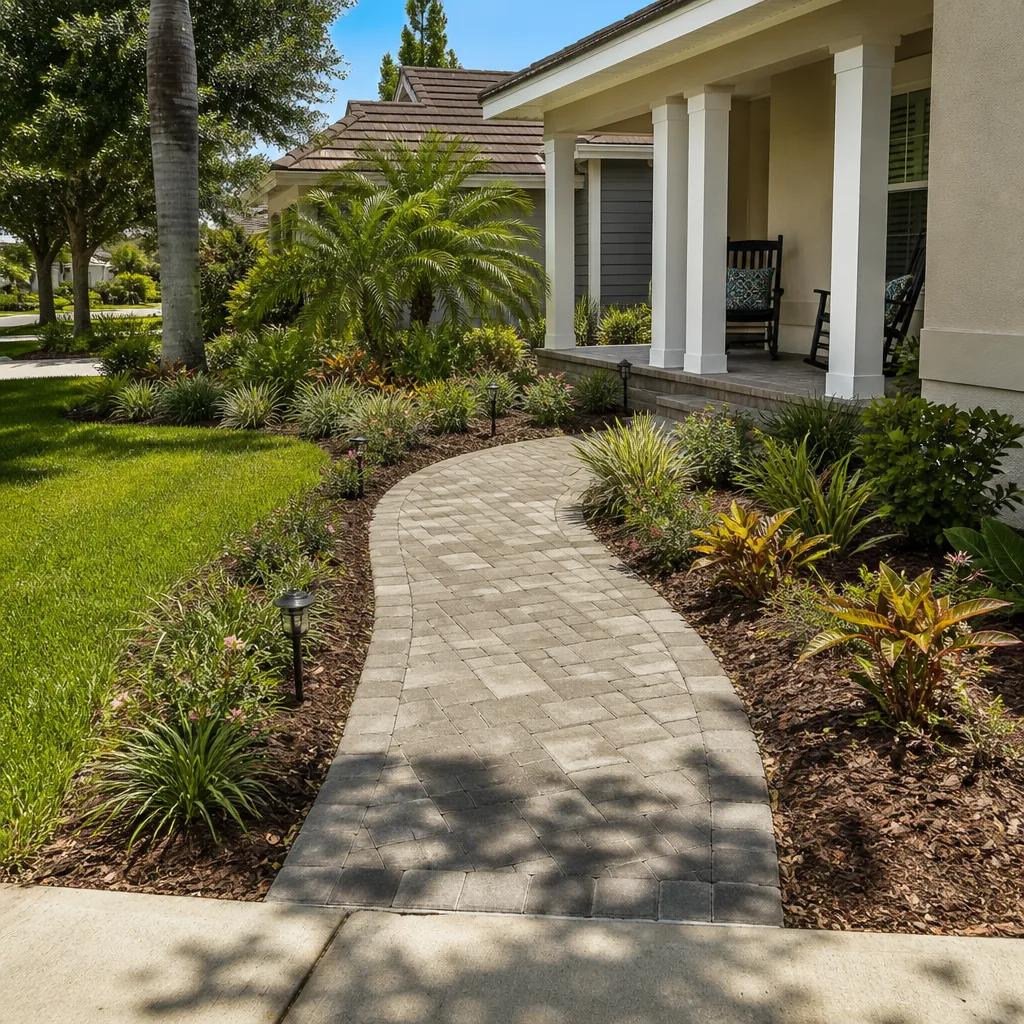
The workhorse choice for Richmond. High-quality concrete pavers with integral color (not surface-dyed) hold up well to fog cycles and UV. Belgard is a strong example of a line that’s built for this kind of exposure. A medium or warm gray hides the dried salt film that appears on bay-facing driveways during onshore wind events.
Where concrete pavers fail in Richmond: cheap pavers with a thin surface color layer. That layer wears through in high-traffic wheel paths and the paver goes chalky underneath. Ask for through-mix or full-body color on any paver you consider.
Clay brick pavers
Clay brick is naturally resistant to salt and freeze-thaw (which matters more than people realize here, since Richmond gets occasional overnight freezes in January). Brick pavers don’t fade and they don’t spall if they’re genuine fired clay. The catch is weight and cost. A clay brick driveway in Richmond runs at the higher end of the price range and requires an even more robust base because of the load.
Natural stone
Bluestone and granite are beautiful and durable, but they’re a premium choice for a driveway. Slightly softer stones like sandstone can pit in a salt-air environment. Stone works best on Richmond driveway aprons and accent borders rather than the full field.
What to skip
- Sealed pavers advertised as “maintenance-free.” Sealers cloud in fog and need reapplication every few years regardless.
- Thin-veneer or stamped overlay systems presented as paver substitutes. They crack on clay.
- Any paver without a documented compressive strength rating. Richmond’s soil movement doesn’t forgive weak pavers.
Base Preparation: Where the Money Should Go
If you remember one thing from this guide, make it this: on Richmond clay, base preparation is worth more than the pavers themselves. A $6-per-square-foot paver on a correct base will outlast a $14-per-square-foot paver on a shallow one every time.
Proper base for Richmond involves:
- Excavation to the right depth. That means removing 12 to 16 inches of existing soil in clay areas, more at the apron, so the finished surface drains away from the garage rather than toward it.
- Subgrade compaction and grading. The exposed soil gets graded to a slope and compacted in lifts before anything goes on top.
- Geotextile separation fabric. This keeps clay fines from migrating up into the base layer. Skip it and the base loses drainage capacity over time.
- Aggregate base in 2- to 3-inch lifts. Each lift gets mechanically compacted before the next. A crew that dumps the entire base in and compacts once is cutting the most important corner on the job.
- Compaction testing. A proctor density test on the base is the difference between a 4-inch drive and a 25-year drive. Ask for it. Reputable installers won’t hesitate.
- Bedding sand layer, screeded. A 1-inch bedding course of sharp sand, screeded to the final slope, sets the pavers evenly.
Time is a real factor here. Proper base work takes longer than the pavers do. If a bid promises a finished driveway in three days on Richmond clay, the base didn’t get the attention it needed. If you’re weighing your driveway project against other improvements, our guide to Groundwork Construction Co. of Richmond home shows how we sequence exterior work with the rest of the house.
Seismic Movement and Jointing: The Part Most Guides Skip
Most driveway guides treat joint sand as a cosmetic detail. In Richmond, jointing is a structural element. The Hayward Fault runs through the East Bay, and we live in a zone where small ground movements are routine. A rigid driveway with tight-set pavers and no give will transmit that movement into cracks and misalignment. A driveway with properly filled, slightly flexible joints absorbs it.
What that means for your spec:
- Use polymeric or stabilized joint sand, not plain mason sand. Polymeric sand locks the pavers into a semi-flexible surface and stays in place through wet seasons, which is what you want here.
- Leave proper gap tolerances. Joint width of 1/8 to 3/16 inch is standard, but how the pavers sit matters, and Rush-order crews who slam pavers tight are inviting the failure.
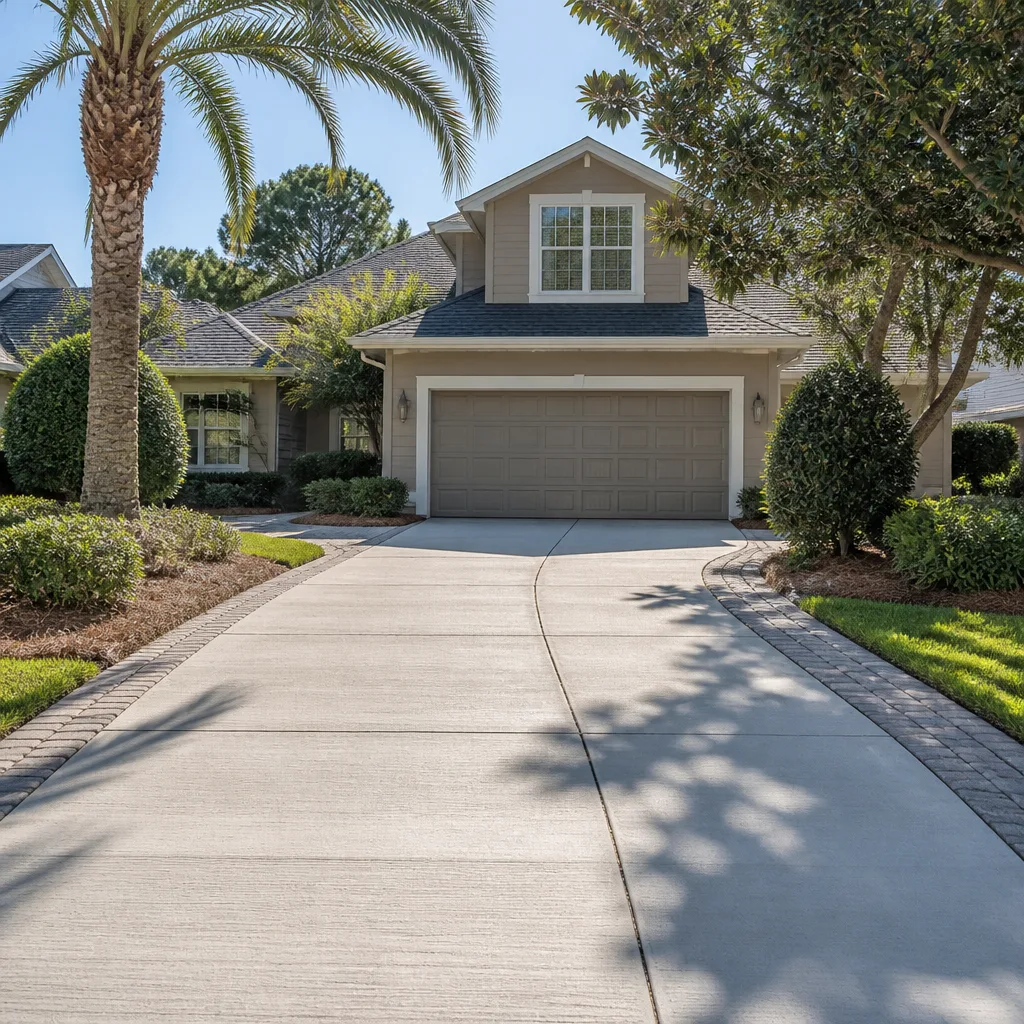
- Edge restraint is non-negotiable. Spiked or adhesive-set edge restraints hold the field in place and prevent the outer rows from walking outward when the ground moves. The most common DIY driveway failure in Richmond is missing edge restraint.
- Flexible expansion joints at any interface with concrete (city sidewalk, garage apron) let the two systems move independently without cracking the slab.
Pavers installed this way don’t just look better. They survive a seismic zone and a moving soil profile at the same time.
Permits for Richmond Driveway Work
Driveway work in Richmond is a permitter’s city. The city requires a permit for new driveways, driveway enlargements, changes to the curb cut, and any work that affects the right-of-way. Repaving an existing driveway in the same footprint with the same material sometimes falls under a minor work exemption, but always verify before the paver truck arrives.
What to know:
- Permits come from the City of Richmond, not Contra Costa County, for addresses inside the city limits. Unincorporated areas of West Contra Costa (parts of El Sobrante, North Richmond, and surrounding pockets) fall under the county. Confirm which jurisdiction your address sits in before applying.
- Curb cut widening requires a separate encroachment permit. Any change to the apron opening near the street triggers review from the public works department.
- Stormwater management plan is part of the package. Richmond requires stormwater controls on paving projects above a certain size, and a pervious option or a drainage channel can satisfy it.
- Inspections happen at more than one stage. Expect a pre-pour or pre-install inspection and a final. Base and subgrade get checked.
- Expedited review exists for residential projects under a certain scope, but timelines can still run a few weeks.
Ask any contractor you hire to pull the permit themselves. If they suggest you pull it as the homeowner, that’s usually a sign they’re not licensed to pull it or they’re trying to dodge the inspection process. Our Driveway & Pavers in Richmond page walks through how we handle permits as part of the estimate.
What Driveway Pavers Actually Cost in Richmond
National averages are close to useless for a Richmond project. Base depth, permit fees, and slope conditions here push the cost above what you’d see in Sacramento or Fresno for the same square footage.
| Line Item | Typical Richmond Range |
|---|---|
| Concrete pavers, material | $3.50 – $7.00 / sq ft |
| Clay brick pavers, material | $6.00 – $11.00 / sq ft |
| Base prep (excavation, fabric, aggregate, compaction) | $5.00 – $9.00 / sq ft |
| Bedding sand and setting | $2.00 – $3.50 / sq ft |
| Polymeric joint sand | $0.75 – $1.50 / sq ft |
| Edge restraint and expansion joints | $1.50 – $3.00 / linear ft |
| Permit and stormwater plan | $300 – $900 per project |
| Old surface removal and haul-away | $1.50 – $3.00 / sq ft |
Total installed cost in Richmond runs $16 to $28 per square foot for a typical residential driveway. A 500-square-foot driveway (two cars, standard apron, no widening) lands between $8,000 and $14,000. Add stone borders, widening, or complex drainage and the number climbs.
The material costs are what they are. The base is where bids diverge the most. Two contractors quoting the same driveway can be $4,000 apart entirely because one is specifying 6 inches of base and the other is building a Richmond-appropriate 10. Ask for the base depth in writing on any quote.
The Installation Process, Step by Step
Here’s what a well-run paver driveway job looks like in Richmond, from start to finish.
- Site assessment and drainage plan. Identify slopes, downspout locations, and where water wants to go. Confirm jurisdiction and permit path.
- Permit application. Filed before work begins. Inspection schedules align with the project timeline.
- Demolition and haul-away. Old asphalt, concrete, or pavers removed. Native soil exposed.
- Subgrade grading and compaction. Soil graded to final slope and compacted in lifts.
- Geotextile installation. Separation fabric laid over the subgrade.
- Aggregate base in lifts. 8 to 12 inches of aggregate added and compacted in stages. Compaction test performed.
- Bedding sand screed. 1-inch sand layer set to final slope.
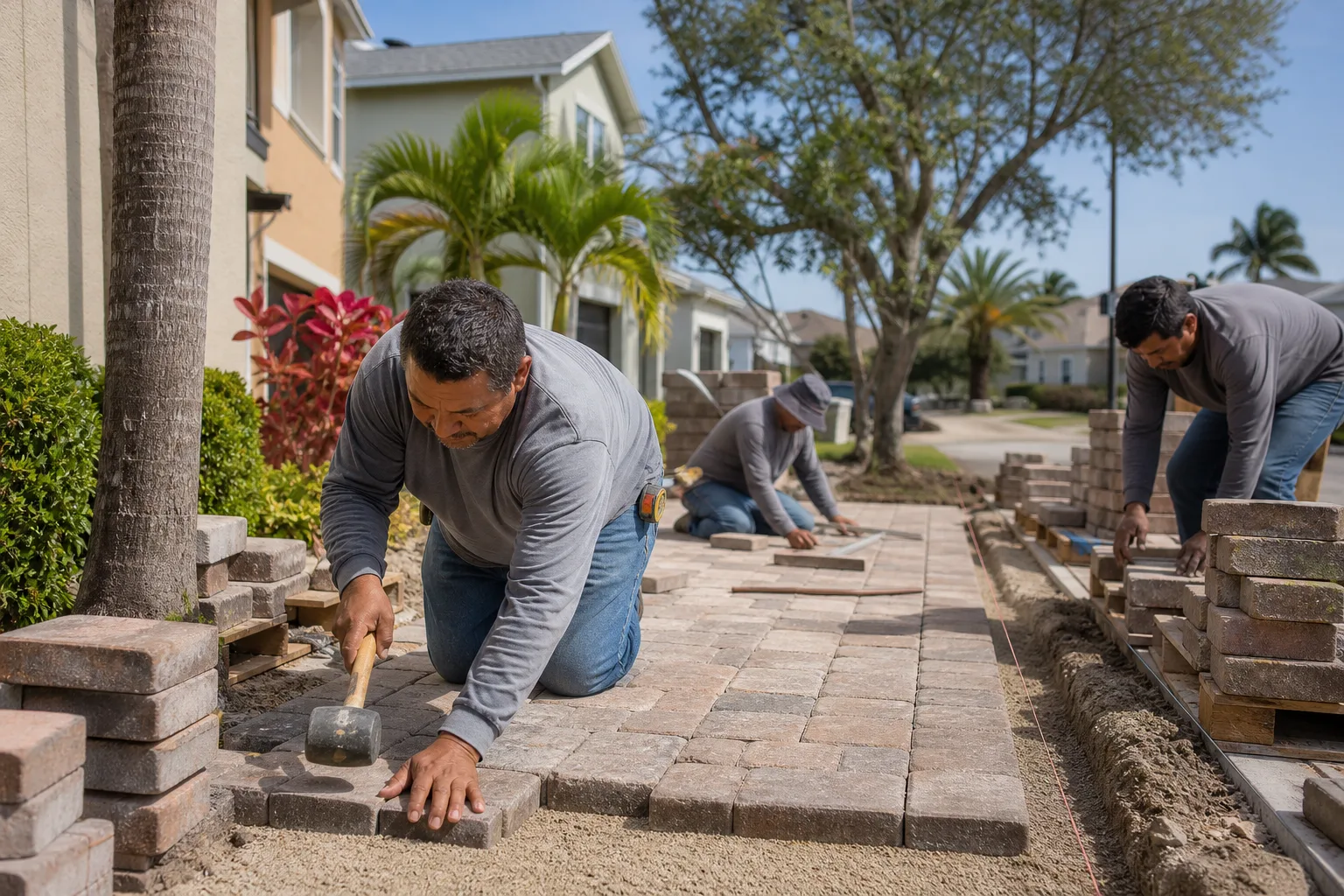
- Paver installation. Field laid, pattern aligned, cut pavers at all edges.
- Edge restraint installation. Spiked or adhesive-set restraint on all open edges.
- Polymeric sand and compaction. Joint sand worked into gaps, pavers plate-compacted, surface cleaned.
- Final inspection. City sign-off, drainage verified, site walkthrough with the homeowner.
Most residential driveway projects in Richmond run 5 to 10 working days once the permit is in hand. That’s not a fast-and-efficient number; it’s the honest one. If you’re also planning a fence or a detached structure near the driveway, we coordinate that work through our Fence Installation in Richmond service so the site stays a single project rather than two.
Keeping Pavers Healthy in Richmond
Properly installed pavers need very little. What they need in Richmond specifically is attention to the wet season and to salt.
- Sweep, don’t power-wash aggressively. High-pressure washing blasts out joint sand. A stiff broom and a garden hose do the job.
- Top off polymeric joint sand every 3 to 5 years. Richmond’s wet season and ground movement work sand out of joints slowly. Replacing it extends the life of the whole system.
- Check drainage before every winter. Clear leaves and debris from any channel drain or apron line before the first big storm.
- Rinse salt film. Wind-driven salt from the bay can dry on pavers. A light rinse once or twice a season keeps the surface looking even.
- Avoid de-icing salt. On those rare January freeze nights, use sand for traction, not rock salt. Salt attacks concrete pavers and joint sand over time.
- Watch for localized settling. A single sunken paver pattern at the apron often signals a drainage issue starting. Fix the drainage before re-laying pavers.
Common Mistakes to Avoid
- Specifying a national-average base depth. A 4-inch base on Richmond clay will fail within a few winters. Insist on 8 to 12 inches of aggregate with compaction testing.
- Skipping the geotextile fabric. It’s a cheap component of the job that saves thousands later by keeping clay fines out of the base.
- Using mason sand in the joints. It washes out in the first wet season. Polymeric sand is the standard for Richmond.
- Hiring a contractor who won’t pull the permit. Unpermitted driveway work in Richmond creates a problem at resale and tells you something about how they run the whole job.
- Letting the driveway drain toward the garage. A surprising number of Richmond driveways are graded wrong from the start, sending water into the garage slab every winter. Fix the slope before anything else.
- Choosing paver color for magazine photos instead of climate durability. Lighter tones show less dried salt film; surface-dyed pavers fade fast in this fog. Function outranks aesthetics.
- Assuming the driveway is a standalone project. Seismic joint restraint, edge restraint, and connecting walkway materials all need to work together. Treat the whole hardscape as one system.
See the difference
 Before
 After
 Before
 After
 Before
 After
When to Call a Professional
Some driveway work is a weekend project. Richmond driveway paver installation is not. The base excavation, subgrade grading, and compaction testing that this soil demands need equipment and experience most homeowners don’t have. Watch for these signals to call in help: a driveway that pools water after rain, an existing apron that’s lifting where it meets the street, pavers that sink at the wheel paths, joint sand that washes out every wet season, or any plan to widen or change the curb cut. Any of those means the issue is in the base, not the surface. A cosmetic fix will look fine for one season and fail again.
Groundwork Construction Co. of Richmond offers free estimates in Richmond and treats every driveway as a soil problem first and a paver problem second. Call (833) 700-4611 and we’ll walk your site and talk through base spec and drainage before you commit to anything.
Frequently Asked Questions
Most Richmond paver driveways run $16 to $28 per square foot installed, or $8,000 to $14,000 for a standard two-car driveway around 500 square feet. The cost moves most on base depth and permit scope, which are higher here than inland because of expansive clay. Call (833) 700-4611 for a free on-site estimate built for your specific soil and drainage conditions.
Yes, in most cases. The City of Richmond requires a permit for new driveways, widened driveways, curb-cut changes, and work affecting the right-of-way; unincorporated West Contra Costa areas fall under the county instead. Confirm your jurisdiction before work begins. We pull permits as part of the project and handle inspections. Call (833) 700-4611 to confirm your address’s permit path.
We specify 8 to 12 inches of compacted aggregate on Richmond clay, versus the 4 to 6 inches most national guides recommend. The soil moves seasonally, and active clay requires a deeper, mechanically compacted base with geotextile fabric to prevent pumping. Ask any contractor for the base depth in writing on your bid. Call (833) 700-4611 and we’ll walk your site and quote the right spec.
Through-mix concrete pavers from a quality manufacturer and genuine clay brick pavers both hold up well to Richmond’s salt air and fog cycles. Skip surface-dyed pavers and thin-veneer stones, which fade and pit in this climate. Medium and warm gray tones hide dried salt film better than darker pavers. Call (833) 700-4611 to talk through material samples for your driveway.
Not on a properly quoted project. Every Richmond driveway we quote is line-item and fixed: base depth, aggregate type, paver selection, permit costs, haul-away, and edge restraints are all on paper before we start. If we find a hidden condition during excavation (an unexpected utility or subgrade issue), we stop and talk to you before proceeding. Call (833) 700-4611 for around-the-clock answers to pricing questions.
A paver driveway on a properly engineered base in Richmond typically runs 25 to 40 years with routine joint sand maintenance. That’s roughly three times the lifespan of asphalt in the same soil conditions. The base is the variable. Get that right and the pavers themselves barely age. Call (833) 700-4611 to talk through a long-horizon driveway plan.
Rarely, and almost never successfully on Richmond clay. Overlaying pavers on an existing slab looks like a savings and turns into a failure within a few seasons, because the slab moves differently than the subgrade would if properly prepared. Removing the existing surface and building a proper base is the only spec we’ll quote. Call (833) 700-4611 for a site assessment before you consider an overlay.
The Bottom Line
Richmond driveways live or die on the base, not the paver choice. Expansive clay, seasonal ground movement, marine fog, and seismic activity all push the spec above what a national guide will tell you. Get the base right, use polymeric joint sand with proper edge restraint, hire a contractor who pulls the permit, and pick materials that hold up to salt air. Do those four things and the driveway outlasts the loan. Skip them and you’ll be re-doing the job in seven years. Groundwork Construction Co. of Richmond backs the work with our 730-Day Done Right Promise, and every estimate is upfront pricing with no surprises. If you’re also thinking about a larger project alongside the driveway, our Home Additions & ADU in Richmond team can plan the site so both phases work together.
Ready to price your driveway? Call (833) 700-4611 for a free estimate. A live person answers 24/7, no voicemail, and you’ll walk your site with a technician who can tell you exactly what your base spec needs to be before you spend a dollar on pavers.
Written by the team at Groundwork Construction Co. of Richmond.