Last updated November 18, 2026






Free written scope consultation - allowances, timeline, and change-order rules on paper before a single trade is scheduled
Construction Emergency Preparedness Guide for Richmond Homes
Most Richmond homeowners know the Hayward Fault runs nearby. Fewer know it passes within roughly two miles of the city, and that a large share of the housing stock here was built before seismic bracing was standard practice. That combination means almost every property in Richmond has at least one construction element – a cripple wall, a retaining wall, a set of older windows, a flatwork slab – that turns from an asset into a liability the moment the ground moves or an atmospheric river parks over the East Bay. This guide covers what to check after an earthquake, how to tell a drainage defect from a maintenance gap, how to secure an active job site mid-project, and how to spot fraud that spikes after a seismic event. It’s built for Richmond, and it’s built to be used.
Quick Answer
Construction emergency preparedness for a Richmond home means three things done before an emergency: documenting your foundation, retaining walls, drainage, and flatwork with dated photos and your permit records; knowing the inspection sequence to run within 24 hours of a seismic or storm event; and verifying any contractor’s credentials before pressure forces a fast decision. Richmond’s seismic and flooding exposure makes this an annual task, not a hypothetical one.
Styles & brands we work with
- Kitchen remodeling
- Bathroom remodeling
- Home additions & ADU
- Roofing
- Windows & doors
- Driveway & pavers
- Fence
Table of Contents
- Why Richmond Is Different: Fault Line, Fill, and Flatwork
- The 24-Hour Post-Earthquake Inspection Sequence
- Storm Drainage Failure: Defect, Maintenance Gap, or Infrastructure?
- Emergency Triage for an Active Construction Site
- Insurance Documentation That Determines Whether a Claim Pays
- Richmond Contractor Fraud Patterns After Earthquakes and Atmospheric Rivers
- How to Verify Credentials Under Pressure
- Your Annual Richmond Preparedness Calendar
Why Richmond Is Different: Fault Line, Fill, and Flatwork
Richmond sits on a mix of bedrock, bay fill, and old industrial ground, and that mix matters more than any single house feature. The neighborhoods closest to the Hayward Fault corridor – parts of North and East Richmond, and the flats below the hills – see stronger ground shaking than the hill neighborhoods west of the ridge. Homes on bay fill in the Marina Bay and South Richmond areas also settle differently than homes on the Point Richmond hillside, and that difference shows up in foundations, retaining walls, and flatwork after an event.
Two structural details are worth knowing before anything happens. First, the age and type of your foundation. A home with a raised or cripple-wall foundation that predates modern seismic bracing behaves differently from a slab-on-grade build, and the difference is visible in the cracks that appear after shaking. Second, your retaining walls. Richmond’s hillside neighborhoods have hundreds of retaining walls holding back slopes, and a wall that was built without proper drainage and backfill fails faster than the slope behind it.
In our experience across Richmond, the flatwork tells the story first. A driveway or patio slab that cracks in a clean line after a quake usually points to ground movement below, not a bad pour. Cracks that spider outward near a foundation wall often signal settlement that started long before the event. When the pattern is unclear, the driveway is the cheapest place to start reading the site, and you can learn more about the materials and drainage that hold up best in Driveway & Pavers in Richmond. The point isn’t to diagnose from a crack. It’s to know which cracks are worth a professional look and which aren’t.
One more Richmond-specific factor: atmospheric rivers. When the region takes a multi-day rain event, the ground under a home on fill saturates, and the same crack that was cosmetic in July becomes a water path in January. Prepare for both in the same pass.
The 24-Hour Post-Earthquake Inspection Sequence
Within 24 hours of a seismic event, Richmond homeowners can run a basic inspection themselves, safely, from the ground. The sequence below doesn’t require a ladder, doesn’t require tools, and doesn’t require entering a crawlspace. It gives you a written record you can hand to a professional or an insurer.
Before you start: if you smell gas, see a downed power line, or the home is visibly leaning or has a collapsed chimney, stop, get out, and call 911. Do not run the rest of this sequence.
- Walk the perimeter. Photograph every exterior wall from a safe distance. Look for new diagonal cracks wider than a pencil, separation at window and door corners, or a wall bulging outward. Note the location and width.
- Inspect the foundation above grade. Look at the visible portion of the foundation on all sides. Horizontal cracks or step-cracking along mortar joints in a masonry foundation need a professional look. Cracks that were there before and haven’t changed go in the “known” pile.
- Check the crawlspace entry from the door. Open the access hatch and look in with a flashlight only. Don’t enter. Look for a foundation wall that’s moved, a beam that’s dropped out of its pocket, or new water intrusion. Photograph what you can see.
- Inspect retaining walls. Step back and look for rotation, masonry cracking, or soil pushing out over the top. A wall that’s leaning toward the slope is failing. A wall that’s leaning away from the slope is a serious safety concern. Don’t stand below it.
- Walk the flatwork. Photograph new cracks in the driveway, patio, and walkways. Note whether they’re new, wider, or longer than before. Check for displacement – one side higher than the other is the signal that matters.
- Check windows and doors. Open and close every door and window that was working the day before. If several suddenly stick or won’t latch, your framing has moved and that’s worth a professional inspection. Windows near the end of their service life can also be a factor here; if the home needs work anyway, see Groundwork Construction Co. of Richmond home for the full range of services.
- Photograph, date, and store. Save everything to cloud storage today, not next week, with the date in the filename. That record is what an insurer asks for first.
Safety comes before documentation. If the foundation appears to have moved, the chimney is cracked, or the home looks out of level, call a licensed structural professional before going inside again. That’s not a call you want to make on your own with a flashlight.
Storm Drainage Failure: Defect, Maintenance Gap, or Infrastructure?
When storm water pools in your yard or backs into your garage during an atmospheric river, the most useful question isn’t “who do I blame?” It’s “what kind of failure is this?” There are three answers, and each has a different responsible party.
Construction defect. If a French drain was installed without proper slope, a downspout was never tied into a discharge line, or a retaining wall was built without weep holes and gravel backfill, that’s a defect. The point of failure usually traces back to the installation, and it’s typically found on the original contractor’s workmanship record or a permit inspection file. The remedy is a repair, and a workmanship guarantee from the original builder or a new one should cover it.
Maintenance gap. If the drain exists but the gutter is clogged, the catch basin is full of leaves, the discharge line has roots through it, or the grading has settled back toward the house, that’s a maintenance issue. Richmond properties with mature eucalyptus and oak trees see this constantly. It’s the homeowner’s responsibility, and it’s the most common category by far.
Municipal or infrastructure issue. If neighbors on both sides have the same pooling, if the curb inlet on the street isn’t draining, or if groundwater is rising through a floor slab rather than from surface flow, the issue is likely in the city’s storm system or in the broader drainage pattern for the block. That path starts with a call to the city’s public works department, not a contractor.
How to tell them apart in about 15 minutes:
- Water pools in the same spot after every storm, regardless of storm size, and the ground around it is graded toward the house: likely a defect.
- Water pools after a big storm, drains normally after a small one, and there are trees within a few feet: likely maintenance.
- Water pools across multiple properties or pushes back through a floor drain: likely infrastructure.
In our experience, Richmond properties hit the maintenance category in roughly three out of four calls. That’s good news, because the fix is usually straightforward. But know the category before you call anyone, because it determines who pays.
Emergency Triage for an Active Construction Site
If a storm or seismic event hits mid-project, the sequence matters. What you secure in the first hour determines the scope of the recovery. What you document in the first day determines whether insurance pays. What you communicate in the first week determines whether the project finishes on schedule.
Secure first. In this order:
- Utilities. If gas, water, or electrical service is damaged anywhere on the property, shut it off if you can do so safely and call the utility. Don’t touch anything you’re not sure about.
- Loose materials. Plywood, siding, roofing bundles, and anything stacked outside becomes a projectile in wind. Move it to a sheltered area or strap it down. For a roofing project, ask the contractor to confirm the roof is decked and dried in before the next weather window.
- Openings. Any portion of the home left open to the weather – a removed window, a missing door, an unfinished wall – needs temporary enclosure. The contractor’s responsibility is to install it, but yours is to confirm it happened.
- Shoring and safety. If a wall was opened for a remodel and hasn’t been properly shored, that’s a call to the contractor immediately, not a DIY fix. Same for any structural work in progress.
Document second. Photograph everything before and after securing it. Save your written communication with the contractor – emails and texts count. Note the date, time, and what was damaged by the event versus what was already open or incomplete. That distinction matters for insurance and for determining who pays for what.
Communicate third. Call the contractor’s main number (not a subcontractor) and follow up in writing with your photos. If the project involves structural or roofing work, ask for a written re-inspection plan before work resumes. Materials matter here too: if the project uses shingles from a brand like CertainTeed or Owens Corning, ask for confirmation those bundles are dry and undamaged before they go back on. The next storm doesn’t wait for a fresh delivery.
Insurance Documentation That Determines Whether a Claim Pays
When a claim is filed, the insurer asks for the same handful of things every time. Homeowners who already have them in a folder get paid faster. Homeowners who scramble to assemble them after the event usually hit a wall. Here’s the list, and it’s worth taking an afternoon to build before anything happens.
- Dated photos of every elevation of the home. Exterior walls, foundation, roof line, flatwork, retaining walls, and fence. Take them from a consistent position so you can compare after an event.
- Interior photos of every room, plus the attic and crawlspace. A phone camera and a cloudy day is enough. The point is “before” evidence, not professional photography.
- Copies of your current and past permits. The permit file for your roof, kitchen, addition, or fence tells an insurer the work was done legally and when. Richmond permits are retrievable from the city’s building department, and it’s worth having a PDF copy of every one attached to your home.
- Contractor records for every project. The signed contract, the final invoice, the workmanship guarantee, and the brand and model of materials used. If your roof was replaced with IKO or Atlas shingles, for example, the brand and product line matter for warranty claims.
- Photos of the work in progress. This is the one most homeowners skip. Photos of open walls, new framing, and roofing underlayment prove two things after a claim: the work was done, and it was done the way the contract said.
- Your policy declarations page and a list of your coverage limits. Especially the difference between dwelling coverage and code-upgrade coverage. The gap between the two is where most Richmond claims surprise people.
Store all of it in cloud storage, not just on a phone. If the roof goes, so does the phone. Once a year, add a fresh set of photos and replace the older set so you’re never documenting a decade-old version of the home.
Richmond Contractor Fraud Patterns After Earthquakes and Atmospheric Rivers
After a seismic event or a major storm, out-of-area contractors arrive in Richmond with door hangers, flyers, and a hard sell. Some are legitimate and productive. Some are not. The pattern that repeats here, and that we’ve watched play out after weather events across the region, is predictable enough that you can spot it before you sign anything.
The patterns to know:
- The “while we’re in the neighborhood” pitch. A crew shows up unannounced, claims to have leftover material from a nearby job, and offers a discount that expires today. Legitimate contractors rarely work this way, and Richmond residents have reported this in the hills after storm events.
- The too-high-to-be-true insurance offer. A “public adjuster” or “claims specialist” offers to handle the whole claim for you, often with a signature and a percentage of the payout. In California, public adjusters are licensed and regulated, and the contract must disclose the fee in writing. Ask for the license, in writing, before signing.
- The unmarked van with no company name. If the crew has no uniform, no marked vehicle, and no written estimate with a company name, don’t let them on the property. Background-checked, uniformed technicians are the standard, and any legitimate operator is happy to prove it.
- The “cash only, no paperwork” request. A legitimate contractor will take a card, a check, or financing, and will issue a written contract with a schedule and a guarantee. Cash-only is a signal to walk away.
- The deposit that’s most of the job. California limits the amount a home improvement contractor can collect as a down payment, and a request for a large deposit before any work begins is a red flag, not a bargain.
- The crew that won’t provide a workmanship guarantee in writing. If the workmanship is guaranteed, the guarantee is in the contract, with a specific term and a specific remedy.
Preparedness against fraud is the same as preparedness against weather: have the credentials verified, in writing, before the pressure arrives.
How to Verify Credentials Under Pressure
When a storm hits and a contractor is on your doorstep, “I’ll check” isn’t an option you have time for. Here’s the short version you can run in ten minutes.
- Ask for the license number and look it up on the Contractors State License Board (CSLB) website. Confirm the license is active, the classification matches the work, and the name matches the company on the estimate.
- Ask for the certificate of insurance, in writing. General liability and workers’ compensation. The certificate should name the contractor and the insurer, and you can call the insurer to confirm it’s active.
- Ask for a written, line-item estimate. Scope, material brand, timeline, payment schedule. An estimate that’s a single round number with no scope is a warning sign.
- Ask about the workmanship guarantee in writing. The term, the remedy, and who honors it. “We stand behind our work” is not a guarantee.
- Ask for the direct phone number and see who answers. If you get a voicemail at 3 pm on a Saturday, that’s the number you’ll get at 3 pm on a Saturday.
We built our business around a longer version of that last point. Calls are answered by a live person, 24/7, and every project is covered by the 730-Day Done Right Promise – if it’s not done right, we make it right. That’s the standard we’d want anyone in Richmond to hold us to, and it’s the standard we’d hold any contractor to.
Your Annual Richmond Preparedness Calendar
The most useful thing this guide can give you is a schedule. Richmond’s two risk seasons overlap less than people think, and each one has a different inspection target.
October – before the rains. Walk your gutters and downspouts, clear the catch basins, confirm grading still slopes away from the house, and check that the retaining wall drainage weep holes aren’t clogged. Photograph everything. Take fresh insurance photos.
January – mid-rain season. After any atmospheric river, inspect for standing water, new cracks in flatwork, and water intrusion at the base of the foundation or at the crawlspace entry. Report any new problem to the contractor or insurer that day.
April – after the rains, before the dry season. Inspect the roof for lifted or missing shingles from winter winds. Look at windows and doors for sticking. Re-check retaining walls for rotation or new cracks. Add the new photos to the insurance folder.
July – mid-year. A visual foundation walk, especially on a raised foundation. Confirm your crawlspace is dry. Note anything new in a running log.
Any time an event happens. Run the 24-hour post-earthquake sequence in this guide. Save the photos that day.
Once a year is the minimum. Twice is better. And whenever you have a project in the works – a fence, a roof, a paver driveway, an addition – ask the contractor to hand over the as-built photos alongside the final invoice. That folder is the most valuable document set you’ll own as a homeowner.
Common Mistakes to Avoid
- Photographing damage only after you’ve cleaned it up. Insurers want the messy “before” record. Take the photos first, then clean, then photograph the “after.”
- Assuming the city covers your driveway apron or retaining wall because it’s near the street. In Richmond, the retaining wall on private property is almost always private responsibility, even when the sidewalk above it is municipal. Confirm ownership before you call the city.
- Letting a contractor start work without a written scope. The post-event urgency is real, but a verbal agreement is unenforceable when the work goes sideways. The estimate should be line-item and signed before demolition begins.
- Skipping the permit because “it’s a small repair.” Structural repairs, retaining wall work, and roof replacements in most cases require permits in Richmond. An unpermitted repair can fail a future sale, and the insurer will ask.
- Ignoring a foundation crack that hasn’t changed. A stable, old crack is a known. A crack that was stable last year and is wider now is a signal. Take the photos, compare, and act on the change, not the age.
- Hiring the first crew that knocks after a quake. The fraud patterns in this guide repeat because urgency works. The ten-minute CSLB check is worth ten times more than a “today only” discount.
- Storing your documentation only on your phone. Cloud storage, with dated filenames, is the difference between a claim that pays and a claim that gets denied for lack of evidence.
See the difference
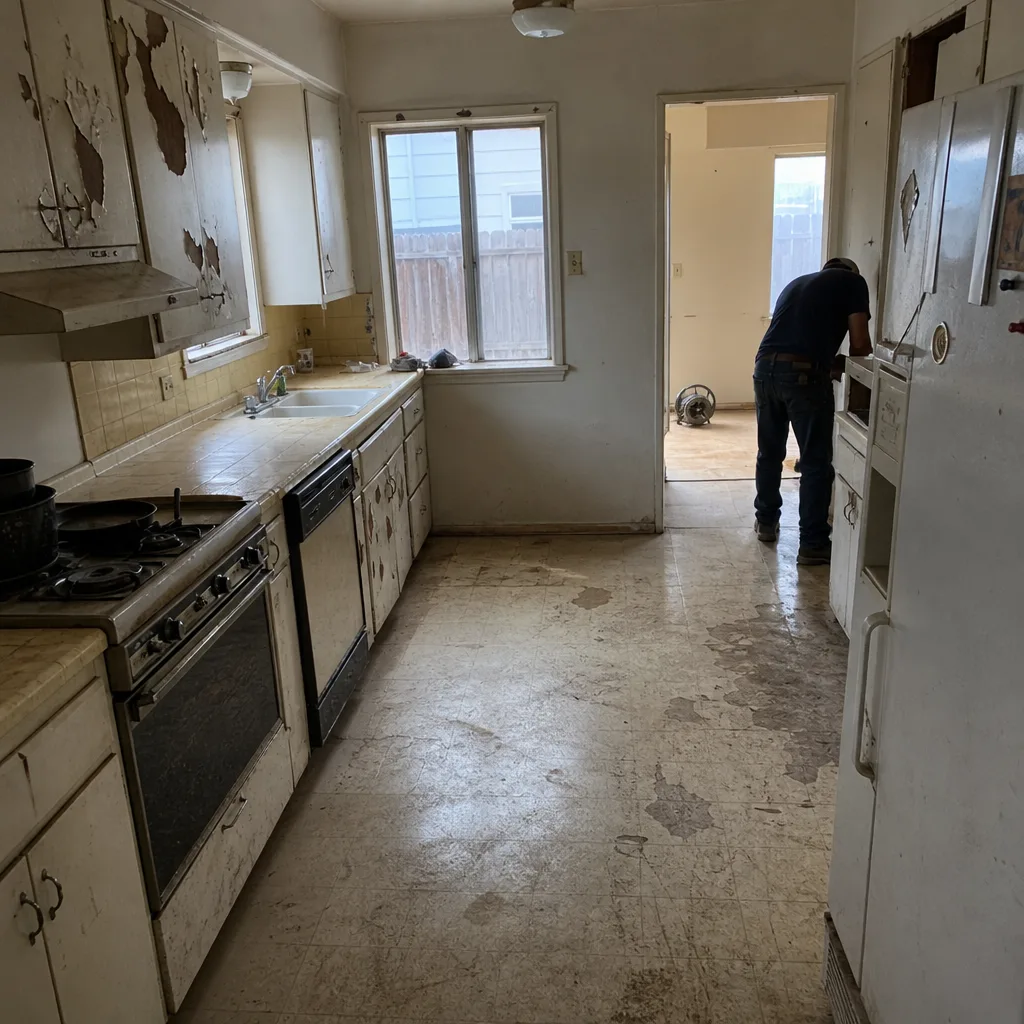 Before
 After
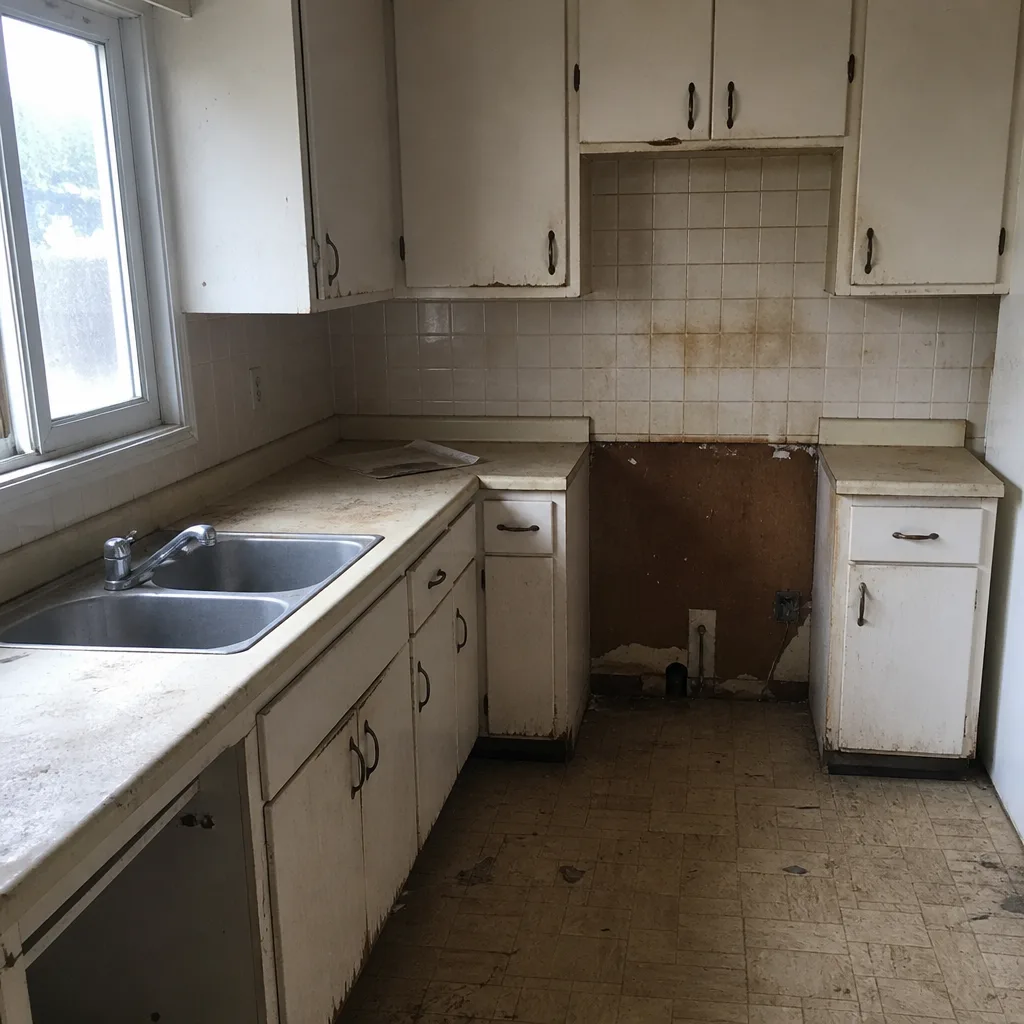 Before
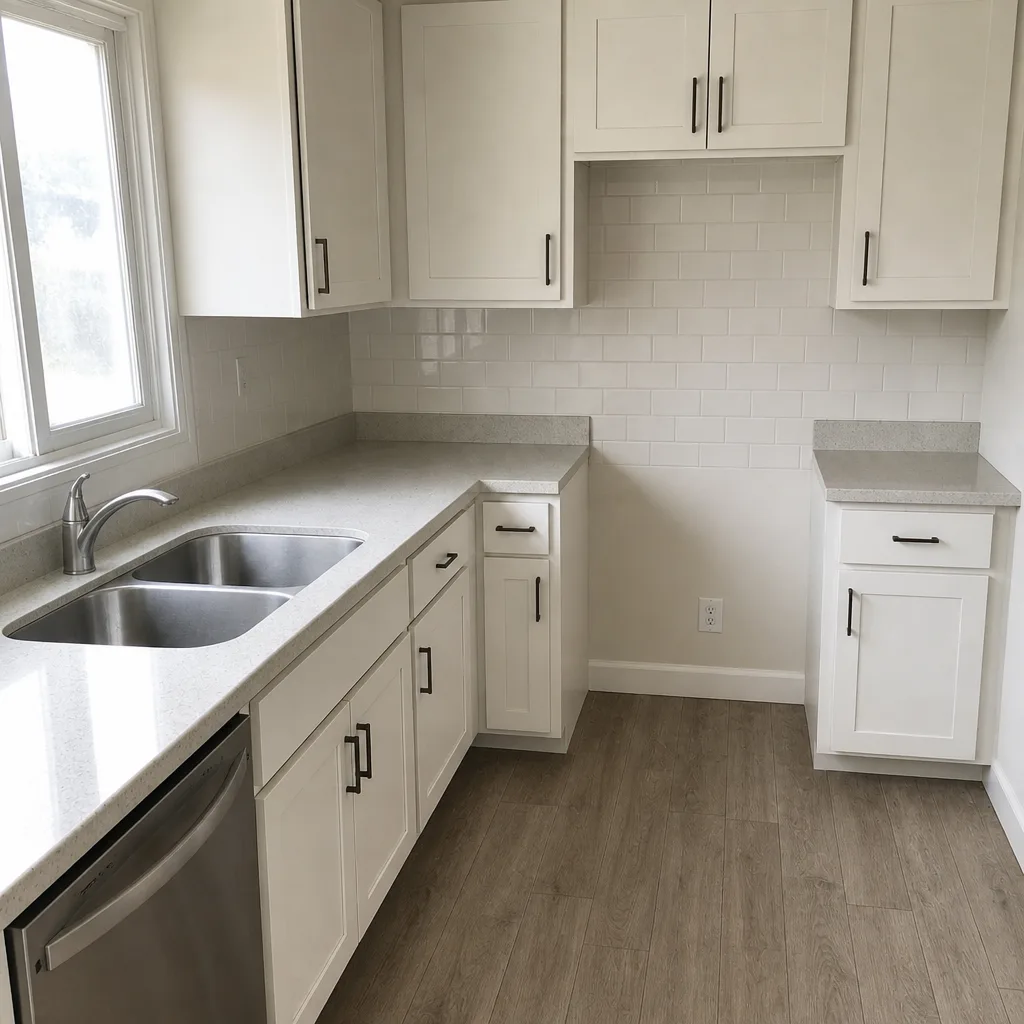 After
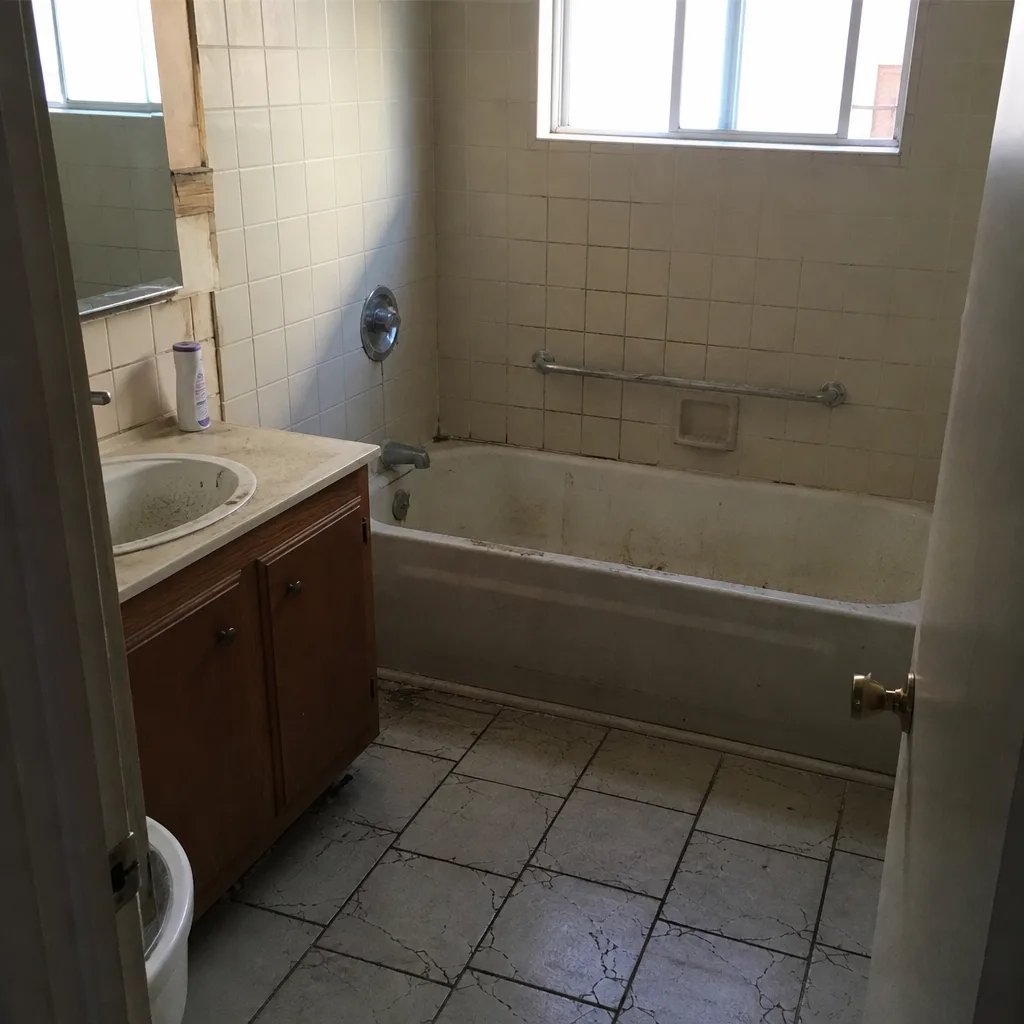 Before
 After
When to Call a Professional
Some damage can wait for a weekend project. Some can’t. Call a licensed professional when any of these are true: a foundation crack has widened or a wall has moved out of plumb; a retaining wall is tilting, has cracks through the masonry, or is pushing soil; the home has suddenly out-of-alignment windows and doors; storm water is entering the home through the floor slab or foundation; a roof has visible damage or a missing section; or an active project has open walls without shoring. These are the cases where the wrong next step makes the recovery more expensive, and where the workmanship record and materials matter most.
Groundwork Construction Co. of Richmond offers free estimates in Richmond – call (833) 700-4611. Every project is backed by the 730-Day Done Right Promise, calls are answered by a live person 24/7, and estimates are no-hassle upfront pricing – the number you see is the number you pay. If your project is larger than a repair, we also handle full additions and ADU work, so you can bring the whole scope to one team. Read more at Home Additions & ADU in Richmond, or start with the smaller project and grow from there. When a perimter needs to be secured after a storm, our Fence Installation in Richmond team handles that too.
Frequently Asked Questions

Check for gas and electrical hazards first, then photograph the perimeter, foundation, retaining walls, and flatwork from a safe distance before doing anything else. This 24-hour inspection is done from the ground and never requires entering a crawlspace or climbing. If the home looks out of level or the chimney has cracked, leave and call a licensed professional. Call (833) 700-4611 for a free estimate once you’re ready to act on what you found.
Water that pools in the same spot after every storm, regardless of storm size, points to a construction or grading defect; water that pools only after a big storm and clears on its own usually points to a maintenance gap like a clogged drain or clogged gutter. If the pooling affects neighbors on both sides or backs up through a municipal drain, it’s likely an infrastructure issue for the city. Call (833) 700-4611 to have either the defect or the maintenance case evaluated – estimates are free.
Most structural repairs, retaining wall construction over a certain height, and roof replacements require permits in Richmond, and the specific thresholds depend on the wall’s height and location. The safest practice is to confirm with the city’s building department before work starts, and to keep the permit record with your insurance documents. If you’re unsure, we’ll walk through the permit requirements with you – call (833) 700-4611 for a free estimate.
You need dated photos of every elevation of the home, copies of permits for previous work, contractor records including the guarantee and material brands, and photos of any work in progress. Insurers ask for these things first, and homeowners who have them ready get paid faster than those who have to assemble them after the event. Our team can help you assemble the contractor-record portion – call (833) 700-4611.
The main signals are unannounced “while we’re in the neighborhood” pitches, unmarked vans and crews with no uniform, cash-only payment requests, large upfront deposits, and no written workmanship guarantee. Before signing anything, look up the license on the CSLB website, ask for the certificate of insurance in writing, and require a line-item written estimate. If any of that comes up empty, walk away and call (833) 700-4611 for a free second opinion.
Yes, and the term should be long enough to survive an entire season cycle – at least one full rainy season and one seismic inspection cycle. A short guarantee often runs out before a hidden defect shows itself, which is why we back every project with the 730-Day Done Right Promise. If your current contractor won’t put their guarantee in writing with a specific term and remedy, that’s a reason to get a second estimate – call (833) 700-4611 and we’ll provide one free.
The Bottom Line
Richmond construction emergency preparedness is a routine, not a reaction. Photograph your foundation, retaining walls, and flatwork against a dated baseline. Know the 24-hour post-earthquake sequence and run it before cleanup. Understand the three kinds of drainage failure and who owns each one. Document an active project while it’s open. Verify a contractor’s license, insurance, and guarantee before the pressure of a storm forces the decision. Do those five things and the next event is an inconvenience you manage, not a loss you absorb. Groundwork Construction Co. of Richmond offers free estimates and stands behind every project with the 730-Day Done Right Promise – call (833) 700-4611 to schedule yours and get your documentation ready before the season turns.
Written by the team at Groundwork Construction Co. of Richmond.