
Last updated November 18, 2026







Free written scope consultation - allowances, timeline, and change-order rules on paper before a single trade is scheduled
Windows & Doors Troubleshooting: Common Problems and How to Fix Them
A door that suddenly sticks in winter isn’t a door problem. It’s your house telling you something shifted. Plane that door down and you’ve fixed nothing – worse, you may have sanded away the only evidence of a bigger structural issue that’s still moving underneath you. In our experience across Richmond, the mistakes we get called to undo almost always start with a homeowner treating a symptom as the disease. This guide is built around that one idea: read the symptom correctly before you touch anything. You’ll learn what each draft, fog patch, rattle, and sticking corner actually means, what you can safely handle yourself, and where the hard line sits between a weekend fix and a call to a pro.
Quick Answer
Most window and door problems trace back to one of five root causes: failed weatherstripping, a broken window seal, settling or foundation movement, house-settlement seasonal swelling, or a frame that was never installed square to begin with. Sticking doors and windows in older Richmond homes are the symptom that most often points past the unit itself to movement in the wall, header, or foundation. The fix depends entirely on getting the diagnosis right, and misreading it is how homeowners end up replacing perfectly good windows over a $40 strip of weatherstripping.
Styles & brands we work with
- Kitchen remodeling
- Bathroom remodeling
- Home additions & ADU
- Roofing
- Windows & doors
- Driveway & pavers
- Fence
Table of Contents
- Symptom-to-Cause: The Diagnostic Chart Every Homeowner Should Know
- Weatherstripping vs. Frame Replacement: How to Tell the Difference
- Interior vs. Exterior Condensation: A Distinction Most Homeowners Get Backwards
- When a Sticking Door or Window Means Foundation Movement
- Foggy Double-Pane Glass: What Seal Failure Actually Means
- What to Try Yourself vs. When to Call a Pro
- Why Richmond Homes Age the Way They Do
- Common Mistakes to Avoid
Symptom-to-Cause: The Diagnostic Chart Every Homeowner Should Know
Before you buy a single product, match what you’re seeing to what it means. We’ve walked into hundreds of Richmond homes where the reported problem (“my window is drafty”) and the actual cause (“the rough opening was framed 3/8 of an inch out of square in 1972”) had almost nothing in common. Here’s the symptom map we use on site, translated for a homeowner.
- Drafts around the edges: Usually a weatherstripping or seal failure – not a broken window. Check by running your hand along the perimeter on a windy evening. A draft at the sash edge is cheap to fix. A draft at the frame-to-wall joint is a rough opening problem.
- Sticking in one season, freeing in another: Thermal movement. Wood swells with humidity and shrinks in dry heat. If it sticks only in winter or only in summer, it’s seasonal, not structural. If it sticks year-round, dig deeper.
- Sticking year-round, or a door that won’t latch without a shove: That’s a warning sign of movement in the framing or foundation, not the door. A door that used to close clean and now drags the top corner means something behind it has changed.
- Fog or haze between double-pane glass: A failed insulating glass seal. The unit itself is done; the frame is probably fine.
- Water on the inside of the glass (not between panes): Interior humidity meeting a cold surface. Not a window failure. This is the one homeowners most often misdiagnose.
- Rattling in wind: Loose hardware, worn weatherstripping, or a sash that’s come out of its channel. Rarely structural.
- Cracks in the wall at window corners: Diagonal cracks radiating from the corner of an opening are a structural signal. We take these seriously and inspect the foundation and header before touching the window.
The pattern to hold in your head: problems at the sash are weatherstripping problems. Problems at the frame are rough-opening problems. Problems in the wall around the frame are structural problems. Each one has a different price tag and a different trade.
Weatherstripping vs. Frame Replacement: How to Tell the Difference
This single diagnosis is where homeowners lose the most money. Weatherstripping is a gasket – a compressible strip of foam, felt, vinyl, or a fin-seal that fills the gap where the sash meets the frame. Frame replacement means the whole unit and possibly the rough opening. One costs a few dollars in material; the other runs into four figures. Getting it wrong in either direction is expensive.
Here’s the test we run:
- The paper test. Close a dollar bill or a strip of paper in the window or door so it’s pinched between sash and frame. Pull it out. If it slides out with no resistance, the weatherstripping has lost its compression. If it takes a firm tug, the strip is still doing its job.
- The light test. At night, turn on a bright light outside and stand inside with the room dark. Any visible light at the perimeter is air you’re paying to heat.
- The wobble test. With the unit closed, push gently against the sash. If it moves independently of the frame, the guides or weatherstripping are worn. If the whole frame moves with the wall, you have a rough opening or structural issue.
- The corner test. Look at all four corners of the frame where it meets drywall or siding. Gaps, cracks, or visible daylight mean the seal between the unit and the wall is failing – that’s a re-caulk and possibly a re-flash job, not a frame replacement.
If weatherstripping passes the paper and light tests, don’t replace the frame. If it fails all four, you’re past weatherstripping and into re-glazing, re-frame, or full unit replacement. In Richmond, the marine air and summer fog cycles break down cheap foam strips faster than drier inland climates do, so a $15 strip every few years is a normal maintenance item on older homes, not a sign the window is failing. When it’s time to replace a full unit, our Groundwork Construction Co. of Richmond home page lays out the brand partners we install, including Andersen and Pella.
Interior vs. Exterior Condensation: A Distinction Most Homeowners Get Backwards
Here’s the counterintuitive part most window guides get wrong. Condensation on the outside surface of the glass is normal. Condensation on the inside surface, or between the panes, is where you look harder.
Exterior condensation forms on cool mornings when the outside glass is colder than the outdoor dew point. It evaporates as the day warms. It’s actually a sign your window is insulating well – the glass is staying cold enough on the outside to sweat. Nothing to fix. Don’t call anybody.
Interior condensation is on the inside face of the glass, the side you can touch from your living room. That’s your indoor humidity meeting cold glass. It’s not a window defect. It’s a signal your interior relative humidity is too high, usually from cooking, showers, laundry, or a dryer vented indoors. In Richmond’s older housing stock, we commonly see this in kitchens and bathrooms where the exhaust fans are undersized or vented into the attic instead of outside. The fix is a better fan, not a new window.
Condensation between the panes is different again. That’s not humidity at all. That’s a broken seal – the gas has escaped, moisture has gotten in, and the insulating unit is finished. You’ll see it as a permanent haze or a patch of fog that never clears, even on warm dry days. That’s the one that needs a unit replacement.
- Outside glass, morning fog, clears by mid-day: Normal, working as designed.
- Inside glass, follows showers or cooking: Humidity problem, address ventilation.
- Between the panes, never clears: Failed sealed unit, replace the glass.
When a Sticking Door or Window Means Foundation Movement
This is the diagnosis we spend the most time undoing. A door that drags at the top corner, a window that won’t latch without a slam, a corner where the drywall has cracked – those aren’t door problems or window problems. They’re the building telling you the wall or the ground beneath it has moved.
Richmond gives us useful clues. The older housing stock – homes in the Point Richmond flats, the neighborhoods around Barrett Avenue, the pre-war bungalows in North Richmond – sits on a mix of fill, bay mud, and clay that responds to seasonal groundwater shifts. A door that swells in December and frees up in April is behaving like a house on reactive soils. A door that’s been dragging progressively for three years is behaving like a house with ongoing movement, and that’s different.
Here’s the pattern that tips us off:
- Seasonal sticking that resolves: Usually soil moisture cycling through the year. Annoying, not urgent, but worth watching and documenting.
- Progressive sticking that doesn’t resolve: Possible active foundation movement. Needs inspection before you touch the door.
- Cracks radiating from the top corners of openings: Diagonal cracks in drywall are a structural signal. Do not plane the door; investigate the header and foundation.
- A door that latches at one height in spring and another in fall: The frame is moving with the house, and the door is following it. Something is settling.
- A door that drags on one side year-round and the window next to it is fine: Often a header problem – a sagging or underbuilt lintel above the opening, common in older Richmond homes that were remodeled before the current code required engineered headers.
Which brings us to the hard rule: if you plane that sticking door down and the movement is ongoing, you’ve erased the evidence and bought yourself six months before the new edge is dragging too. Diagnose first. If the movement is foundation or header related, get it assessed before anyone makes sawdust. And if the drywall around a window is cracking while the window itself is binding, that’s the phrase that means “stop and call someone.”
Foggy Double-Pane Glass: What Seal Failure Actually Means
A permanent fog or a milky patch inside a sealed double-pane unit means the perimeter seal around that unit has failed. The gas inside has leaked out, ambient moisture has gotten in, and the glass has lost its insulating value. You can’t clean it out. The fog isn’t on the surface – it’s trapped between the panes, which is why no product on the shelf will fix it.
Here’s what has and hasn’t happened:
- What failed: The perimeter seal of the insulating glass unit (IGU). This is the black or grey spacer that runs around the edge of the glass sandwich, usually filled with desiccant to absorb moisture.
- What’s still fine: The frame, the sash, the hardware, and the rough opening. Fogged glass is not a frame failure, and any contractor who tells you it is hasn’t looked closely.
- What you can do: Replace the IGU (glass only), or replace the whole window if the frame is also worn. On a newer unit still under manufacturer warranty, the glass may be covered – check the paperwork first.
- When it’s urgent: Fogged glass isn’t structural and won’t cause a wall failure. But a failed seal means the unit is now a poor insulator, and Richmond’s wet winters make interior surface condensation and mold risk worse in that room. We usually recommend replacing failing IGUs before the next rainy season.
One consistent pattern we see: fogged glass failures cluster by both age and orientation. West-facing units here take the full afternoon sun through the warmer months, then cycle through fog and rain, and the expansion-contraction stress adds up. A window that fails on the west side of an older Richmond home years before its east-facing twin did is a normal pattern, not a mystery.
What to Try Yourself vs. When to Call a Pro
We’ll give you a clean list. Homeowners deserve a straight answer about what’s safe to handle, and honestly, the list is shorter than the product aisle at the hardware store makes it seem.
Try this yourself first
- Re-caulk the exterior perimeter of a window or door frame. Scrape the old bead off, clean the surface, apply a fresh exterior-grade caulk rated for the material. This is the number-one fix for most drafts, and it costs about $10 in material.
- Replace worn weatherstripping on a door. Peel off the old strip, measure the gap, apply new foam, vinyl, or fin-seal. A common one-visit fix in our experience.
- Adjust door strike plates and hinges. A door that’s slightly rubbing can often be realigned by tightening the top hinge screws or bending the strike plate a hair. This is a screwdriver job.
- Clear and lubricate sash tracks on a sliding window. Fifty years of dust and debris can make a window feel jammed when it’s just dirty. Vacuum, wipe, apply a silicone-based lubricant – not WD-40, which attracts dust.
- Check and improve ventilation fans. If you have interior condensation, run the exhaust fan during and after cooking and showers. If the fan is weak or vents into the attic, it needs replacement – and that’s a quick electrician or handyman call.
Call a professional for this
- Anything involving the rough opening. That’s the framed hole the window sits in. Removing the unit, reframing, reflashing, and re-seating is a multi-trade job and gets done wrong by untrained hands more often than it gets done right.
- Anything involving a structural header. The header is the beam of lumber that carries the wall above an opening. If it’s sagging, undersized, or shows fracture, this is engineering territory. Do not remove, notch, or alter a header.
- Any door or window binding that’s ongoing or progressive. Movement that doesn’t stop means the diagnosis precedes the repair. Have it assessed.
- Failed IGUs (fogged glass). The sealed unit swap looks easy on video and isn’t, because the sashes are usually held by glazing stops that get brittle with age.
- Anything on a second-story window above ground floor. Ladders, height, and glass are a dangerous combination. Please don’t.
The rough opening and the header are the two hard lines. Everything else is negotiable. Get those wrong and you’ve turned a $40 problem into a four-figure repair.
Why Richmond Homes Age the Way They Do
Not every city gives you the same window-and-door problems, and Richmond writes its own playbook. Three local factors drive what we see:
Marine air and fog cycles. The summer fog line that rolls through the Richmond flats and up toward Point Richmond brings repeated wet-dry cycling to exterior seals, hinges, and hardware. Stainless and powder-coated finish hardware lasts far longer here than bare steel or unfinished aluminum. We recommend marine-grade or heavily coated hardware on any window or door replacement in the flats.
Reactive soils. A meaningful share of Richmond sits on bay fill, clay, and former marshland, including parts of the Marina Bay area and neighborhoods closer to the shoreline. These soils move with groundwater levels, and the seasonal swelling shows up first as doors and windows that change behavior with the seasons.
Older housing stock and code shifts. Many of the homes we work on were built before the 1970s, before modern rough-opening tolerances and modern header requirements. That means window and door problems in these homes are often not maintenance problems – they’re the symptoms of the way the house was framed. The California Residential Code’s requirements for rough opening sizing, flashing, and header sizing are stricter than what was commonly built then, and any replacement we do brings the assembly up to current code. When we take on a window replacement in an older Richmond home, we expect to find things the previous installer got away with. You can see how we approach window-and-door work alongside roofing and structural repair on our Home Additions & ADU in Richmond page, since new openings above grade follow the same framing rules.
Common Mistakes to Avoid
- Planing a sticking door before diagnosing the cause. If the movement is foundation or header related, planing erases the evidence and kicks the real problem six months down the road. Diagnose first, cut second.
- Replacing a whole window when only the weatherstripping failed. We see this constantly in Richmond – a homeowner replaces a unit over a draft that a $15 strip of fin-seal would have solved. Run the paper test before you sign anything.
- Confusing interior condensation with a window defect. Water on the inside face of the glass is a humidity and ventilation problem, not a window failure. Replacing the window won’t stop it.
- Using WD-40 on window tracks. It attracts dust like a magnet and builds up into a sticky mess over the summer. Use silicone-based lubricant designed for tracks and glides.
- Caulking over a wet or dirty surface. In Richmond’s wet winters, a caulk bead applied to a damp joint fails within a single season. Scrape, dry, and clean before you caulk, or wait for a dry stretch.
- Ignoring diagonal cracks at window or door corners. A single hairline crack may be settlement of the drywall. A crack radiating outward from a corner and growing, in a home that’s on bay fill or older soil, is a signal that needs a structural look before anyone touches the unit.
- Hiring whoever quotes the lowest number without a written scope. A quote is only a quote when it lists the grade of unit, the flashing method, the rough-opening tolerance, and the cleanup. If it’s one number on a business card, it will move once work starts. Our work is covered by the 730-Day Done Right Promise – if it’s not done right, we make it right – and every estimate is a written line-item scope before you sign.
On doors and windows specifically, that written scope matters more than almost anywhere else in a home. Windows are one of the few items where the rough opening work, flashing, and finish trim are as important as the unit itself, and where a corner cut shows up six months later as a draft, a leak, or a fog patch. The old-timers called it “framing and flashing – the two things nobody sees and everybody pays for.” That’s still true.
See the difference
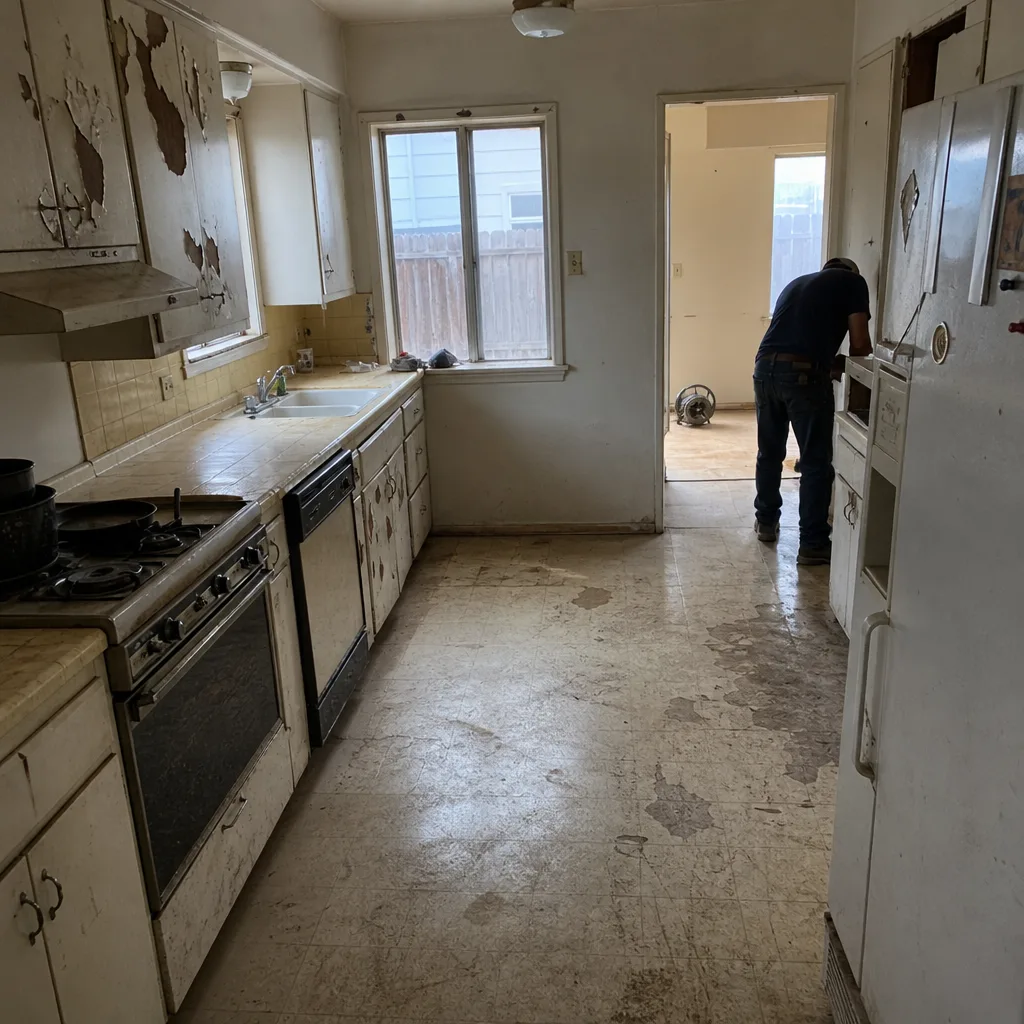 Before
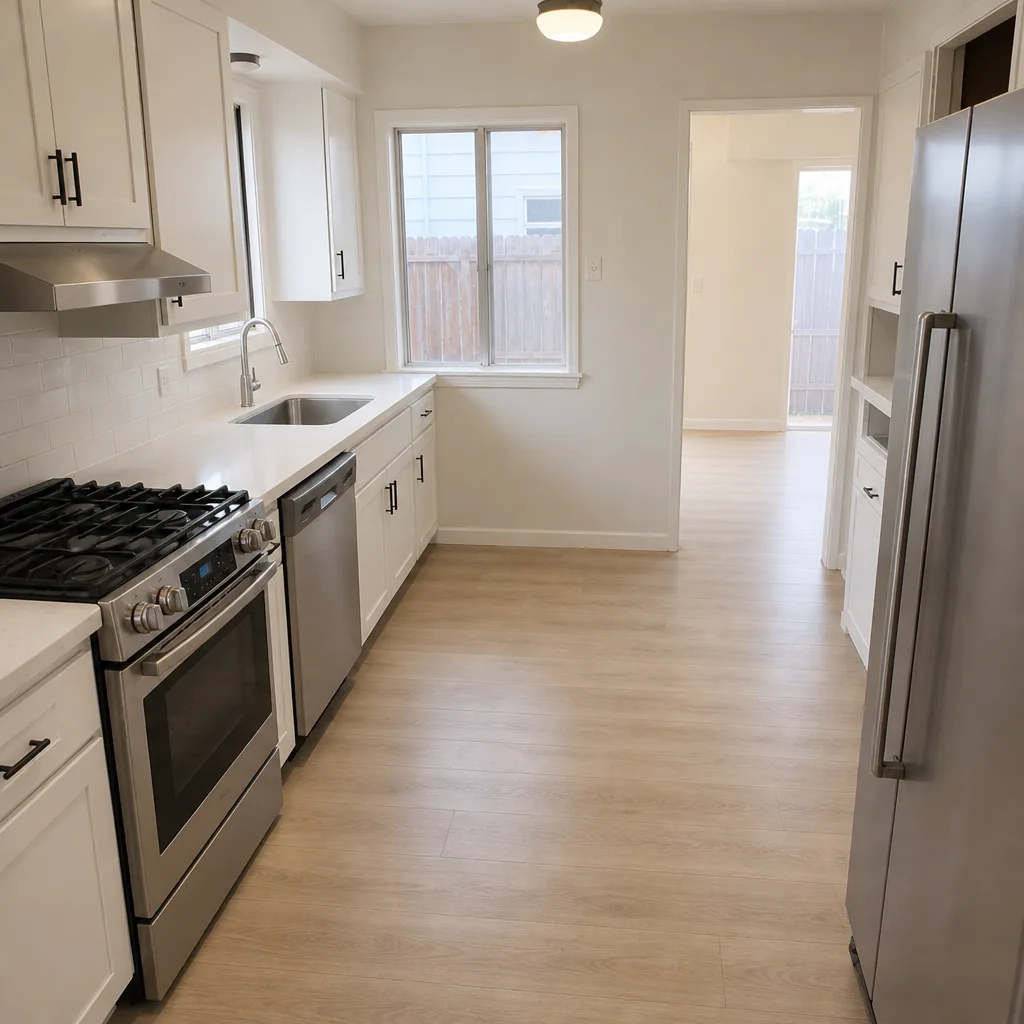 After
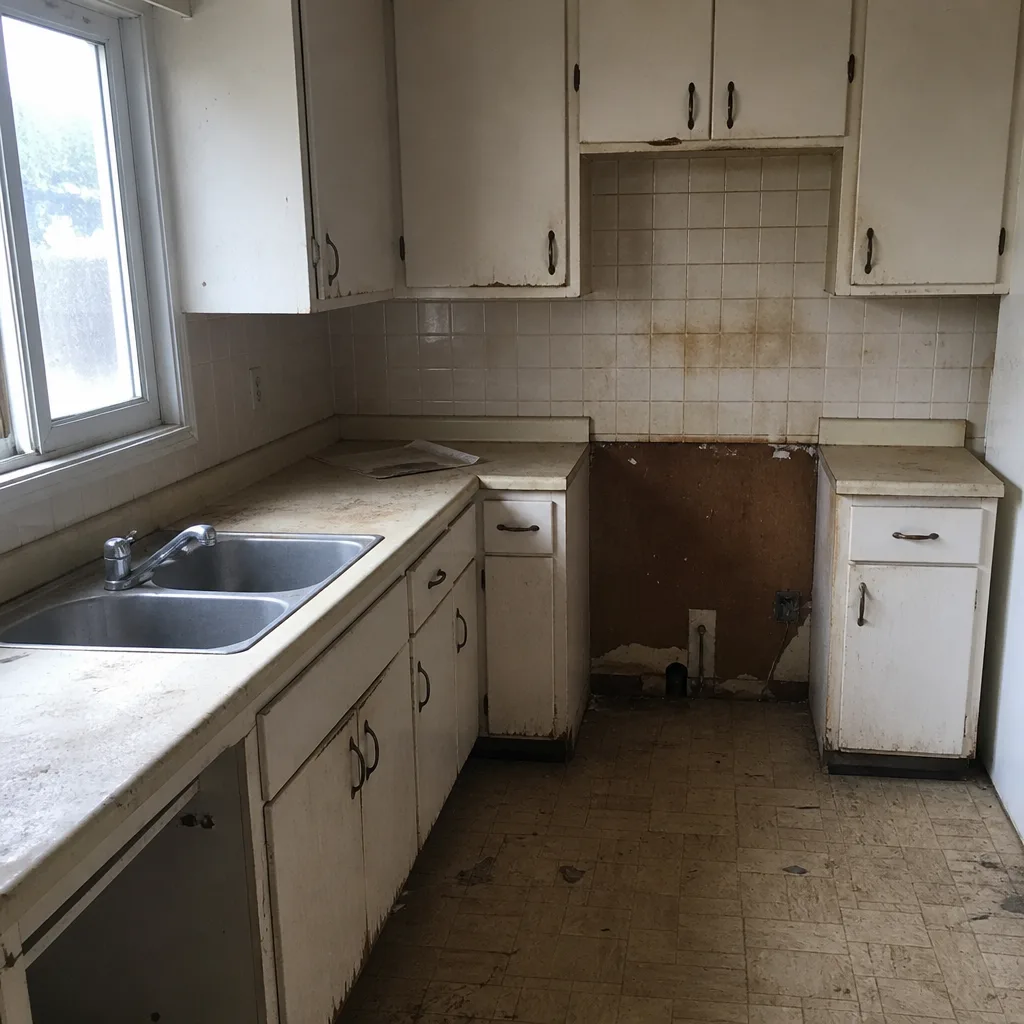 Before
 After
 Before
 After
When to Call a Professional
Call a professional when the symptom lives past the sash: any binding door or window that’s ongoing or progressive, any diagonal crack radiating from an opening, any fogged glass replacement, any work that touches the rough opening or structural header, and any second-story unit. Those are the cases where the diagnosis has to come before the repair, and where a wrong guess is expensive and occasionally dangerous. Around Richmond, the older housing stock makes that professional look more valuable, not less – a fix that’s been holding for decades in a framed wall is worth preserving when possible. The good news is that the majority of window and door complaints are still fixable in a single visit with weatherstripping, caulk, and hinge adjustment. If you’re not sure which side of that line you’re on, we offer free estimates in Richmond – call (833) 700-4611 and we’ll walk you through it. Our technicians have up to 12 years of experience with window-and-door assemblies and everything behind them, and every visit starts with a real diagnosis, not a sales pitch. If the front-of-house problem runs to fence or hardscape, that’s a different trade – see our Fence Installation in Richmond and Driveway & Pavers in Richmond pages for how we approach those.
Frequently Asked Questions

The four most common causes we see in Richmond are failed weatherstripping, broken window seals (fogged glass), seasonal frame movement from reactive soils, and headers or rough openings that were never framed square to begin with. Of those, failed weatherstripping and broken seals are the least expensive to fix, while frame movement and header problems need diagnosis before repair. The key is to identify which of those four your specific symptom points to. Call (833) 700-4611 for a free estimate if you’re not sure.
No, interior condensation is not the window failing – it’s your indoor humidity meeting cold glass. The inside face of the glass is where humid air from cooking, showers, or laundry condenses when it hits a cold surface. Condensation on the outside face is the normal one, and it’s actually a sign your window is insulating well. Condensation between the panes is the one that means the sealed unit has failed and needs replacing.
A sticking door points to foundation or framing movement when it sticks progressively rather than seasonally. If the door frees up in dry weather and binds in wet weather, that’s usually soil moisture cycling. If it’s been dragging more and more for a year or longer, and especially if there are diagonal cracks radiating from the top corners of the door or the windows nearby, that’s a structural warning and worth a professional inspection before anyone planes the door. Call (833) 700-4611 to schedule an assessment.
No, foggy glass usually means the sealed insulating unit (IGU) failed, not the frame or the rough opening. On most windows, the glass sandwich can be replaced on its own, which costs considerably less than a whole unit. The right move is to have the window checked to confirm the frame and sash are still sound, then replace only the failed IGU. If the frame is also worn – cracking at the corners, loosening at the joint – a full window replacement makes more sense.
Not with a proper written estimate from us. The number you see is the number you pay, and every job runs on a written line-item scope before anything gets ordered or cut. When we identify a hidden problem mid-job – and in older Richmond homes we do expect to find things – we stop, document what we found, and give you a written change order to approve before we proceed. Nothing moves forward without your sign-off, and the original scope never quietly expands. That’s the whole point of upfront pricing. Call (833) 700-4611 for a free estimate and written scope.
Replacement windows and doors that keep the same opening size as the existing units typically don’t require a structural permit, but any work that changes the rough opening, adds or resizes an opening, or touches the header does require one. Richmond’s building department also expects flashing and weather-barrier installation to meet the current California Residential Code, which is stricter than what was commonly built decades ago. We pull the permits and pass the inspections as part of the job, so you’re not left carrying a code issue. If your project involves new openings or an addition, our Home Additions & ADU in Richmond page covers how that process works. Call (833) 700-4611 for a free estimate on the scope.
Most single-unit window or door replacements are done in one day, and multiple units in older homes can usually be completed within a few days depending on the condition of the surrounding framing. Anything that involves reframing the rough opening or repairing a header adds time because flashing and inspection take longer than the swap itself. We finish the trim, caulk, and cleanup on the same visit whenever the scope allows, so you’re not living around open openings overnight. For a real timeline on your home, call (833) 700-4611 and we’ll scope it in the free estimate.
The Bottom Line
Almost every window and door complaint resolves to one of five root causes, and the fix depends entirely on getting the diagnosis right. Read the symptom before you touch the unit: drafts point to weatherstripping, fogged glass points to a broken seal, and a door that binds progressively points to the frame or the foundation behind it. Caulk, weatherstrip, and hinge adjustments are homeowner work. The rough opening and the header are not. Richmond’s marine climate and reactive soils make those distinctions more valuable here than in most markets, and they’re the reason the diagnosis always comes before the repair. We started Groundwork Construction Co. of Richmond to give homeowners a straight, written scope in a market that’s full of quiet surprises – and a 730-Day Done Right Promise to back it up. Call (833) 700-4611 for a free estimate on any window, door, or framing work in Richmond. Our team is ready to walk your home and tell you what’s actually going on.
Written by the team at Groundwork Construction Co. of Richmond.