Last updated November 18, 2026



Free written scope consultation - allowances, timeline, and change-order rules on paper before a single trade is scheduled
Fence Installation Warning Signs Every Homeowner Should Know
A fence can look perfectly straight on installation day and start leaning within 18 months. In almost every case, the contractor gave away exactly what was going to happen before they ever broke ground. We’ve walked onto Richmond properties where a two-year-old fence is already sagging at the gate, and the homeowner tells us the original crew “seemed nice” and “worked fast.” The warning wasn’t in the finished fence. It was in the quote that never mentioned concrete, the permit that never got pulled, and the post that went into the ground two feet instead of three. This guide is about reading those signals early, before you write a check for a fence that won’t survive a Richmond winter.
Quick Answer
The biggest warning signs in fence installation are a quote that never mentions post depth or concrete, a contractor who dodges permits, a crew that skips a soil assessment on Richmond’s clay-heavy ground, and panel spacing that ignores wind load. Any one of these tells you the job is being built to look right on day one, not to last. If you spot two or more before work starts, walk away.
Styles & brands we work with
- Kitchen remodeling
- Bathroom remodeling
- Home additions & ADU
- Roofing
- Windows & doors
- Driveway & pavers
- Fence
Table of Contents
- What Your Contractor’s Communication Says Before Work Starts
- The Post Depth Problem in Richmond’s Clay Soil
- Quote Red Flags: What a Real Fence Bid Includes
- Why a Contractor’s Refusal to Pull Permits Costs You
- Panel Spacing and Wind Load in a Bay Area Coastal Environment
- Material Shortcuts and Brand Substitutions
- Post-Installation Inspection Checklist Before Final Payment
- Common Mistakes to Avoid
What Your Contractor’s Communication Says Before Work Starts
Bad fence jobs announce themselves in conversation. We’ve noticed the pattern across Richmond: the crew that shows up late to the estimate, rushes the walk-through, and hands you a number scribbled on a business card is usually the same crew that backfills posts with dirt and calls it a day. The product looks fine for a season. Then the ground settles and the fence tells you the truth.
Here’s what to listen for in the first conversation:
- They quote a total without asking about your soil. In Richmond, the difference between Point Richmond’s fill-heavy lots and the firmer ground up in the Hillside neighborhoods changes how deep and how wide a post footing needs to be. A contractor who quotes blind is guessing.
- They can’t explain their post-setting method in plain words. Ask: how deep, what mix, how long before backfill. A pro answers in specifics. A corner-cutter changes the subject.
- They pressure you to skip the walk-through. A real estimate involves walking the property line, checking for utility markings, and looking at how the grade runs. A number texted to you is not an estimate.
- They won’t put the warranty in writing. Verbal “we stand behind our work” evaporates the moment something leans. We put our workmanship guarantee in writing, and we back fence work with the same 730-Day Done Right Promise we give every job – if it’s not done right, we make it right.
- They arrive in an unmarked van with no uniforms. Presentation is a proxy for accountability. At Groundwork Construction Co. of Richmond, every technician is background-checked and arrives in uniform, because a homeowner letting strangers onto their property deserves to know who’s showing up.
The through-line is simple: how a contractor handles the boring, respectful parts of the job – the questions, the paperwork, the walk-through – is how they’ll handle the parts that stand up to weather for the next decade.
The Post Depth Problem in Richmond’s Clay Soil
This is the single most common reason fences fail in Richmond, and it’s almost always invisible on installation day. Posts get set too shallow, filled with a couple of bags of quick-set, and then the clay soil around them expands and contracts with every wet winter and dry summer. The post works loose, the panel starts to lean, and by year two you’re looking at a fence that’s given up.
The rule of thumb: a post should be buried at least one-third of its total above-ground length, and in Richmond’s heavy clay it often needs to go deeper and wider than that. A 6-foot post should sit in a hole 2 feet deep at minimum, and we frequently go to 2.5 or 3 feet in the softer fill lots. If the contractor is setting a 6-foot post in an 18-inch hole, the fence is built to a countdown.
How to Verify Post Depth Before Concrete Sets
- Ask before digging starts. Get the post depth in feet, on paper, in the bid. If your contractor can’t or won’t state it, that’s your first red flag.
- Be there for the first post. Watch the hole get dug. A string or measuring tape takes ten seconds.
- Check the concrete, not just the dirt backfill. Posts should sit on a gravel base with concrete poured around them, not tamped in with soil.
- Look at the hole width. A 6-inch hole around a 4-inch post leaves an inch of concrete on each side. That’s too thin. It should be roughly three times the post width.
- Confirm the concrete crown. Good crews slope the concrete up and away from the post so water sheds instead of pooling at the base.
If any of this doesn’t happen, you can raise it before the concrete cures. After that, the fix means pulling the post and starting over, and a contractor who cut the corner once will fight you on the do-over.
Quote Red Flags: What a Real Fence Bid Includes
A fence quote in Richmond should read like a build plan, not a headline number. You want to see line items, materials, and the specifics of how the posts and panels will go in. When you’re shopping fence installation bids, here’s what separates a real one from a guess:
| Line item | What a real bid shows |
|---|---|
| Post depth and footing | Specific depth in feet, concrete spec or mix, gravel base |
| Panel and rail spec | Material, brand, board thickness, rail count, fastener type |
| Permit | Explicit line item, or written confirmation a permit isn’t required at your address |
| Soil or grade notes | Any observation about clay, fill, slope, or drainage along the run |
| Removal and disposal | Whether old fence and concrete footings come out, and who hauls them |
| Warranty | Workmanship term, in writing, with what’s covered and what isn’t |
| Change order policy | How pricing changes if the job runs into rock, roots, or utility lines |
When we quote fence work in Richmond, the number you see is the number you pay. No surprise add-ons after the crew arrives. That’s upfront pricing, no surprises, and you can read more about how we handle Fence Installation in Richmond on our fence service page. The quotes that skip the permit line, skip the concrete spec, and skip any mention of your soil are the ones to set down on the table and walk away from.
Why a Contractor’s Refusal to Pull Permits Costs You
“It’s just a fence, you don’t need a permit” is one of the most expensive sentences a homeowner can hear. It’s also one of the most common. But Richmond, like most Bay Area cities, has fence height limits, setback rules, and sometimes HOA overlays that a permit process catches. A contractor who skips it is trading your liability for their convenience.
Here’s what that shortcut actually costs:
- You inherit the liability. If a fence is built over a setback line or into an easement and a neighbor or the city objects, you’re the one who owns the problem – not the contractor who’s already gone.
- It shows up in a resale disclosure. Unpermitted work has to be disclosed when you sell in Richmond. Buyers discount for it, or ask you to remove and rebuild. Either way, you eat the cost.
- Insurance claims get complicated. If a wind storm knocks the fence into a neighbor’s car and the fence was never permitted, you’re explaining that to your insurer. Some policies have clauses about non-compliant structures.
- It’s a tell about the whole job. The contractor who skipped the permit is also the contractor who skipped the depth check and used the cheapest fasteners. The permit is rarely the only shortcut.
Ask directly: “Will you pull the permit, and will it be in the bid?” If the answer is “you don’t need one” without checking your address, get a second estimate.
Panel Spacing and Wind Load in a Bay Area Coastal Environment
Richmond sits in a coastal wind environment, and the wind doesn’t care how nice the fence looked the day it went in. Panels that are set too tight leave no room for seasonal expansion, so boards cup and warp. Panels set too loose rattle in a gust and pull fasteners out over a few seasons. And the wrong rail count for the wind exposure means a fence that flexes every time the afternoon wind comes off the bay.
What we look for in a properly built panel for Richmond:
- Two rails minimum, three on taller or more exposed runs. A 6-foot panel in an open, wind-exposed yard needs more structure than the same panel tucked between buildings.
- Consistent gaps between boards. Roughly an eighth to a quarter inch for wood, allowing for seasonal movement. Gaps that are all over the map mean the crew set them by eye and hoped.
- Galvanized or coated fasteners. Richmond’s marine air eats bare steel. Cheap fasteners rust, stain the wood, and fail long before the panel does.
- Posts aligned and plumb. A string line run along the whole fence should sit tight against every post. One post off by an inch is enough to make the whole run look tired.
- Rail attachment to the post, not just the panel. Rails should be fastened through the post with proper hardware, not nailed to the face with a couple of finish nails.
Material selection matters here too. Premium manufacturers design for coastal exposure, and we work with brand partners like Boral on composite and PVC lines because they hold up to Bay Area salt air without the annual repaint. Built to last, backed in writing is the standard, and if a builder can’t explain the rail count or the fastener spec, they’re not building for this climate.
Material Shortcuts and Brand Substitutions
Here’s one that’s easy to miss and expensive to fix: the quote says one thing, the delivery truck drops off another. A contractor who bid premium cedar shows up with fence-grade pine. A bid that named a specific composite brand gets delivered a house brand from the lumber yard. You might not notice until the first season of weather starts doing its work.
How to protect yourself:
- Get the brand and product line in writing. “Composite” is not a spec. “Boral composite, builder-grade” is close. The exact product line is better.
- Be there when materials are delivered. Check the stamps and labels before the crew unloads. If the material doesn’t match the bid, don’t let them install it.
- Watch for mixed loads. A pallet of “close enough” boards mixed with the right ones is still a cut corner.
- Ask about the sequence. Post-setting materials should arrive before panels. If panels show up first, the crew is planning to backfill posts with soil.
When you work with a builder that has curated brand partnerships, this goes away. We don’t substitute brands on our jobs – whether it’s an Andersen window going into a Home Additions & ADU in Richmond project or a fence product on the property line, what’s on the bid is what goes in the ground. That’s what a Groundwork Construction Co. of Richmond home project looks like from foundation to finish line.
Post-Installation Inspection Checklist Before Final Payment
The day the crew packs up is your last best chance to catch a bad build before you release final payment. Walk the fence with this list in hand. It takes 20 minutes and saves you a two-year argument.
The Walk-Through Checklist
- Run a string line down every run. Every post should touch it. If a post bows off the line, the run is going to fail.
- Shake each post. Firm handshake test. Any post that moves in the ground is either too shallow or was backfilled with dirt.
- Look at every post base. Concrete should be visible, crowned, and sloped away from the post. Soil backfill instead of concrete is a fail.
- Check the gate swing. Open and close it ten times. It should swing freely, latch without force, and not sag toward the ground.
- Walk the panel line. Gaps consistent, boards vertical, no cupping, no split ends. Fasteners set flush, not driven past the wood.
- Check the bottom rail height. Enough clearance off the ground to prevent moisture wicking and rot. Tight-to-dirt is a fail in Richmond’s wet winters.
- Confirm the permit is signed off. If a permit was pulled, the inspection card should be signed. If the contractor said no permit was needed, ask for it in writing before releasing payment.
- Get the warranty document in hand. Not a promise. A document. The warranty term, the coverage, and who to call.
If any line fails, don’t release payment until it’s fixed. A reputable contractor will want to fix it. A corner-cutter will get defensive.
Common Mistakes to Avoid
- Picking the lowest bid without reading it. The low number usually means a smaller post hole, cheaper material, or no permit. Ask what got left out, not what got discounted.
- Letting the crew set posts without confirming depth. In Richmond’s clay, an 18-inch hole is a 2-year fence. Be there for the first post, every time.
- Skipping the walk of the property line. Grade changes, buried lines, and HOA setback lines matter. A contractor who quoted from a phone photo is guessing about all three.
- Not asking about the permit. Richmond fence height and setback rules trip up homeowners every year. If the bid doesn’t address permits, the contractor is shifting that risk to you.
- Ignoring the material brand. Bid cedar, get pine is a real problem. Get the brand and product line in writing, and check the delivery.
- Releasing final payment before the walk-through. The checklist above is your leverage. Use it before the check clears, not after.
- Believing “you don’t need a warranty for a fence.” Fences are the structure most likely to fail in year two. A written workmanship warranty is the difference between a fixed fence and a repair bill you eat.
See the difference
 Before
 After
 Before
 After
 Before
 After
When to Call a Professional
Some fence problems are a phone call to the original builder. Others are a rebuild. Call a professional if your existing fence is leaning more than a few inches at the post, if the gate hasn’t latched right in more than one season, if you can see soil instead of concrete at the base of any post, or if you’re planning a new fence and your last quote didn’t specify post depth, concrete, or permit. Those are the four situations where “we’ll figure it out” turns into a two-year conversation with your neighbor. Groundwork Construction Co. of Richmond offers free estimates in Richmond – call (833) 700-4611. A live person answers, any hour, any day.
Frequently Asked Questions
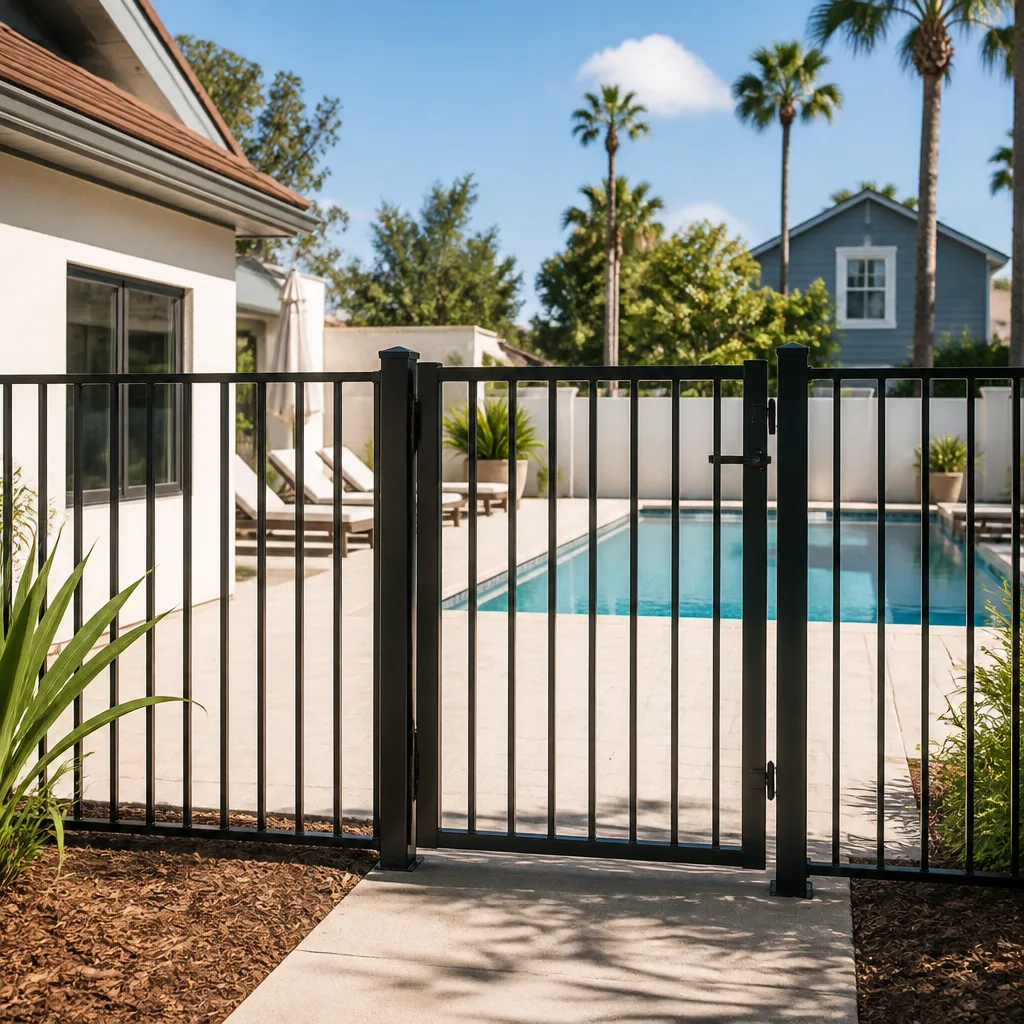
Posts should be buried at least one-third of their above-ground length, which means roughly 2 feet minimum for a 6-foot post, and often 2.5 to 3 feet in Richmond’s softer clay and fill lots. The hole should be about three times the post width and filled with concrete over a gravel base, not soil. If your contractor can’t state the depth in the bid, that’s your warning sign. Call (833) 700-4611 for an exact quote on your property – estimates are free.
In most Richmond residential cases, yes – typically for fences over a certain height, and always when the fence touches a setback or easement. Height limits and setback rules vary by zoning, and HOAs can add their own. A reputable contractor will check your specific address and put the permit in the bid. If they say “you don’t need one” without checking, get a second opinion. Call (833) 700-4611 and we’ll walk your address with you.
A properly built fence should hold its line for 15 to 20 years or more before it needs structural repair, depending on material. A fence that starts leaning in 18 to 24 months almost always has a post depth or footing problem. Fix the post, not the panel – putting a new panel on a bad post just resets the countdown. Call (833) 700-4611 for a free estimate on a rebuild or repair.
It shouldn’t. A real fence bid accounts for post depth, material, permit, and disposal up front, and any change order should be discussed in writing before work continues. At Groundwork Construction Co. of Richmond, the number you see is the number you pay. That’s upfront pricing, no surprises. If a bid comes back with “we’ll see once we get in there,” you’re about to fund someone else’s surprises. Call (833) 700-4611 for a written, line-item quote.
Wind load is the force the wind puts on your fence panels, and it depends on the fence’s height, the yard’s exposure, and the panel spacing. In Richmond’s coastal wind, a 6-foot panel in an open yard takes significantly more force than the same panel between two buildings. That’s why rail count, post size, and fastener spec matter here more than in a sheltered inland yard. A contractor who never mentions exposure is building a fence for a different climate.
Get the workmanship warranty in writing, with the term, the coverage, and who to call in writing. A verbal “we stand behind our work” is not a warranty. Our fence work is covered by the 730-Day Done Right Promise – if it’s not done right, we make it right. That’s one of the longest workmanship guarantees in the residential construction space, and it applies to fence work the same way it applies to a Driveway & Pavers in Richmond project or a roof. Call (833) 700-4611 with questions.
The Bottom Line
The warning signs of a bad fence job show up long before the fence does. A quote that skips post depth, concrete, or permits. A crew that won’t state a method in plain words. A material delivery that doesn’t match the bid. A contractor who tells you no permit is needed without checking your address. In Richmond’s clay soil and coastal wind, those shortcuts turn into lean, rot, and a two-year fight with the builder who wrote them. Read the room before you sign. Demand the specs in writing. Release final payment only after the walk-through checklist above. Get it right on day one and the fence disappears into the yard for the next 20 years.
Ready to get a fence quote that shows you the specs, the depth, the permit, and the warranty in writing? Groundwork Construction Co. of Richmond offers a free project estimate and design consult. Calls are answered by a live person 24/7 – call (833) 700-4611 and we’ll walk your property line with you.
Written by the team at Groundwork Construction Co. of Richmond.