
Last updated November 18, 2026






Free written scope consultation - allowances, timeline, and change-order rules on paper before a single trade is scheduled
Seasonal Construction Care for Richmond: Year-Round Homeowner’s Guide
Richmond’s so-called mild climate is a maintenance trap. Because nothing freezes hard and nothing bakes the way it does in the Central Valley, most homeowners here skip the seasonal prep that Bay Area moisture and seismic activity quietly demand every single year. The result shows up eighteen months later as a cracked driveway, a soft spot under a fence post, or water finding its way behind stucco. We’ve watched this cycle repeat across Richmond neighborhoods for years, and it almost always traces back to two ignored transition windows. This guide covers both, plus the inspection habits that catch small problems before they get expensive.
Quick Answer
Richmond has two construction-critical seasons, not four: the wet season (roughly November through March, when atmospheric rivers hit) and the dry season (April through October, when soils shrink and stucco bakes). The highest-value work happens in the transition windows – October through early November before the first serious storm, and March through April after the ground stops saturating. Handle drainage, caulk, retaining wall weep holes, and paver joints in fall; check for settlement, cracking, and seismic micro-movement in spring.
Styles & brands we work with
- Kitchen remodeling
- Bathroom remodeling
- Home additions & ADU
- Roofing
- Windows & doors
- Driveway & pavers
- Fence
Table of Contents
- Why Richmond Really Has Two Seasons, Not Four
- The Fall Window: October to November Checklist
- Drainage Grading and Retaining Wall Weep Holes
- Paver Joint Integrity Before the Rain
- Dry Season Tasks That Prevent Moisture Problems
- Inspecting for Seismic Micro-Movement
- Spring Post-Rain Assessment: Normal vs. Call a Pro
- Richmond Soil Types and What They Do to Your Foundation
Why Richmond Really Has Two Seasons, Not Four
Richmond sits in a pocket of the East Bay where the marine layer does most of the weather work. Fog rolls in off the bay through the Richmond-San Rafael corridor, keeping summer temperatures moderate and keeping moisture on surfaces long after the sun comes up. That fog is the reason stucco, paint, and exterior caulk on the bay-facing side of a Point Richmond home age differently than the same materials three miles inland toward El Sobrante.
What this means practically is that Richmond doesn’t get a “spring thaw” or a “fall freeze” that forces homeowners to think about their house. There’s no dramatic event that says “check your grading.” The transitions are subtle. The ground goes from saturated to dry over maybe six weeks in spring, and from dry to saturated over about the same span in fall. Those six-week windows are when homes either get protected or start accumulating quiet damage.
We frame the year in two seasons because that’s how the work actually flows:
- Wet season (November to March): Atmospheric rivers push water against the house. Grading, drainage, caulk, and roof flashing are all being tested daily. Anything compromised shows up now, often as a stain on an interior wall or a puddle against the foundation.
- Dry season (April to October): Clay-heavy soils shrink, concrete flatwork moves, stucco dries and cracks, and paver joints open up. This is counterintuitive – most homeowners think dry season means “nothing to worry about” – but dry season is exactly when moisture problems get set up for the following winter.
The transition windows (October-November and March-April) are when proactive Richmond homeowners do their prep. Everyone else waits for a problem to announce itself, usually in January, usually with a wet crawl space.
The Fall Window: October to November Checklist
The two to four weeks before Richmond’s first serious atmospheric river are the single most valuable maintenance window of the year. Miss it and you’re doing reactive repairs in the rain, which costs more and gets scheduled slower because every contractor in the East Bay is booked. Here’s the sequence we recommend, in order of impact:
- Walk the perimeter and check grading. Soil should slope away from the foundation at roughly a 5% grade (about 6 inches of drop over 10 feet) for the first 10 feet out. If you see a low spot against the house, that’s where water will pool in December.
- Clear gutters and downspouts. Richmond has a lot of mature trees – eucalyptus, oak, redwood – and gutters clog fast. Downspouts should discharge at least 6 feet from the foundation, ideally onto a splash block or into a drain.
- Inspect caulk at every penetration. Windows, doors, hose bibs, dryer vents, utility penetrations. Run a finger along the caulk line; if it’s cracked, chalky, or pulling away, it needs to come out and get replaced with a proper exterior-grade sealant.
- Check retaining wall weep holes. Richmond has a lot of stacked retaining walls – many in the older neighborhoods around the Marina District and Iron Triangle. Weep holes drain hydrostatic pressure behind the wall. If they’re plugged with soil, roots, or mortar spill, the wall is holding water it wasn’t designed to hold, and that’s when walls lean.
- Inspect paver joints. Polymeric sand or joint sand should be full and level. Any voids mean water is getting under the pavers, and one winter of freeze-free but saturated cycles will start shifting them.
- Check roof flashing and roof penetrations. Look around chimneys, skylights, and any roof-to-wall transitions. If you can’t safely get on the roof – and honestly, most people shouldn’t – call for a professional inspection in October, not December.
If all of this sounds like a lot, it is a couple of weekends of work for a homeowner who’s comfortable on a ladder and doesn’t mind getting dirty. But part of it – the retaining wall, the roof, anything involving height or structure – is worth having a professional look at, and Groundwork Construction Co. of Richmond home offers free estimates so you’re not guessing.
Drainage Grading and Retaining Wall Weep Holes
Richmond drainage is almost entirely about slope and pressure. Water that falls on your lot has to go somewhere. If it goes downhill toward your foundation, you have a problem that no amount of interior waterproofing will fix. The fix lives outside.
Grading is the first line of defense. For a Richmond home on a typical 5,000 to 7,000 square foot lot, the goal is to keep water moving across the surface and away from the structure, not soaking in against the wall. Signs your grading has failed:
- Soil staining or erosion channels against the foundation
- Efflorescence (white powdery mineral deposits) on the foundation stem wall – this is a moisture signal
- Settled soil creating a low point within 3 feet of the house
- Standing water in the yard for more than 24 hours after rain
Retaining walls are the second line. Weep holes exist because a retaining wall is holding back soil, and soil saturated with water weighs a great deal more. Without functional weep holes, the wall’s design load roughly doubles. On older Richmond walls – especially mortared stone and older concrete block – we’ve seen weep holes sealed off by later concrete work, plant growth, or just decades of silt. Clearing them is not glamorous, but it’s the cheapest structural insurance you can buy.
If a retaining wall has any visible lean, bulging, or horizontal cracking in the mortar, don’t try to fix it yourself. That’s a structural question and needs a professional evaluation. Call (833) 700-4611 to schedule a free estimate – we’ll tell you honestly whether it’s a maintenance item or a rebuild.
Paver Joint Integrity Before the Rain
Pavers are an excellent surface for Richmond, but they’re not maintenance-free. The joints between pavers are the load-distribution mechanism. When those joints are full, the pavers act as a single surface and load spreads across them. When joints go empty, each paver acts alone, which means rocking, settling, and eventually a patched repair.
Fall is the right time to refill joints because you want the sand in place before the wet season, not after. As part of seasonal care, check for:
- Visible voids between pavers – if you can see daylight or soil down between the pavers, it’s empty
- Rocking pavers – step on each one; any that moves is sitting on a compromised base
- Sand loss on slope edges – pavers on a slope lose joint sand fastest
- Weed growth in joints – a sign the sand layer has thinned
Joint sand should be topped up annually on driveways and walkways, and every two to three years on patios with lighter traffic. For more detail on the right materials and approach, our guide to Driveway & Pavers in Richmond walks through what to use and what a full re-sanding looks like.
Dry Season Tasks That Prevent Moisture Problems
This is the section most Richmond homeowners skip, and it’s the one that matters most over a multi-year horizon. Dry season (April to October) is when you set up the wet season. Counterintuitive, but true – the moisture damage we see most often was caused by an August or September job that didn’t get done.
Here’s what we mean:
Caulk and sealant cure. Exterior caulk needs dry conditions and moderate temperatures to cure correctly. If you caulk in November, you’re racing the rain and the joints may not be fully cured when the first storm hits. Caulk in September, cure for a week, then let it do its job in the wet season.
Stucco repair. Any crack in Richmond stucco – and stucco cracks in Richmond, especially on the sunny southwest face – needs to be sealed in the dry season. Water gets behind small cracks and causes the stucco to delaminate over the winter. Then you have a bigger repair in spring. Fix the crack in August, not January.
Concrete flatwork sealing. Sealing concrete – driveways, patios, walkways – is best done in dry season when the moisture has had time to leave the slab. A sealed slab resists the seasonal wet-dry cycling that opens up cracks. Products from Quikrete or Sakrete are readily available for smaller jobs, but the surface prep is where most DIY seal jobs fail.
Roof inspections. Good weather is the time to be on a roof. Bad weather is the time to be calling someone because it’s raining inside. If you’re going to have a roof inspected, do it between May and October.
The dry-season mindset is this: everything you protect in summer and fall is something you don’t have to repair in winter and spring. Seasonal care in Richmond is a planning exercise, not a response exercise.
Inspecting for Seismic Micro-Movement
Richmond sits near enough to the Hayward Fault and the broader East Bay fault network that seismic activity is not a hypothetical – it’s a slow, continuous reality. Most of what a Richmond homeowner sees is micro-movement: hairline cracks, small offsets, doors that used to close smoothly but now stick. These aren’t emergencies. They’re information.
After any noticeable Bay Area seismic event – typically anything above magnitude 4.0 that you felt in Richmond – walk these three areas and note what you see:
- The foundation stem wall. Look for new diagonal cracks in the concrete, particularly near corners. Old, hairline, and stable is fine. New, wider than a credit card, or widening over time is not.
- The junction where the foundation meets the siding or stucco. This is where any differential movement between foundation and framing shows first. A small line is expected. A gap is not.
- Flatwork and hardscaping. Driveways, patios, walkway slabs. New cracks after an event are worth noting in a dated photo, then rechecking in 90 days. If they’ve grown, that’s your signal to have a professional look.
Photograph everything with your phone and a timestamp. This is enormously helpful if you ever need to make a foundation or warranty claim, and it’s the single best way to tell “old crack” from “new crack.” Also check the interior at doorframes and window openings – if a door or window suddenly stops latching properly after a seismic event, that’s worth noting in the same file.
We can’t tell you whether a crack is structural from a photograph. What we can do is send a professional to look in person. Groundwork Construction Co. of Richmond offers free estimates and honest assessments – call (833) 700-4611 if something looks off.
Spring Post-Rain Assessment: Normal vs. Call a Pro
By March, Richmond has usually had its worst rain. The ground has been saturated for months and is starting to dry. This is the second most valuable inspection window of the year because it’s the first time you can see what winter actually did.
Here’s the honest breakdown of what’s normal versus what warrants a call:
- Normal: Small settlement pockets in garden beds (soil compacts, it’s fine). Minor staining on hardscape from organic matter washing across it. A single new hairline crack in an older concrete slab, less than 1/16 inch wide, with no vertical displacement.
- Warrants a professional look: Any crack wider than 1/4 inch in a foundation stem wall. Any vertical displacement across a flatwork crack (one side higher than the other). Doors or windows that no longer operate smoothly after the wet season. Water staining on interior surfaces near grade. Any retaining wall with visible movement.
- Warrants a call this week: Water entry during rain, a soggy area of lawn that doesn’t dry out after a week of dry weather, an exposed fence post footing with the post leaning, or any foundation crack that has grown since your prior photo.
The rule of thumb: a crack that isn’t growing is information. A crack that’s growing is a problem. Spring is when you check the growth.
Richmond Soil Types and What They Do to Your Foundation
Richmond soil is not uniform, and it matters to know roughly what you’re on. Much of the flatland – the Marina District, parts of the Iron Triangle – has fill and bay mud mixed in, which is highly expansive. It shrinks in dry season and swells in wet season. On expansive soil, seasonal movement of half an inch at the surface is normal and expected. Foundations handle it. Flatwork doesn’t always.
The hillside areas – Point Richmond, parts of Kensington border neighborhoods – have different behavior. Soil there is often more stable but the slopes create their own drainage issues, and hillside retaining walls do much more work than flatland ones. That’s why weep holes and drainage behind walls matter even more up there.
What this means for your seasonal care:
- On expansive flatland soil, expect to top up paver joints annually and monitor driveway cracks after rainy seasons
- On hillside lots, prioritize drainage above all else; a small drainage failure above the house is a big problem
- Everywhere in Richmond, expect stucco cracks in the dry season; sealing them is genuinely important, not cosmetic
If you’re planning a larger project – a home addition, an ADU, or a full site regrade – soil behavior matters at the design stage, not the repair stage. Our team at Home Additions & ADU in Richmond can walk you through what foundation type and drainage design make sense for your specific lot.
How Your Fence Fits Into Seasonal Care
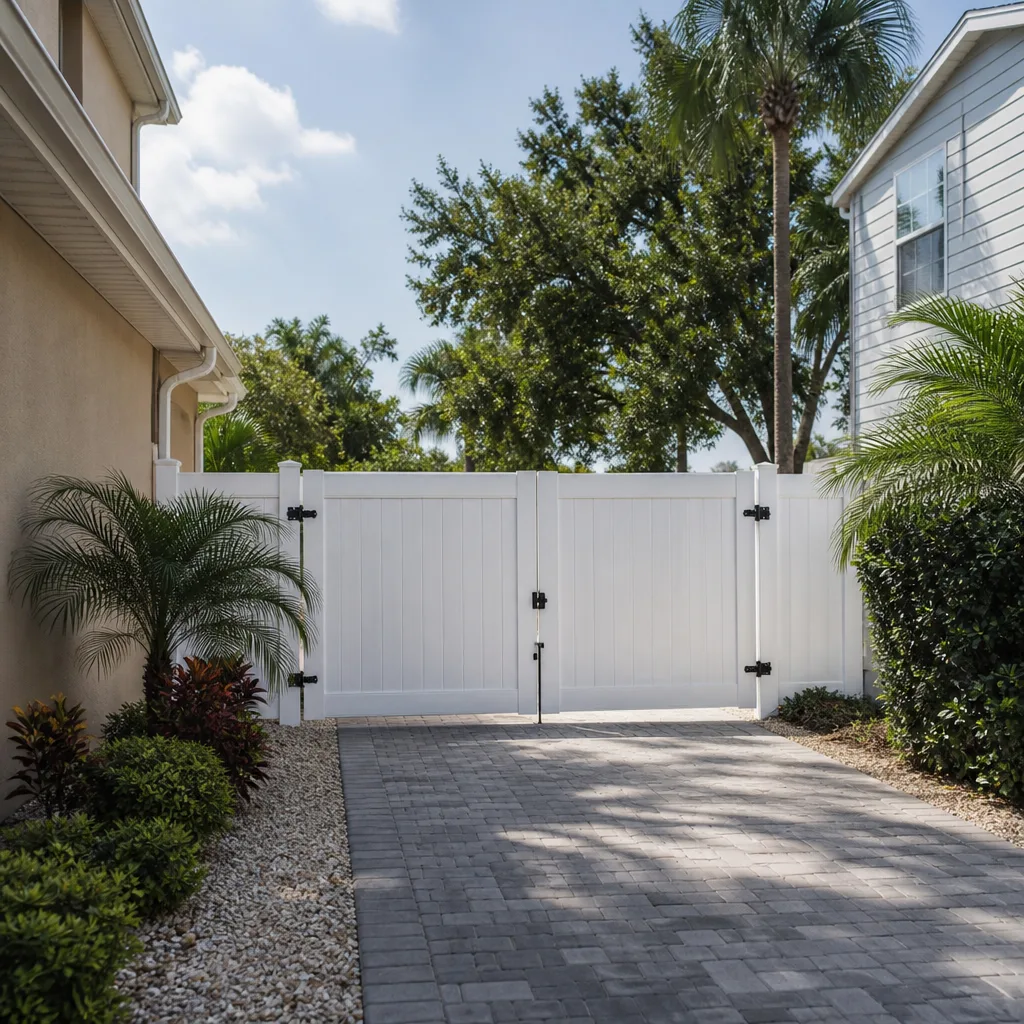
Richmond fences take a beating from wind and moisture, and most homeowners only notice when a post leans or a panel falls. Fence maintenance is genuinely seasonal, and it’s easy to fold into the same fall and spring walks:
- Fall: Check post footings for soil erosion or pooling. Tighten or replace fasteners that have backed out. Look at horizontal fence rails for cupping or separation. If you have wood, a fall re-stain protects it through the wet season.
- Spring: After the wet season ends, check post bases for rot (probe with a screwdriver – soft wood means the footing is compromised). Check gate hardware and hinges for sagging. Look at the top rail on any fence running downhill – that’s where alignment issues show first.
If a post is loose, don’t cement over the top of the problem – the fix is pulling the post, inspecting the footing, and re-setting correctly. Our Fence Installation in Richmond overview covers what a properly set post footing looks like, and it’s worth understanding even if you’re just making repairs.
Roof and Gutters: The Seasonal Rhythm
Every roof system – asphalt shingle, metal, tile – has a seasonal inspection rhythm, and in Richmond that rhythm is set by the atmospheric river timing. Roof failures in Richmond typically announce themselves in December, not July, because that’s when sustained wind-driven rain finds the weak point.
Here’s the annual rhythm to follow:
- October: Full roof inspection – flashing, penetrations, and skylights. Replace any cracked sealant. This is the last safe window to get on a roof before wet season.
- November: Clean gutters and confirm downspouts discharge away from the foundation.
- March: Walk the perimeter and look for shingle loss, gutter damage, or downspout separation from the storms.
- May to June: Any needed repairs – get them done now, before fire season and before the next wet cycle.
GAF and Owens Corning both publish maintenance schedules for their shingle systems, and the schedule reflects this exact rhythm. If you’re considering a roof replacement, the best window in Richmond is actually mid-spring or early fall – enough dry weather to work, but you’re not racing summer heat or winter rain.
Windows, Doors, and Exterior Openings

Windows and doors are the most-frequently-touched exterior system on a Richmond home, and the caulk around them takes more punishment than any other sealant on the house. Every opening is a penetration where water wants to work its way in. Fall is when you want that caulk in the best condition of the year.
What to check in fall:
- Caulk line at every window and door frame exterior. Cracked, chalky, or separating is the signal to replace.
- Weatherstripping at doors. Check that it compresses when the door closes. Worn weatherstripping lets wind-driven rain around the door itself.
- Window frame finish. Any peeling paint or finish on the sill or lower frame means moisture is finding its way in.
- Operability. Every window should open and close smoothly. If one is sticking after the wet season, that’s information about shifting in the frame.
Materials matter here too. The brands we install – Andersen and Marvin – have maintenance schedules tailored to their specific frame systems, and following them is the best way to extend service life. If it’s time for actual replacement rather than maintenance, we can help with Window & Door Replacement in Richmond.
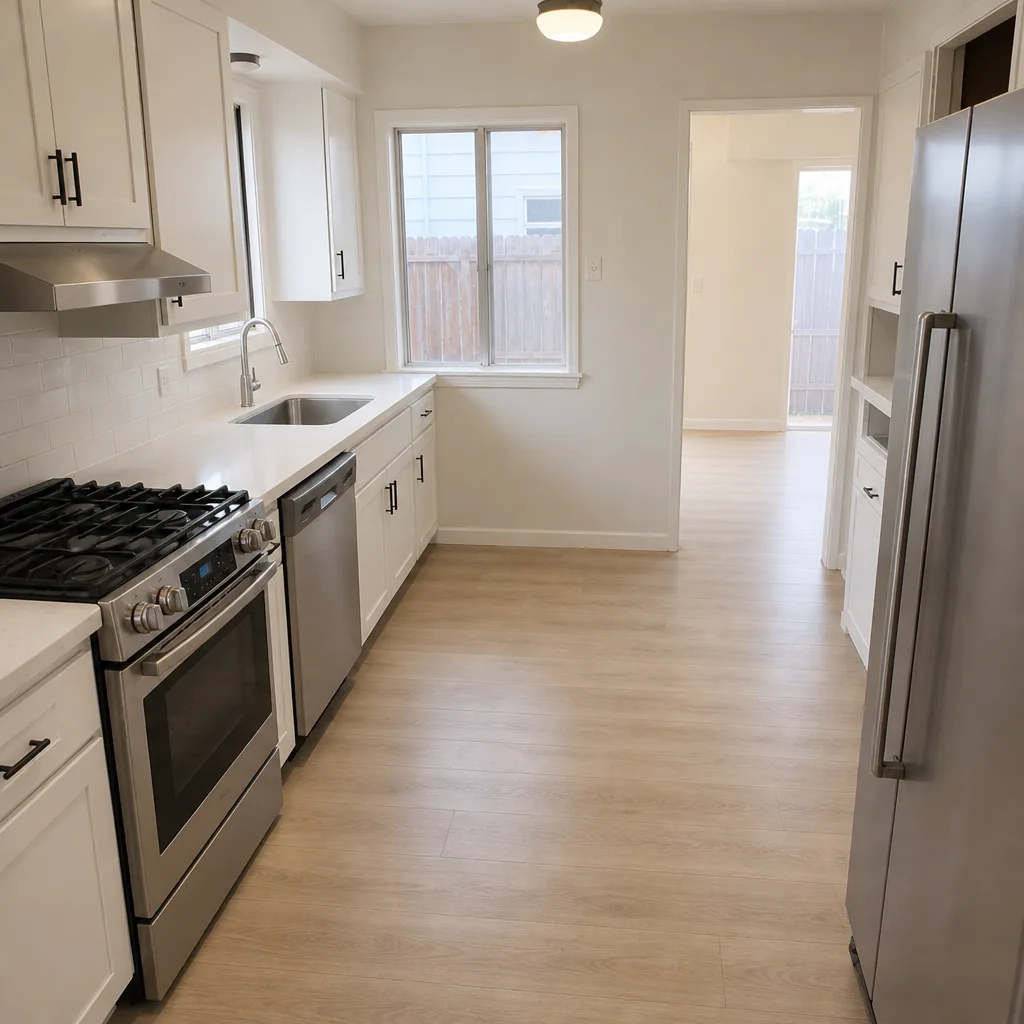
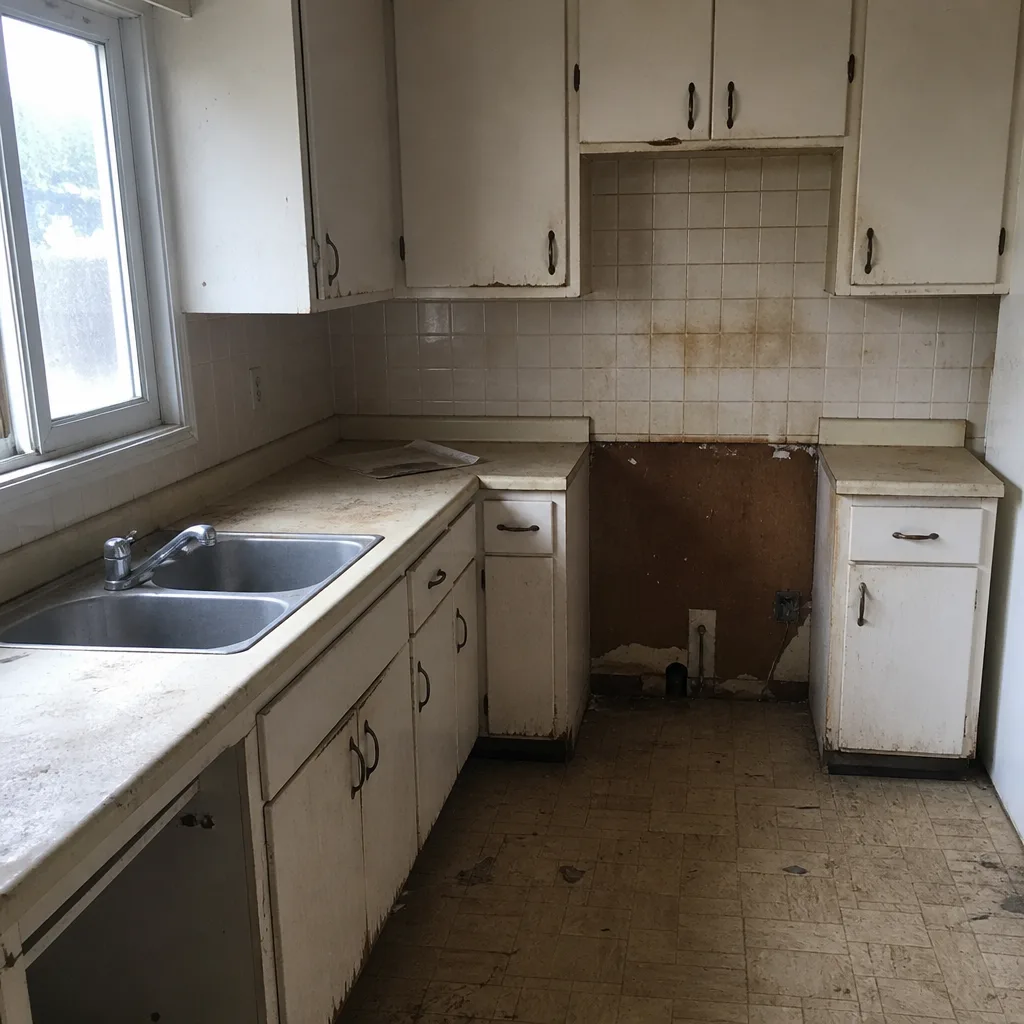
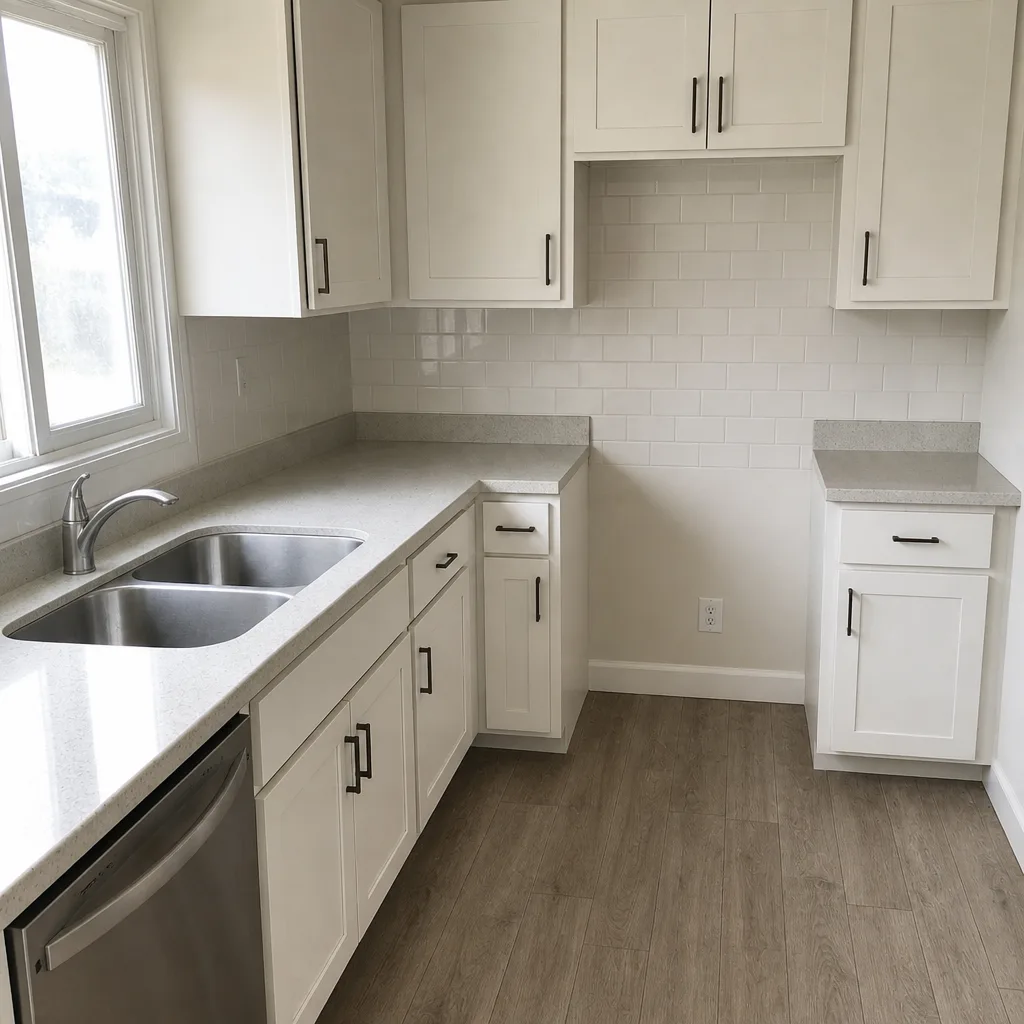
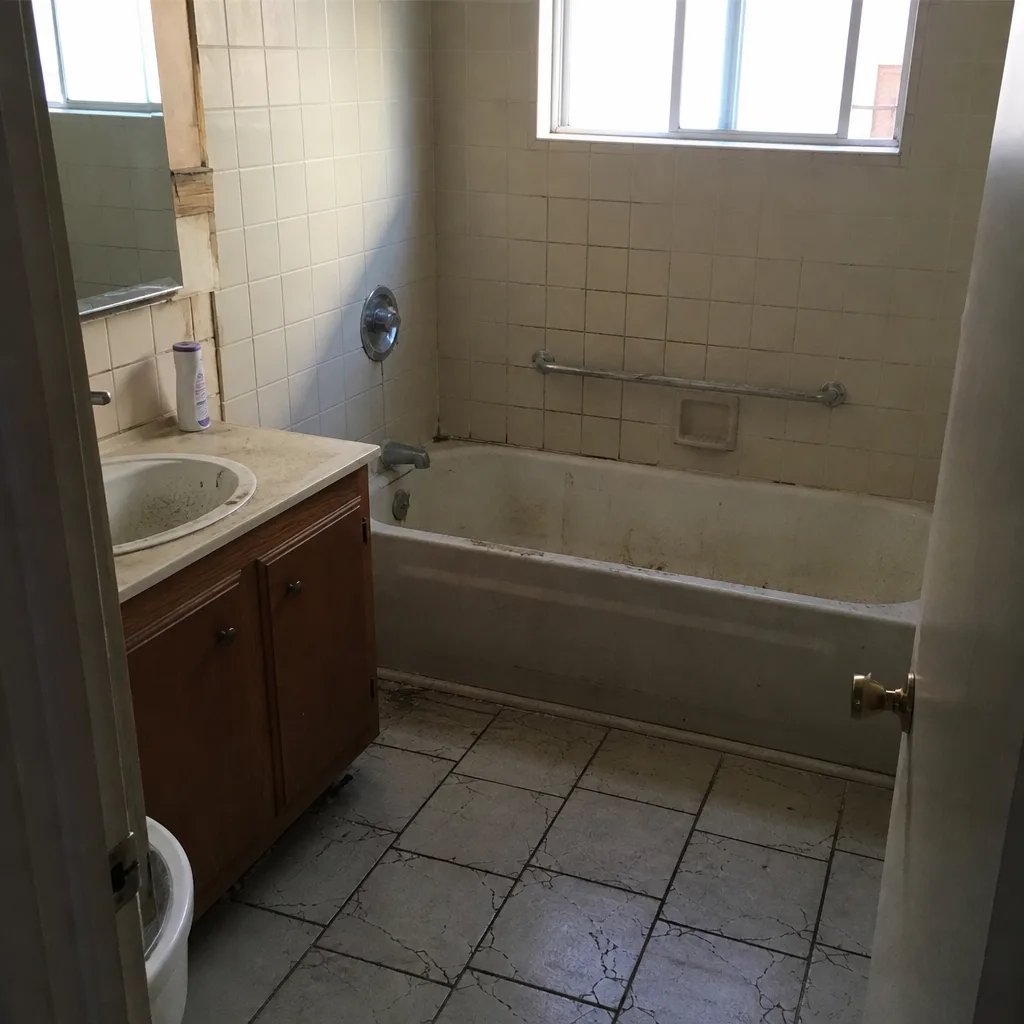
See the difference
 Before
 After
 Before
 After
 Before
 After
Common Mistakes to Avoid
- Treating Richmond like it has no weather cycle. The mild climate is exactly why homes here go neglected. Every other homeowner in a climate with visible seasons does some version of this prep every year. Richmond homeowners who do it see a fraction of the repair work over a decade.
- Caulking in the rain. Sealant has to cure. Applying it wet, or days before an atmospheric river, means it fails within the first season. Wait for a dry week, ideally in September or early October.
- Pouring gravel or rock over a drainage problem. This is common and it doesn’t fix anything – it just hides the water. Water still pools against the foundation, and now you can’t see it.
- Judging a crack once and never again. A crack that isn’t growing is fine. A crack that grew 1/8 inch over six months is a foundation question. Take photos on a schedule so you can tell the difference.
- Ignoring retaining wall weep holes because the wall “looks fine.” Retaining walls fail from the inside out. By the time a wall visibly leans, it’s a rebuild, not a maintenance call.
- Skipping paver joint refills because they “look okay.” Joint sand loss is subtle from standing height. Walk the driveway barefoot or get down near surface level to actually see what’s happening between pavers.
- Doing roof work yourself after a storm. Roofs are genuinely dangerous – falls are the leading cause of serious injury for homeowners doing their own maintenance. Call a professional for anything above the ground floor eave line.
When to Call a Professional
Richmond homeowners can handle a lot of their own seasonal care. But some items are worth the call, and the ones we see most often are: any foundation crack wider than a quarter inch or showing vertical displacement; any retaining wall with visible movement or structural cracking; any roof work above the eave line; drainage failures that persist after a proper regrade; and any post-storm concern you can’t confidently diagnose. Roof work especially – we know more homeowners every year who took a fall trying to DIY a shingle repair, and the math never works out. Groundwork Construction Co. of Richmond offers free estimates in Richmond – call (833) 700-4611 to talk through what you’re seeing and get a straight answer.
Frequently Asked Questions
Twice a year at minimum, timed to the transition windows: late September to early October (before the first atmospheric river) and March to April (after the wet season ends but before dry-season heat sets in). Between those two inspections, do a quick visual walk after any significant storm or seismic event, primarily to check the foundation line and any drainage area you’ve already flagged as worth watching. Fall inspection protects the house for winter; spring inspection catches what winter did.
Water intrusion behind stucco, caused by dry-season cracks that go unsealed. Richmond stucco cycles through wet and dry season every year, and each cycle opens small cracks a bit more. Sealed in September, those are cosmetic. Ignored through two or three winters, they become stucco delamination and framing issues. The second biggest is drainage failure against the foundation during atmospheric rivers, which is why fall grading checks matter so much.
Yes, in a maintenance sense rather than an emergency one. Richmond is close to the Hayward Fault and experiences continuous micro-movement. The point of post-event inspection isn’t that every crack is dangerous – most aren’t – it’s that you want a documented baseline so you can tell growth when you see it. If you don’t photograph before and after a notable event, “did that crack get bigger?” becomes an unsolvable question.
Three criteria, in order: width (over 1/4 inch is the threshold for evaluation), displacement (one side higher than the other is concerning, even at small width), and growth (any crack that’s visibly widening over months is worth a professional look regardless of width). Hairline cracks under 1/16 inch with no displacement are typically shrinkage cracks and normal. Anything that triggers one of the three criteria is worth an in-person evaluation, and our free estimate is a good place to start.
April through June, or September through October. Those windows give the roofing crew dry weather to work in, moderate temperatures for the adhesive and sealant to cure properly, and no risk of booking conflicts with the pre-wet-season rush. Avoid the height of winter unless it’s a repair – no contractor wants to install shingles in a downpour, and you don’t want the installation rushed to beat an incoming storm.
Routine seasonal maintenance is mostly labor and materials you can do yourself: caulk and a caulk gun ($20-$40), replacement joint sand for pavers ($30-$60 per 50 lb bag), and a few hours with a garden hose and a probe. The professional items vary widely based on what’s found – a roof inspection, professional grading, or a retaining wall repair all price differently, and you shouldn’t accept a professional quote until you have a written line-item breakdown. Groundwork Construction Co. of Richmond uses upfront pricing, no surprises: the number you see is the number you pay. Call (833) 700-4611 for a free estimate.
The Bottom Line

Richmond doesn’t have four maintenance seasons, but it has two critical ones: the fall window before the first atmospheric river, and the spring window after the wet season ends. Protect the house in fall – grading, caulk, weep holes, paver joints – and inspect for what winter did in spring. Document everything with dated photos so you can tell old cracks from new ones. Treat the seismic micro-movement as information rather than emergency, and settle your retaining walls and roofs with a professional inspection once a year. Everything else is manageable seasonal care. The proactive homeowners are protecting their investment every year; the reactive ones are writing larger checks every third or fourth year.
Groundwork Construction Co. of Richmond covers seven core services – kitchen and bath remodels, roofing, windows and doors, fences, driveways and pavers, and additions and ADUs – using verified brand partners like Oldcastle, Quikrete, and Abodu where each trade calls for them. All projects come with the 730-Day Done Right Promise, background-checked and uniformed technicians, and live person answering calls 24/7. Take advantage of our standing offers – a free project estimate and design consult, 0% financing for 18 months, and $1,000 off projects over $10,000 – and call (833) 700-4611 to schedule your free estimate today. From foundation to finish line, we’ll help you build a maintenance rhythm your Richmond home can rely on year round.
Written by the team at Groundwork Construction Co. of Richmond.